
Strategic Business Advisory: Aligning Strategy and Finance
Align your strategy and finance with strategic business advisory insights to drive sustainable growth and profitability for your organization.
Sales tax compliance isn’t optional-it’s a legal requirement that trips up thousands of business owners every year. Missing a filing deadline or misclassifying a product can result in penalties, interest charges, and audits that drain your resources.
We at My CPA Advisory and Accounting Partners have helped countless businesses navigate these complex rules and avoid costly mistakes. This guide walks you through the essentials you need to know.
Sales tax nexus is the connection that determines whether you owe taxes in a state. Physical presence used to be the only trigger, but the 2018 Supreme Court decision in South Dakota v. Wayfair, Inc. changed everything. Now economic nexus means you can owe sales tax based purely on sales volume or transaction count, even without an office or warehouse in a state. Most states set thresholds around $100,000 in annual sales or 200 transactions, though exact figures vary significantly.
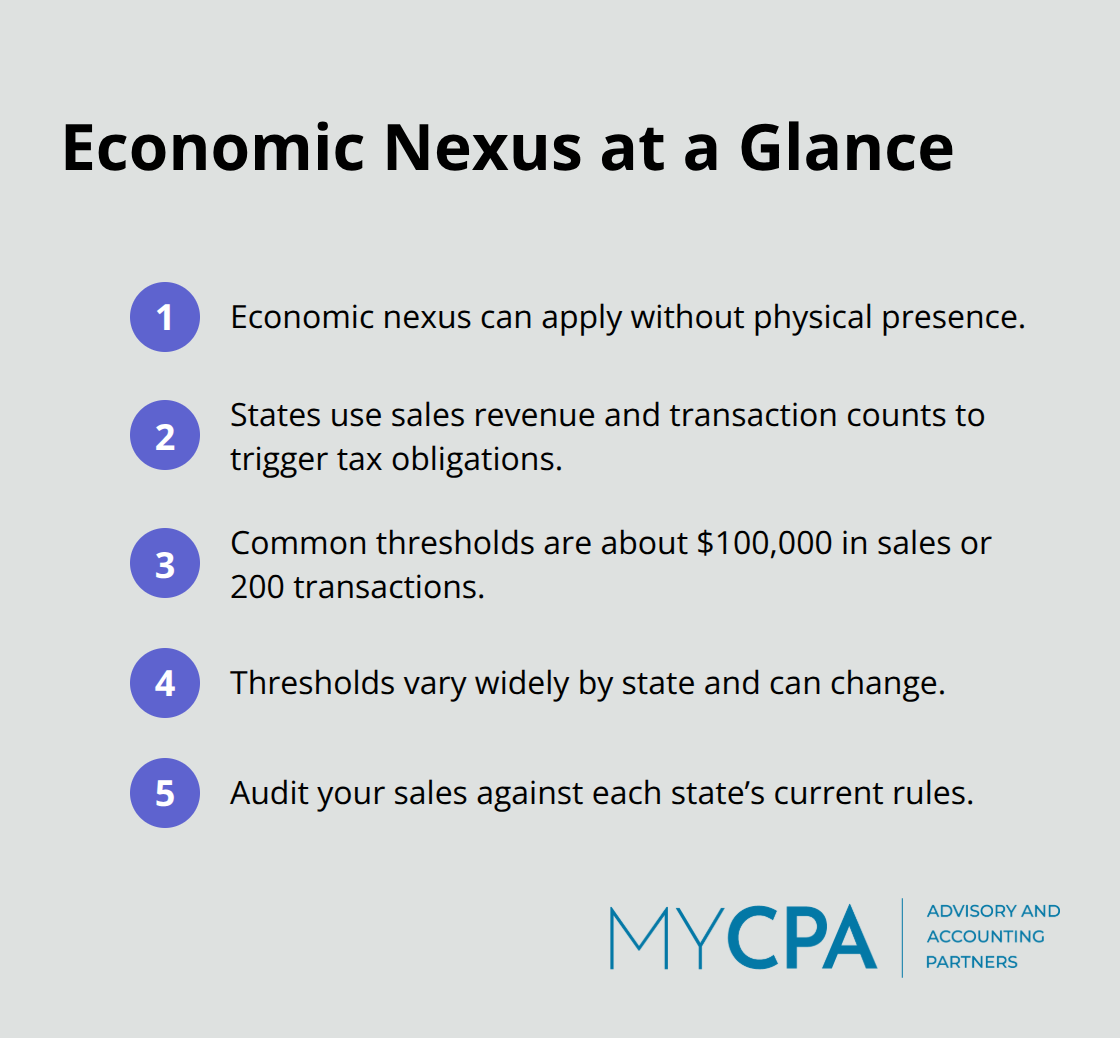
Some states are more aggressive with lower thresholds, while others haven’t set specific numbers yet. This is why you cannot assume you’re safe just because you don’t have employees in a state. If you sell online across state lines, you likely have nexus in multiple states right now. The only way to know is to audit your sales data against each state’s rules. Start with your top five sales states and verify their thresholds directly on their tax authority websites, not through third-party summaries that may lag behind recent changes.
Taxability rules differ across states. Connecticut taxes software as a service at full rates, while some states apply reduced rates or exempt it entirely for business use. Groceries are generally exempt, prescription drugs are exempt, and residential leases are exempt, but many services fall into gray areas. The problem is that states classify items differently, and a product taxable in one state might be tax-free in another. You cannot rely on what worked in your home state. Instead, classify each product or service based on the destination state’s rules at the point of sale. This is where mistakes multiply quickly. Many businesses assume that if something isn’t taxed at home, it won’t be taxed elsewhere. That assumption costs money. Automated tax software updates classification rules in real time across all jurisdictions, eliminating the guesswork and manual errors that plague most businesses.
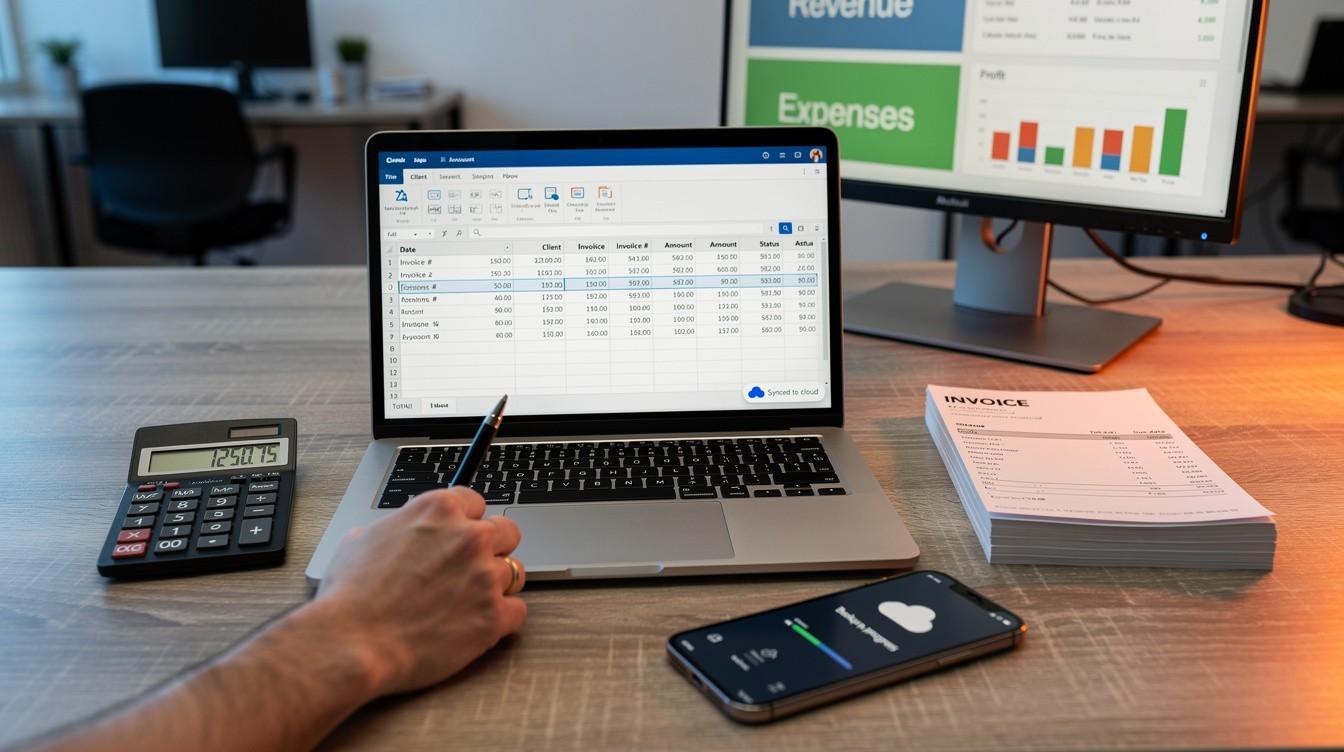
Once you confirm nexus in a state, registration must happen before you collect your first dollar of tax. Each state has its own registration process and timeline. Waiting until you receive a notice from the state creates immediate compliance gaps and potential penalties. Register proactively in states where you’ve confirmed nexus, even if you haven’t started collecting tax yet. Different states require different information on registration forms, so don’t assume one form works everywhere. Some states require your NAICS code, ownership structure, first taxable date, and employee count upfront. Others ask for less. The registration itself is usually free and can be done online through each state’s tax authority portal. After registration, you’ll receive a sales tax permit number that you must include on invoices and use when filing returns. Keep these permit numbers organized in a spreadsheet or document management system tied to each state. If you operate in multiple states and channels, this organization prevents missed filings and duplicate registrations. With nexus confirmed and registration complete, the next challenge is avoiding the compliance mistakes that derail even experienced business owners.
Misclassifying products and services remains the single biggest compliance error we encounter. A business selling both tangible goods and software bundles might tax the software correctly in one state but miss it entirely in another because classification rules differ. Connecticut taxes SaaS at full rate, while some states apply reduced rates or exempt it for business use. The result is underpayment in some states and overpayment in others, both creating audit risk.
Many businesses assume their home state’s rules apply everywhere, which is financially dangerous. You cannot manually track 12,000 sales tax jurisdictions across different product categories. Automated tax software handles this by applying destination-based rules at checkout, classifying items correctly based on where the customer receives the product or service. This eliminates the guesswork that leads to penalties.
Managing exemption certificates is equally critical and equally neglected. Businesses often accept a customer’s word that they qualify for tax-free status without collecting proper documentation. When an auditor later asks for your exemption certificates, missing paperwork means you owe back taxes on transactions from years ago, plus interest and penalties.
State audits are intensifying, and enforcement intensity is rising across jurisdictions in 2026. The solution is straightforward: require a valid exemption certificate before processing any tax-free sale. Verify that the certificate matches the transaction type and customer location. Store certificates in a centralized system where you can retrieve them quickly if audited.
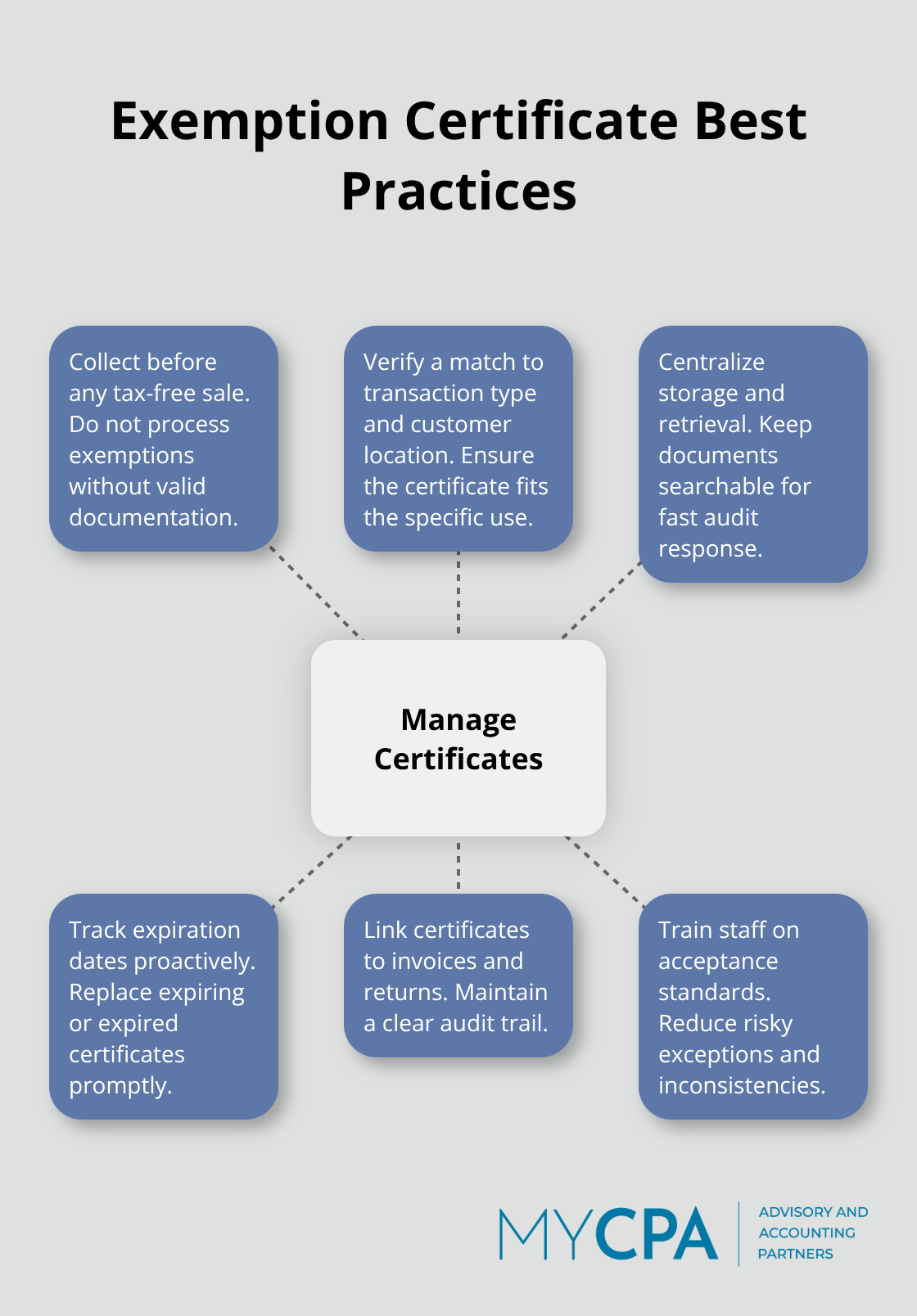
Software solutions manage exemption certificates alongside invoices and returns in one searchable repository, keeping records organized.
Filing deadlines and payment due dates vary by state, creating another trap for growing businesses. Some states require monthly filings, others quarterly or annual, and some home-rule states demand local remittance alongside state filings. Missing even one deadline triggers penalties immediately, and sales tax is treated as trust fund money, meaning late remittance can create personal liability for business owners.
Your solution is a master calendar listing every state where you have nexus, with each state’s specific filing frequency and due date. Automated software sends reminders before deadlines and generates pre-filled returns, reducing the manual work that causes missed dates. Late remittance on sales tax collected from customers is particularly costly because the money belongs to the state, not your business. These mistakes compound quickly, but structured practices prevent them from happening in the first place.
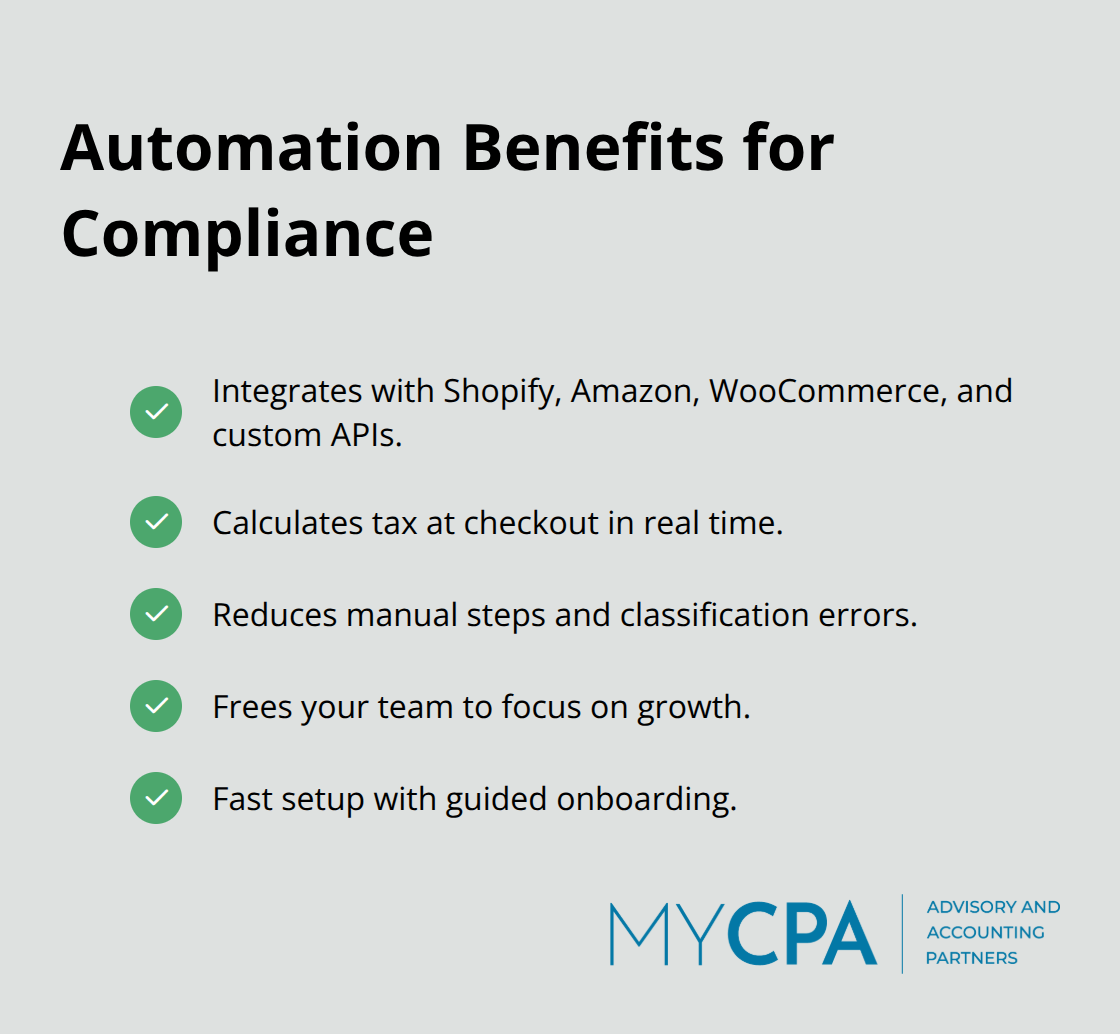
The businesses we work with fall into two categories: those using automation and those drowning in spreadsheets. The difference in their compliance outcomes is dramatic. Automated sales tax software eliminates the manual classification errors that plague growing businesses by applying the correct tax rate to every transaction in real time across all jurisdictions. When your software updates tax rules automatically whenever a state changes rates or nexus thresholds, you stop relying on quarterly emails from tax services or hoping you caught the latest rule change.
The cost of automation is negligible compared to a single audit or back-tax bill. Most platforms integrate directly with your sales channels-Shopify, Amazon, WooCommerce, and custom APIs-so tax calculations happen at checkout without extra manual steps. This means your team spends less time on compliance and more time growing the business. Setup takes days, not months, and onboarding support walks you through configuration for your specific business model and sales channels.
Record organization separates businesses that survive audits from those that face massive bills. When a state auditor asks for proof of sales, tax collected, and exemptions claimed, organized records determine whether you pay what you actually owe or face reconstructed assessments based on the auditor’s assumptions. Centralized systems store invoices, exemption certificates, and returns in one searchable repository, making audit preparation straightforward instead of panicked.
Maintain records for the full statute of limitations, which often spans several years depending on the state. For exemption certificates specifically, track expiration dates because an expired certificate provides no protection if audited. Verify that each certificate matches the transaction type and customer location before processing tax-free sales. If you process tax-free sales without proper documentation, you’ll owe back taxes plus interest and penalties on transactions from years past.
Regular audits of your own filings catch errors before state auditors do. Review your sales data quarterly against your filed returns to spot discrepancies, missed jurisdictions, or misclassified products. If you uncover past exposure, a Voluntary Disclosure Agreement limits lookback periods and waives penalties, putting you in control instead of waiting for enforcement action.
Many businesses overpay sales tax on exempt purchases or underpay on taxable items without realizing it until years later. A structured review process prevents these costly oversights and recovers money that belongs back in your business. States intensified enforcement in 2026, making proactive audits more valuable than ever. The difference between catching an error yourself and having an auditor find it can amount to thousands of dollars in avoided penalties and interest charges.
Sales tax compliance doesn’t require perfection-it requires systems. Identify where you have nexus, register in those states, classify your products correctly, collect the right tax amount, and file on time. Automated software eliminates the manual errors that multiply across hundreds of transactions, while organized records transform audits from nightmares into straightforward processes where you can prove exactly what you owe.
The mistakes we see most often stem from spreadsheets and outdated assumptions about tax rules. When you rely on guesswork about which states tax your products, errors compound quickly and create audit risk. Automated software applies destination-based rules in real time and updates whenever state rules change, removing the burden of manual tracking across 12,000 jurisdictions.
Audit your current sales tax position today by identifying which states require registration based on your actual sales data and verifying your product classifications against each state’s rules. If you’re uncertain about your nexus obligations or want a professional review of your current filings, our team at My CPA Advisory and Accounting Partners can help you build a compliance process that scales with your business.






Privacy Policy | Terms & Conditions | Powered by Cajabra