
Accounting Accuracy Improvements: Techniques That Endure
Boost accounting accuracy improvements with proven techniques that reduce errors, save time, and strengthen financial controls for your business.
Tax season brings stress for many business owners and self-employed professionals. The difference between a smooth filing and an audit nightmare often comes down to preparation and organization.
We at My CPA Advisory and Accounting Partners have created this tax compliance checklist for 2026 to help you stay audit-ready year-round. Follow these steps and you’ll have the documentation and deadlines covered.
Getting your financial records organized is non-negotiable if you want to avoid audit problems. The IRS can audit the last three tax years, and up to six years if major errors are found. That means documents you file away today could matter years from now.
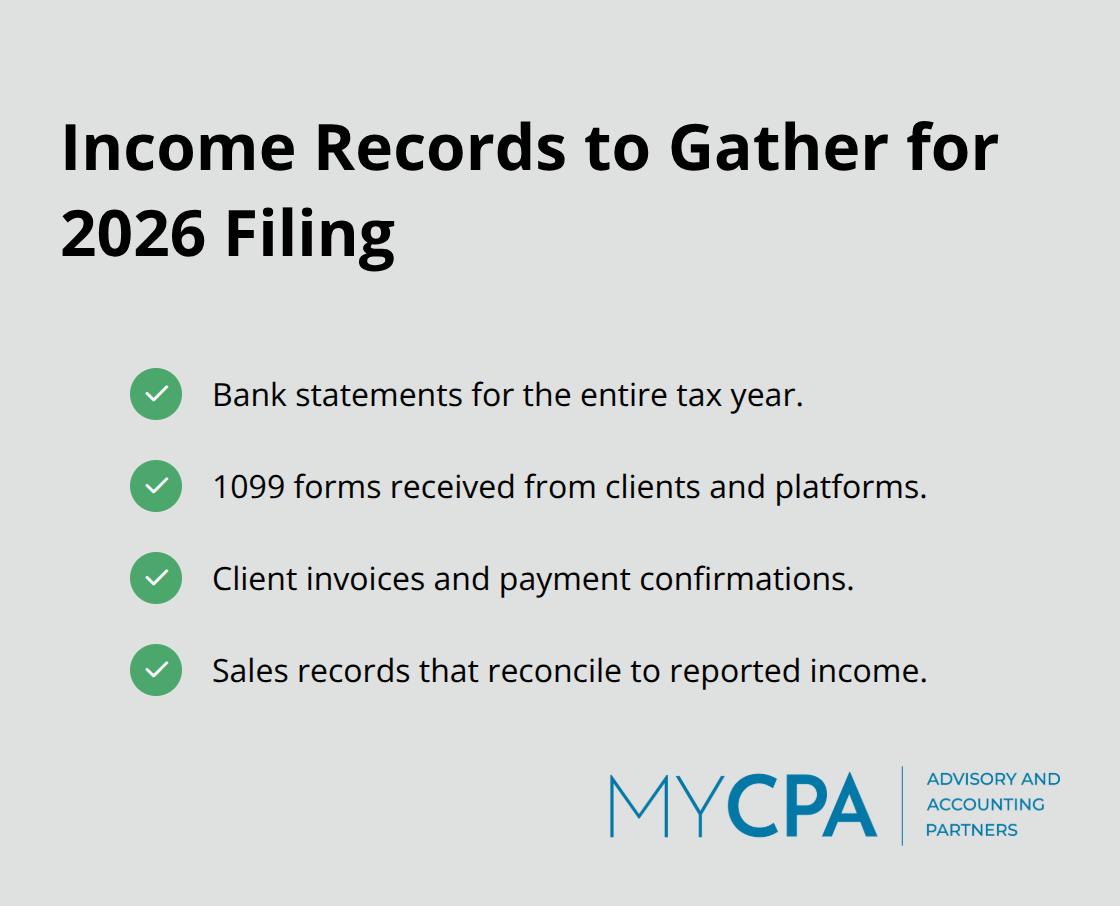
Start with all income records-bank statements, 1099 forms, invoices from clients, and sales records. These must cover the entire tax year and match what you reported on your return.
The IRS uses automated programs and data-matching tools to flag returns for further scrutiny, so mismatches between your reported income and third-party documents like 1099s trigger immediate attention.
If you receive a 1099 that isn’t yours or is incorrect, report it and seek correction rather than ignoring it. This step prevents the IRS from matching your return against incorrect third-party data.
Keep every receipt, invoice, and proof of payment for business expenses you claim. This includes meals, travel, equipment purchases, and supplies. Deductions for business meals, travel, and entertainment require careful documentation, including attendees and business purpose. Employer reimbursements are never deductible, so separate those out. Many business owners lose deductions simply because they can’t produce the receipts when questioned.
Vehicle deductions draw IRS scrutiny more than almost any other expense category. Claiming 100% business use of a vehicle is rare and requires detailed records. The 2026 standard mileage rate of 72.5 cents per mile is up 2.5 cents from 2025. Keep a mileage log showing the date, destination, miles driven, and business purpose of each trip.
If you use the actual expense method instead of standard mileage, maintain records for fuel, maintenance, insurance, and depreciation. The IRS monitors these claims closely because overstatement is common.
For payroll records, maintain documentation for at least four years after the date the tax becomes due or is paid, whichever is later. This includes W-2s issued, payroll tax deposits, and quarterly filings. Self-employment tax records deserve the same attention. The 2026 self-employment tax maximum Social Security earnings rise to $184,500, while Medicare tax remains on all net earnings. Keep detailed records of net business income to calculate your SE tax correctly.
If you have employees, store their W-4 forms, I-9 documents, and any agreements related to compensation or benefits. Store all critical documents in one accessible location-either a physical filing system or a cloud-based platform.
The period of limitations is the window during which the IRS may assess tax. Keeping records organized means you can respond quickly if contacted. Your documentation strategy now directly affects how you handle any future IRS inquiry, which is why the next section covers the specific deadlines and filing requirements that keep you compliant throughout 2026.
April 15, 2026 marks the filing deadline for calendar-year 2025 returns, but this single date masks a much more complex reality. Self-employed professionals and business owners face a staggered calendar of deadlines throughout the year, and missing even one triggers penalties.
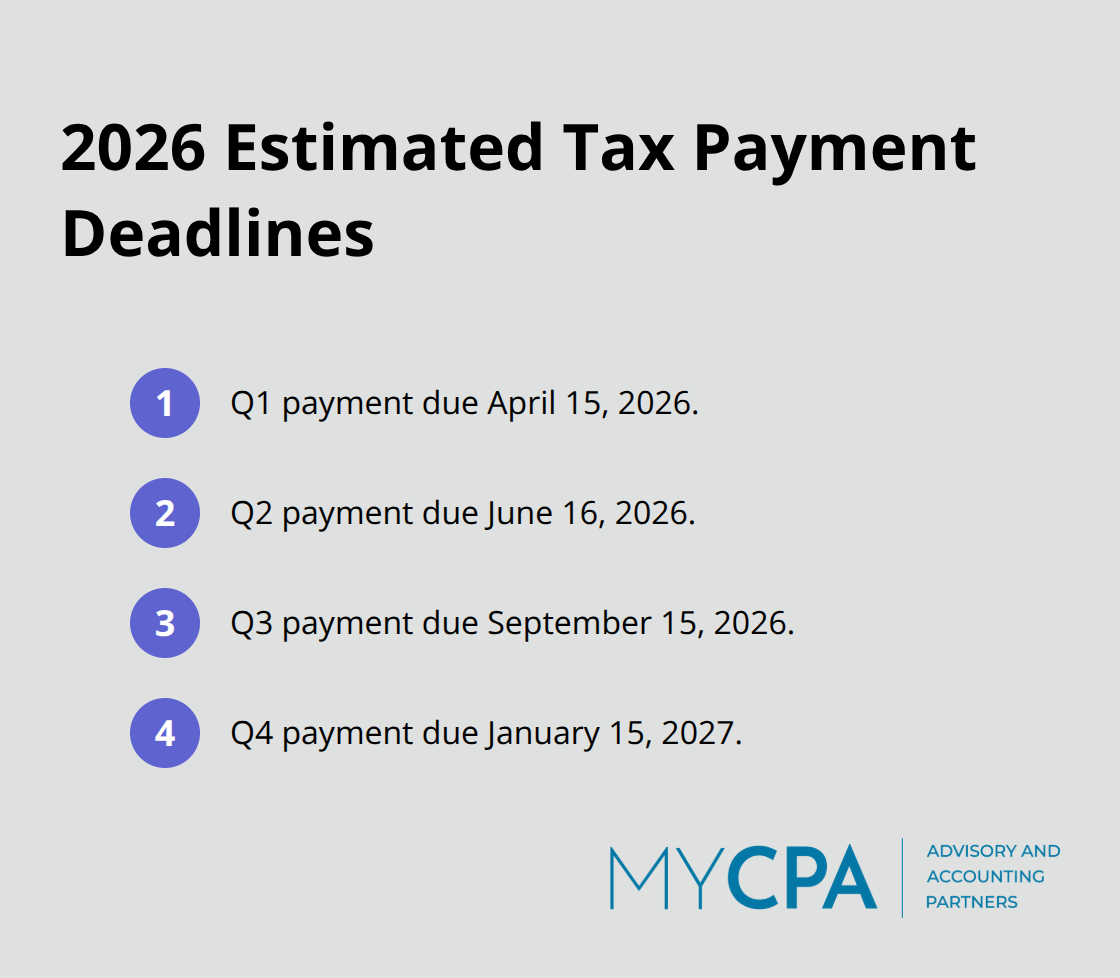
Quarterly estimated tax payments begin the cycle. If you’re self-employed or have significant income not subject to withholding, you must pay estimated taxes on April 15, June 16, September 15, 2026, and January 15, 2027. Missing these dates costs real money in penalties and interest, even if you ultimately owe nothing on April 15.
Calculate your estimated liability based on your 2025 net self-employment income and your expected 2026 income. Use Form 1040-ES to determine the amount. Pay electronically through Direct Pay, EFTPS, or the IRS Online Account for accuracy and speed. Underpayment penalties apply when your total payments fall short of 90% of your 2026 tax or 100% of your 2025 tax liability, whichever is smaller. Many business owners skip this step thinking they’ll reconcile everything at year-end, but the IRS penalizes you regardless of how much you ultimately owe.
State and local tax deadlines vary wildly by jurisdiction, and this variation causes more compliance failures than any federal requirement. Some states follow the federal April 15 deadline, while others have different dates entirely. More critically, sales tax returns demand attention monthly, quarterly, or annually depending on your state and sales volume. Schedule C filers face heightened scrutiny, particularly those with cash-based businesses or loss-making operations. Your state revenue department applies similar scrutiny to sales tax compliance.
If you operate across multiple states, you must file returns in each state where you have nexus, meaning physical presence or economic nexus threshold based on sales thresholds. Florida’s economic nexus threshold is $100,000 in revenue, while Georgia uses either $100,000 in revenue or 200 transactions. End-of-year sales activity often pushes businesses over these thresholds, making a year-end nexus review essential before December 31, 2025 concludes.
File Form 4868 for a six-month extension to October 15, 2026 if you need additional time, but understand that an extension to file is not an extension to pay. Any taxes owed remain due April 15 regardless of your filing extension. Electronic filing through e-file provides higher accuracy and faster refunds, often under 21 days compared to paper processing.
Establish a calendar system now that flags each deadline by mid-month, giving you buffer time to gather documents and submit payments without rushing. This proactive approach prevents the scramble that leads to missed deadlines and costly penalties. With your filing calendar locked in, the next critical step involves identifying and avoiding the tax mistakes that trigger audits in the first place.
The IRS selected fewer than 0.20% of individual returns for audits in 2022, but this statistic misleads many business owners into complacency. The agency directs resources toward higher-income and more complex taxpayers, meaning your risk increases substantially if you operate a business, claim substantial deductions, or file Schedule C. Understanding which mistakes actually trigger scrutiny matters far more than overall audit statistics.
Underreporting income remains the fastest way to land on the IRS radar. The agency matches your reported income against third-party documents like 1099s, W-2s, and bank deposits automatically. If you receive income that doesn’t appear on your return, the IRS catches it through data matching before a human ever reviews your file. Claiming deductions that exceed typical ranges for your income level draws immediate attention.
A Schedule C filer reporting a net loss faces heightened scrutiny, particularly those operating cash-based businesses where income verification proves difficult. The IRS expects most businesses to generate profit eventually, and persistent losses trigger questions about whether you actually run a business or operate a hobby. The distinction matters legally because hobby losses face strict limitations. If you claim a loss on a hobby, the IRS requires proof of reasonable profit expectation and proper records supporting that business intent.
Vehicle deductions generate more audit red flags than almost any other expense category. Claiming 100% business use of a personal vehicle is extremely rare and demands meticulous documentation (including a mileage log with dates, destinations, miles, and business purposes for every trip). Higher claimed percentages demand stronger evidence.
Home office deductions similarly require exclusive and regular business use of a defined space, with documented expenses tracked on Form 8829. Deductions for meals, travel, and entertainment require documentation of attendees and explicit business purpose-employer reimbursements never qualify as deductible expenses.
Math errors and typos trigger automated checks that flag returns for review, so verify all numbers carefully and confirm your Social Security number appears correctly. Claiming inflated deductions without supporting documentation is the fastest path to audit problems. You must maintain records that substantiate every income item, deduction, and credit claimed on your return. The period of limitations typically runs three years from when you file, meaning documentation you gather now protects you for years.
Missing filing deadlines and ignoring penalty notices compounds audit risk exponentially. When the IRS contacts you about a missed deadline or incorrect return, respond promptly and provide requested documentation. Most issues resolve without escalation when you act quickly.
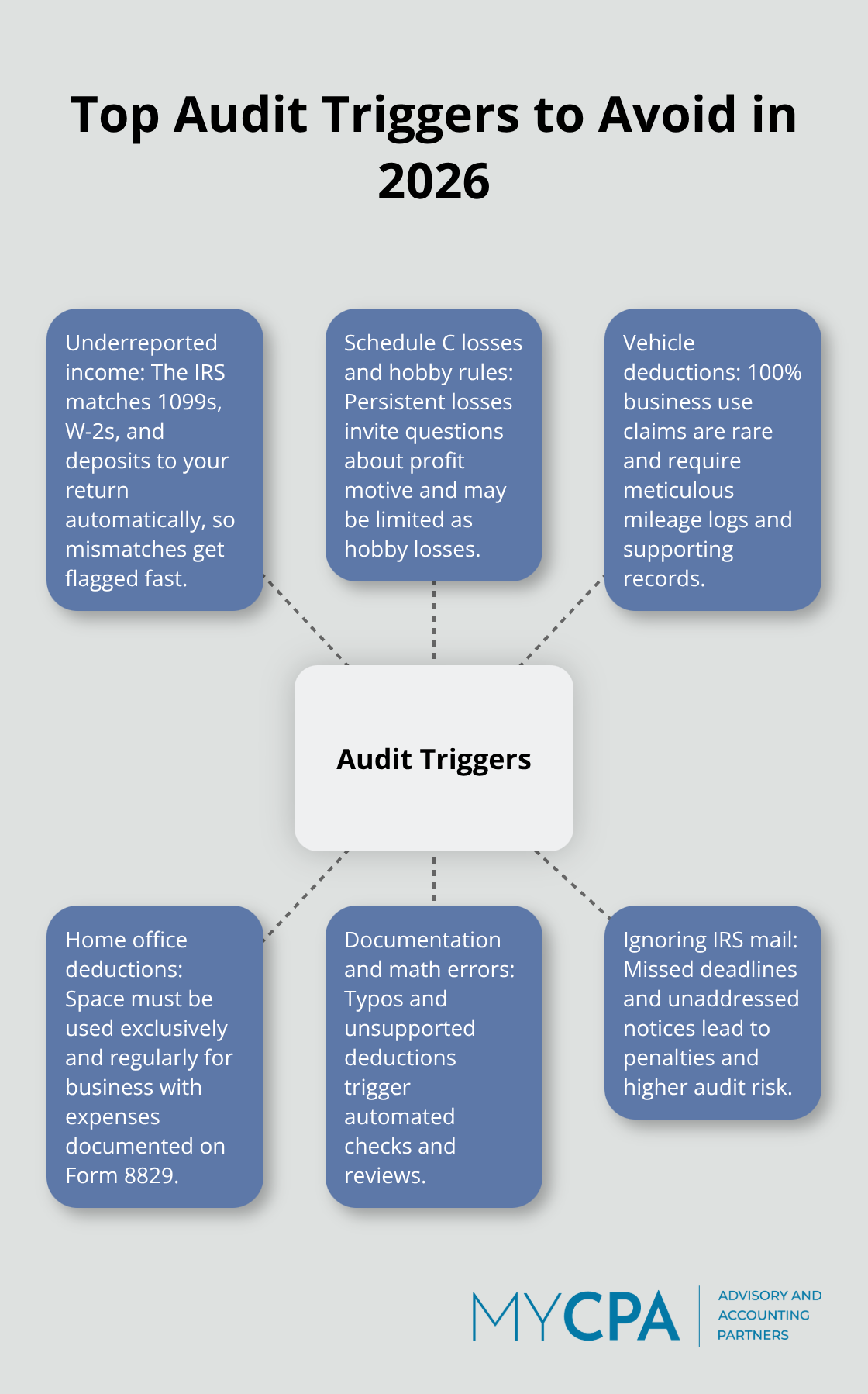
Ignoring IRS correspondence guarantees penalties multiply and audit risk intensifies.
Establish a calendar system that flags each deadline weeks in advance. Automate income and expense tracking throughout the year rather than scrambling in March. Maintain organized files for every receipt, invoice, and payment record supporting your return (this approach prevents the documentation gaps that trigger deeper IRS scrutiny).
Staying audit-ready throughout 2026 requires you to organize your records now, meet every deadline on your calendar, and avoid the documentation gaps that trigger IRS scrutiny. Your tax compliance checklist 2026 protects you far more effectively than hoping the IRS never looks your way, and the IRS increasingly targets business owners and self-employed professionals with complex returns. Your preparation today determines whether you respond to an inquiry with confidence or scramble to reconstruct missing documentation.
When you maintain clean records and track deadlines consistently, tax season becomes manageable rather than chaotic. You spot deduction opportunities you would otherwise miss, calculate estimated payments accurately instead of guessing, and file returns on time without extensions or penalties. This systematic approach frees mental energy and reduces the stress that plagues most business owners during tax season.
Working with a tax professional transforms your compliance efforts from a burden into a strategic advantage. We at My CPA Advisory and Accounting Partners help business owners and individuals minimize tax liabilities while maintaining accurate financial records that withstand IRS scrutiny. Contact us to discuss how tailored tax planning and accounting services fit your 2026 strategy.







Privacy Policy | Terms & Conditions | Powered by Cajabra