
Strategic Business Advisory: Aligning Strategy and Finance
Align your strategy and finance with strategic business advisory insights to drive sustainable growth and profitability for your organization.
Most businesses don’t know if they’re truly tax-compliant until an auditor shows up. Tax compliance reviews let you find problems before the IRS does, saving you money and stress.
We at My CPA Advisory and Accounting Partners help clients catch gaps in their tax positions, documentation, and internal controls. This guide walks you through a self-audit so you can strengthen your readiness and avoid costly mistakes.
A tax compliance review is a structured self-examination of your tax positions, documentation, and processes before an auditor arrives. Unlike a full audit, you control the scope and pace. The IRS audits roughly 0.4% of all tax returns annually, but that statistic masks a harder truth: if you operate a cash-heavy business, misclassify workers, or claim aggressive deductions without solid documentation, your risk climbs significantly. A compliance review forces you to answer the questions an auditor will ask-and it costs far less to fix problems yourself than to defend them under scrutiny.
Most businesses uncover gaps in three predictable areas during these reviews: worker classification records, deduction substantiation, and income reporting accuracy. The IRS flags worker misclassification as a top audit trigger because the consequences are severe. A single reclassification can cost thousands in back taxes, penalties, and interest. Deductions fail when you lack receipts, invoices, or bank statements that prove an expense was ordinary and necessary. Income gaps emerge when cash transactions aren’t recorded consistently or when deposits don’t match reported revenue. These aren’t theoretical problems; they’re the exact issues that trigger assessments.
The financial damage from poor tax compliance extends beyond the tax bill itself. If the IRS discovers unreported income or disallowed deductions, you owe the tax plus interest calculated from the original due date, often compounding over multiple years.
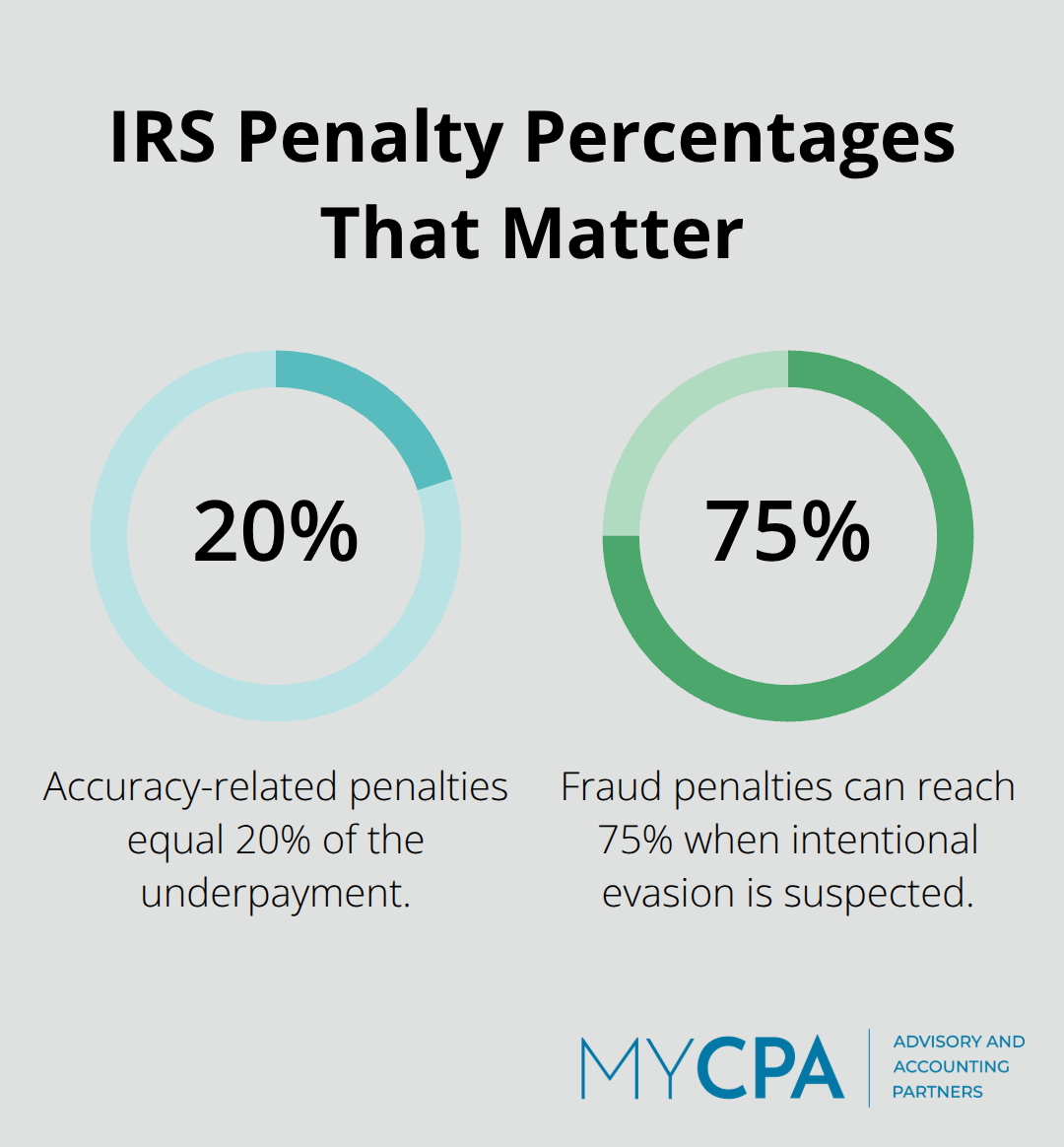
Penalties stack on top: accuracy-related penalties are 20% of the underpayment, and fraud penalties reach 75% if the IRS suspects intentional evasion. The statute of limitations typically runs three years from filing, but extends to six years for substantial errors-meaning the IRS can reach back further if documentation is weak.
Beyond dollars, non-compliance damages your ability to operate. A business with unresolved tax issues struggles to secure loans, hire quality employees, or survive background checks for contracts. Legal consequences also apply: repeated filing failures or payment defaults can trigger wage garnishments, asset liens, or even criminal prosecution in egregious cases. The stress of an audit consumes management time and diverts resources from growth.
Tax compliance works best when you weave it into your everyday systems rather than treat it as a once-a-year task. Implement a point-of-sale system that records every transaction with a timestamp and description-this single step eliminates the income-reporting gaps that plague cash-heavy operations. Use bookkeeping software like QuickBooks to create an automatic audit trail showing who entered each transaction and when. Align your chart of accounts with Schedule C categories so reports map directly to what you file on your tax return.
Schedule quarterly reviews to reconcile software reports with bank statements and catch large or unusual transactions early. For employees, maintain I-9 forms, W-4 withholding elections, timesheets, and payroll adjustments; for independent contractors, keep written contracts and payment records that clearly establish contractor status. Store all receipts and expense documentation digitally, organized by category. The IRS accepts electronic records, and this approach eliminates the chaos of paper filing.
Work with a tax professional to review quarterly results, strengthen documentation, and stay current on IRS priorities. This proactive engagement catches compliance issues before they become audit exposure. A tax advisor helps you identify which deductions apply to your business, validates your worker classifications, and ensures your income reporting matches your actual deposits. The cost of quarterly guidance pales against the expense of fixing problems after an audit begins. With your systems in place and your documentation solid, you’re ready to address the specific areas that auditors scrutinize most closely.
Pull every document you created or received in the past three years. The IRS maintains records for six years if substantial errors exist, so your review window covers this exact period. Open your bookkeeping software and export your general ledger, then print your bank statements month-by-month. Place copies of every invoice you issued, every receipt for business expenses, and your payroll records next to these documents. This physical or digital assembly forces you to see what you actually have versus what an auditor will demand.
Most businesses discover immediately that they lack receipts for certain expense categories, that some transactions lack descriptions, or that cash deposits don’t reconcile cleanly to reported income. This step reveals the exact pressure points you need to address. For cash-heavy operations, this reconciliation is non-negotiable. Run a point-of-sale report showing daily totals, then compare those totals to your bank deposits. If a gap exists, trace it now while you control the narrative rather than waiting for an auditor to flag it.
The IRS requires that every deduction be ordinary and necessary for your business. Pull your top 20 deductions by dollar amount and ask yourself: can you prove this expense with a receipt, invoice, and bank statement? Can you explain why this expense is necessary for your business operations? For home office deductions, measure the square footage of your dedicated workspace and calculate the percentage of your home it occupies. For vehicle expenses, maintain a mileage log showing business versus personal use.
For meals and entertainment, keep receipts showing the date, location, attendees, and business purpose. The IRS scrutinizes these categories heavily because they’re subjective. If you claim $15,000 in meals but your business revenue is $80,000, expect questions. Watch for red flags like dramatic year-over-year expense spikes or deductions that are disproportionately high relative to your income.
Worker classification demands special attention. If you pay individuals as independent contractors, confirm that written contracts exist and clearly state the terms of the engagement. Verify that you don’t control how, when, or where the work happens, because controlling those factors indicates employment rather than contractor status. The IRS flags worker misclassification as a top audit trigger, and a single reclassification can cost thousands in back taxes, penalties, and interest.
Pull your Form 1099 records and cross-check them against your expense ledger to confirm consistency. Ensure that your payment records clearly prove contractor status. For employees, maintain I-9 forms, W-4 withholding elections, timesheets, and payroll adjustments. This documentation protects you if an auditor questions your worker classifications and demonstrates that you applied proper withholding and benefits.
Store all receipts and expense documentation digitally, organized by category. The IRS accepts electronic records, and this approach eliminates the chaos of paper filing. Create a system where each expense category (travel, supplies, utilities, professional services) has its own folder with supporting receipts attached to corresponding ledger entries. This organization allows you to retrieve documentation quickly if an auditor requests it.
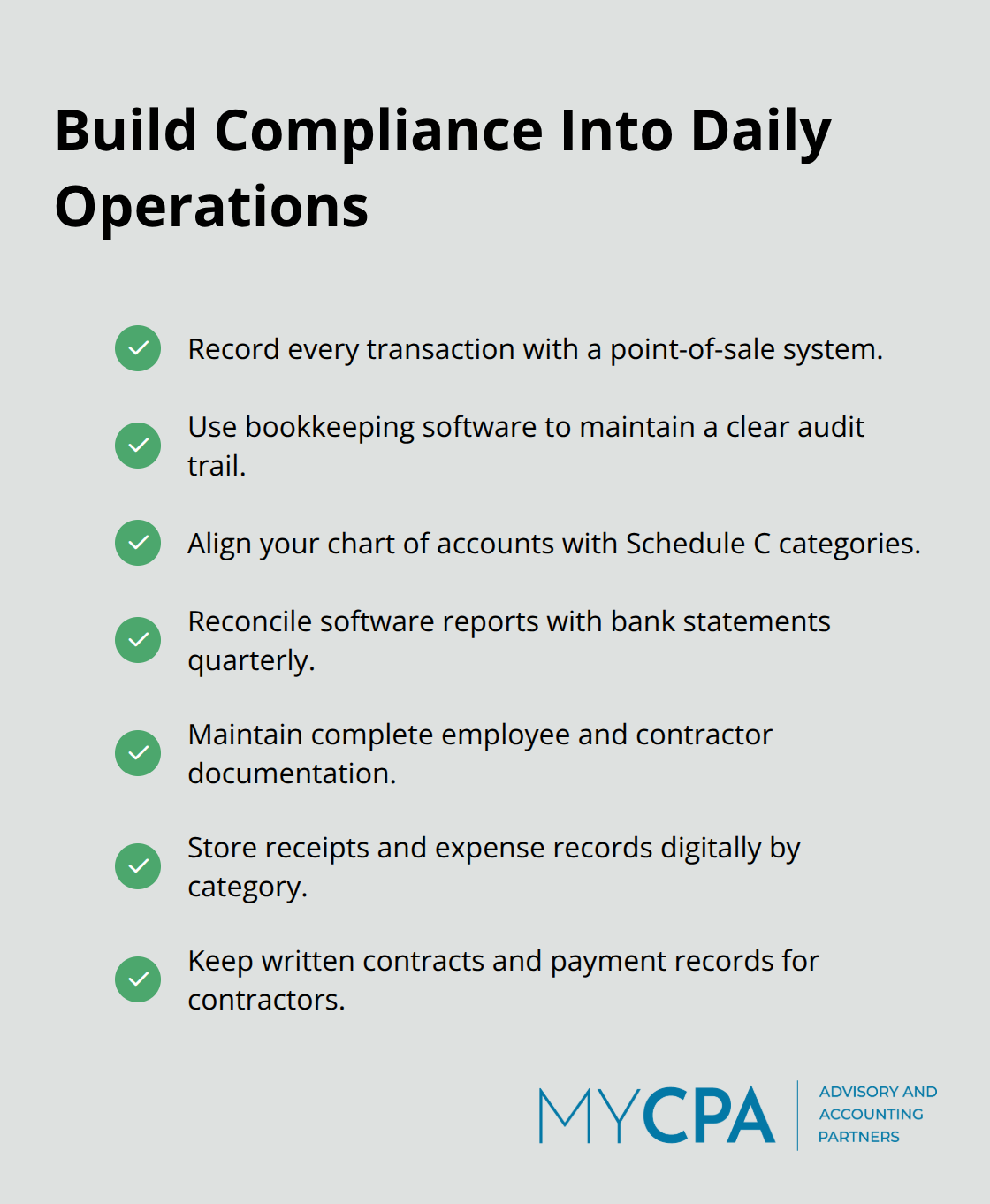
Align your chart of accounts with Schedule C categories so reports map directly to what you file on your tax return. This alignment makes it simple to explain where each deduction appears on your return and to produce supporting documentation on demand. With your documentation organized and your deductions tested, you’re positioned to address the specific compliance areas that require the most attention.
The gap between what you think your records show and what an auditor will actually find often determines whether a review becomes a minor adjustment or a costly battle. Most businesses underestimate this gap until they sit down to organize everything. You need three specific actions before an auditor arrives: consolidate your financial records into an audit-ready format, correct any tax positions that don’t hold up under scrutiny, and install the internal controls that prevent future compliance failures. These aren’t optional refinements-they’re the difference between a clean audit and one that costs thousands in penalties and interest.
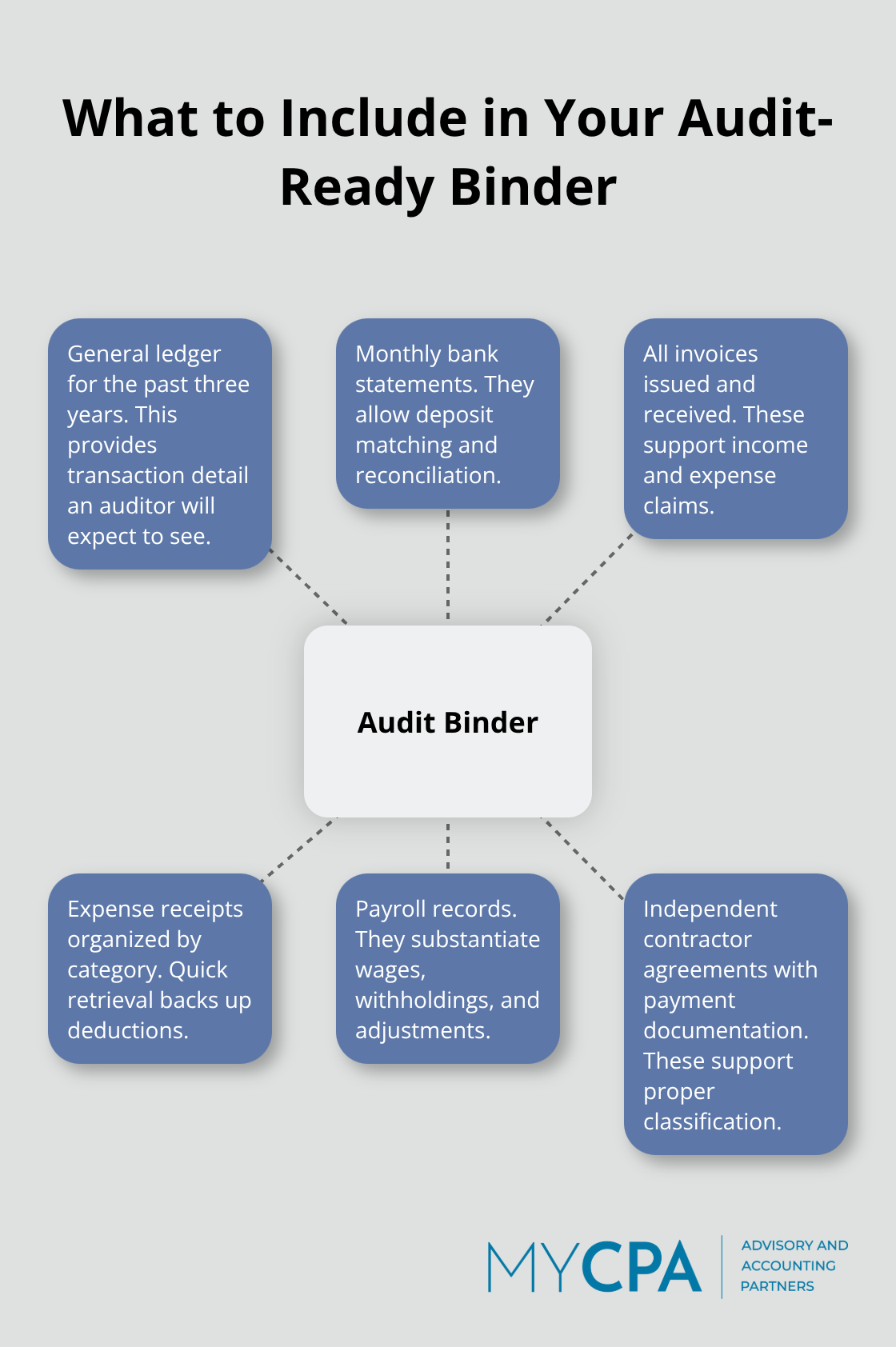
Start with a centralized audit binder that contains your general ledger for the past three years, monthly bank statements, all invoices issued and received, expense receipts organized by category, payroll records, independent contractor agreements with payment documentation, and copies of every tax return you filed. The IRS maintains records for six years if substantial errors exist, so your binder should cover this entire window. Export your bookkeeping software reports showing transaction-level detail with descriptions, dates, and amounts. Many businesses discover that their software reports lack the granularity an auditor needs, so run exports that show the rule ID or category assigned to each transaction.
If you operate a cash-heavy business, pull your point-of-sale reports showing daily totals and reconcile them month-by-month to your bank deposits. Document any gaps with written explanations showing where cash went and why deposits don’t match sales totals. This reconciliation work costs time now but eliminates the income-reporting exposure that auditors target first.
Audit your tax positions for accuracy and defensibility. Pull your most recent return and walk through each deduction, credit, and income item as if an auditor is asking you to prove it. For every deduction over $500, confirm you have a receipt, invoice, and corresponding bank statement showing the payment. Test your largest deduction categories-home office, vehicle, meals, supplies, professional services-against IRS standards.
A home office deduction requires that you use the space exclusively and regularly for business; measure your dedicated workspace and calculate the percentage of your home’s square footage it represents. For vehicle expenses, maintain a mileage log that shows business versus personal use percentages; the IRS expects contemporaneous documentation, not estimates from memory. For business meals, verify that your receipts show the date, location, attendees, and business purpose; the deduction for business meals is generally limited to 50%.
Review your worker classification decisions with particular rigor. Pull your Form 1099 records and confirm that each contractor has a written agreement establishing the terms of engagement, that you don’t control the method or timing of work, and that payment records clearly document contractor status. The IRS ranks worker misclassification as a top audit trigger because reclassification cases generate substantial back taxes, penalties, and interest.
If you classified someone as a contractor but they work exclusively for you, follow your schedule, and use your equipment, reclassify them as an employee immediately and adjust your payroll records. This correction protects you far more than hoping an auditor overlooks the issue.
Address any prior-year tax issues that you’ve been avoiding. If you failed to file a return in a prior year, file it now with an explanation. If you know you underpaid taxes in a previous year, calculate the amount owed, add interest from the original due date, and pay it voluntarily. The IRS Voluntary Disclosure Program allows you to report unpaid or underpaid tax liabilities; after you pay the tax and interest, penalties may be waived if you meet eligibility requirements and the Department hasn’t already contacted you.
Implement internal controls that lock compliance into your operations going forward. Assign a single person ownership of tax compliance and create a written escalation path for issues that arise. Establish a tax calendar with all filing deadlines, extension options, payment timetables, and penalty dates for every jurisdiction where you operate. Conduct quarterly internal tax self-audits using a standardized checklist to identify gaps before external reviews.
Schedule a monthly reconciliation of your bookkeeping software reports with your bank statements; this 30-minute task catches errors before they compound. Require that all expense reimbursements include receipts attached to the ledger entry, and that all payroll adjustments include written documentation explaining the change. For businesses with multiple locations or product lines, implement a process where expense categorization gets reviewed and approved before posting to your general ledger. These controls transform tax compliance from a reactive scramble into a predictable, manageable process that reduces audit exposure and builds confidence in your financial reporting.
A tax compliance review transforms your relationship with the IRS from reactive defense to proactive management. You’ve already eliminated the most damaging compliance gaps when you assemble your documentation, test your deductions, verify worker classifications, and organize your records before an auditor arrives. The work you do now costs far less than fixing problems after an examination begins.
Lock these improvements into your operations permanently through assigned ownership, a written tax calendar, and monthly reconciliations of your bookkeeping software with bank statements. Quarterly internal tax self-audits surface gaps early, require receipts for all expense reimbursements, and document every payroll adjustment in writing so compliance failures don’t recur. These controls demonstrate to auditors that your business takes tax obligations seriously and builds confidence in your financial reporting.
We at My CPA Advisory and Accounting Partners help business owners strengthen their tax positions year-round through personalized financial plans and proactive advice. Start this month by implementing one system: set up your audit binder, schedule your first quarterly review, or contact a tax professional to assess where your biggest gaps exist.








Privacy Policy | Terms & Conditions | Powered by Cajabra