
Tax Compliance Readiness Tips Every Small Enterprise Needs
Prepare your small business for tax season with essential compliance readiness tips. Avoid penalties and stay audit-ready with our practical guidance.
Weak internal controls cost businesses millions in errors, fraud, and compliance failures every year. At My CPA Advisory and Accounting Partners, we’ve seen firsthand how internal controls strengthening transforms accounting operations and protects company assets.
This guide walks you through the most common control gaps, the essential controls every business needs, and exactly how to implement them in your organization.
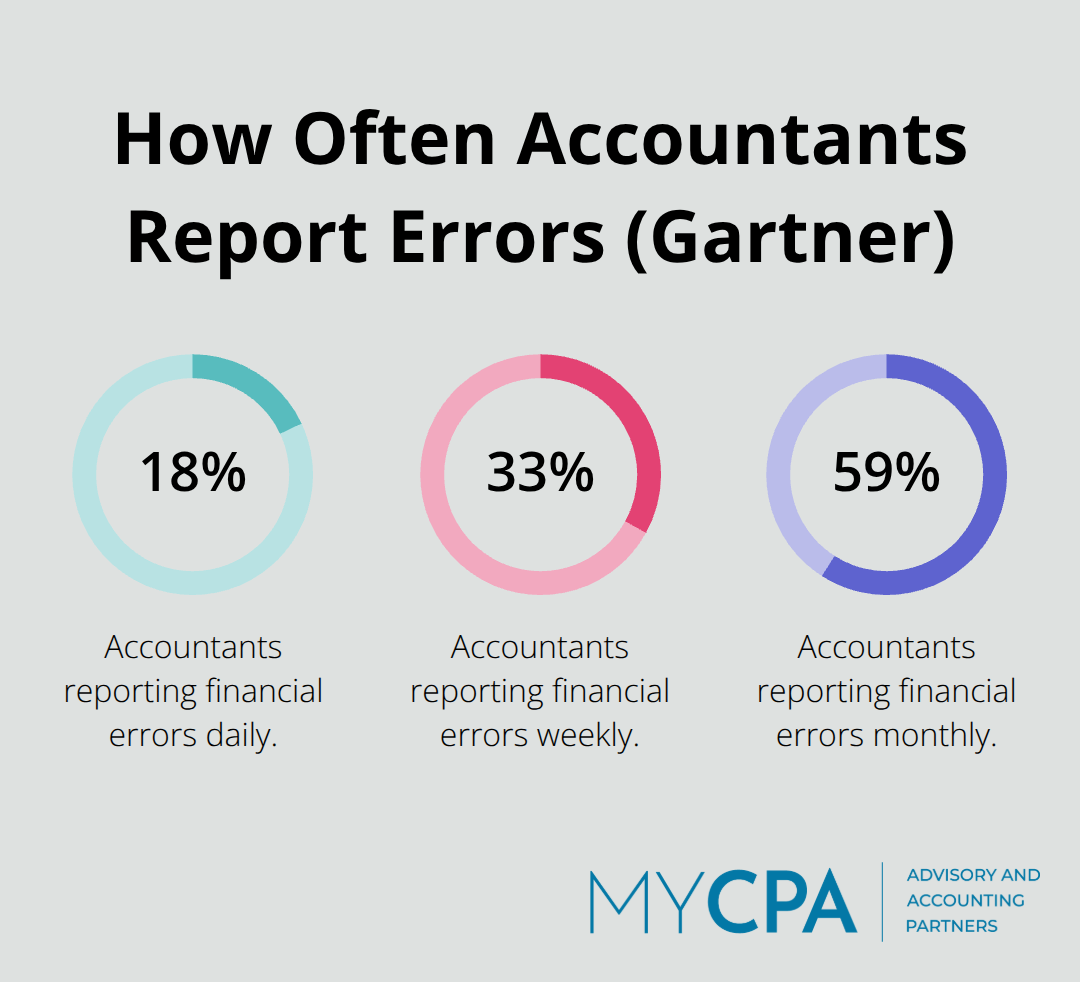
Weak internal controls cost businesses millions in errors, fraud, and compliance failures every year. The most damaging control failures don’t stem from missing software or outdated policies. They come from how responsibilities are distributed and how organizations monitor what actually happens versus what should happen. According to Gartner, 18% of accountants make financial errors daily, 33% weekly, and 59% monthly. These aren’t careless mistakes-they’re symptoms of broken control structures. One person approves their own expenses, another processes payments without verification, a third closes the books without independent review. When duties overlap or concentrate in single hands, fraud becomes invisible until it’s catastrophic.
The SEC’s 2024 enforcement data showed internal control violations drove 58% of their actions, with $8.2 billion in financial remedies. That’s not theoretical risk. That’s real money leaving real companies because controls failed at the execution level.
The problem deepens when organizations can’t prove what happened. Missing documentation means no audit trail. No audit trail means regulators assume the worst. Companies face penalties not because they committed fraud, but because they couldn’t demonstrate they had controls in place to prevent it. Documentation isn’t bureaucracy-it’s your defense mechanism. It proves controls existed and worked. Handwritten notes, email approvals, and verbal authorizations leave no verifiable record. When auditors question what happened, you can’t reconstruct the transaction or explain why decisions were made. This gap alone exposes organizations to regulatory action and reputational damage.
The segregation of duties principle means no single employee should have complete control over a critical process. In practice, many businesses skip this entirely. A bookkeeper initiates a vendor payment, approves it, and reconciles the bank statement. One person controls authorization, execution, and verification. According to the New Jersey Society of CPAs, organizations need a documented duties matrix showing who does what and where potential conflicts exist. Without one, you operate blind. This single point of failure creates opportunity for fraud and masks errors that multiple reviewers would catch.
The third weakness is monitoring that’s too infrequent or too shallow. Monthly reconciliations miss daily fraud. Spot-check reviews catch nothing. Real monitoring happens continuously, with clear escalation paths when variances appear. Organizations that automate reconciliations and implement real-time dashboards catch issues before they become problems. Preventive controls stop bad things from happening. Detective controls find them after they occur. Most businesses obsess over prevention and ignore detection. You need both, with detection running constantly. Automated exception reports flag unusual transactions immediately. Periodic variance analysis compares actual results to expectations and investigates gaps. Physical audits of inventory reveal discrepancies between records and reality. These detective mechanisms cost far less than fraud losses or regulatory penalties.
The tone from leadership matters enormously. When management demonstrates that controls matter, employees comply. When controls are treated as optional, they become invisible. Organizations serious about strengthening internal controls invest in staff training, not just policy documents. Employees need to understand why controls exist and how they protect the company. That knowledge transforms compliance from burden to habit. This cultural foundation determines whether controls function as intended or deteriorate over time. With these weaknesses identified, the next step involves understanding which specific controls address these gaps and how to implement them effectively in your organization.
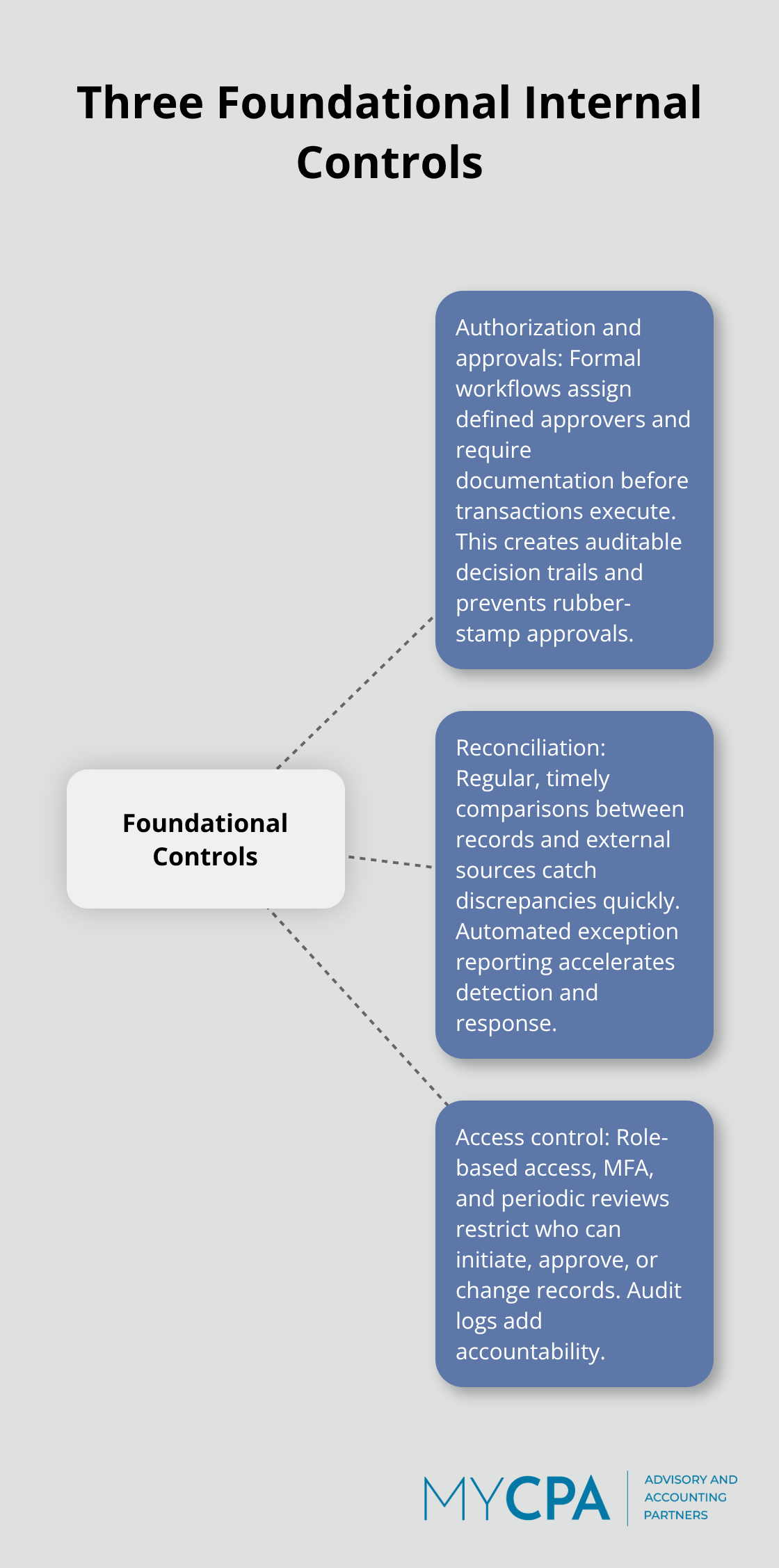
Every organization needs three foundational control mechanisms, and most businesses get at least one of them wrong. The first mechanism is authorization and approval procedures that create documented decision trails. This doesn’t mean email chains or verbal sign-offs. It means formal approval workflows where specific people with defined authority review and authorize transactions before they execute.
Organizations implementing standardized approval workflows experience elevated efficiency, enhanced compliance, and reduced processing costs because the system enforces rules consistently. Without automation, approval processes degrade into rubber stamps. A manager glances at an invoice and clicks approve without verification. The control exists on paper but fails in practice.
Effective authorization procedures require spending limits tied to job roles, mandatory supporting documentation attached to every request, and multi-level approval for high-risk transactions. A $500 purchase order needs one approval. A $50,000 vendor contract needs three. This tiered approach focuses review effort where risk concentrates. Documentation of who approved what and when creates the audit trail that regulators demand. When the SEC investigates, you’ll produce these records and demonstrate controls worked. The second mechanism is reconciliation that happens regularly and catches discrepancies fast.
Monthly reconciliations are too infrequent. Bank reconciliations should happen weekly or daily, comparing your records against the bank statement to identify missing transactions, duplicate entries, or unauthorized activity immediately. Inventory reconciliations need to occur monthly at minimum, with physical counts compared to system records. Accounts receivable aging reports should flag overdue invoices within days, not weeks. Variance analysis goes further by comparing actual results to budgets and investigating gaps exceeding defined thresholds. If actual spending runs 15% above forecast, that variance triggers investigation.
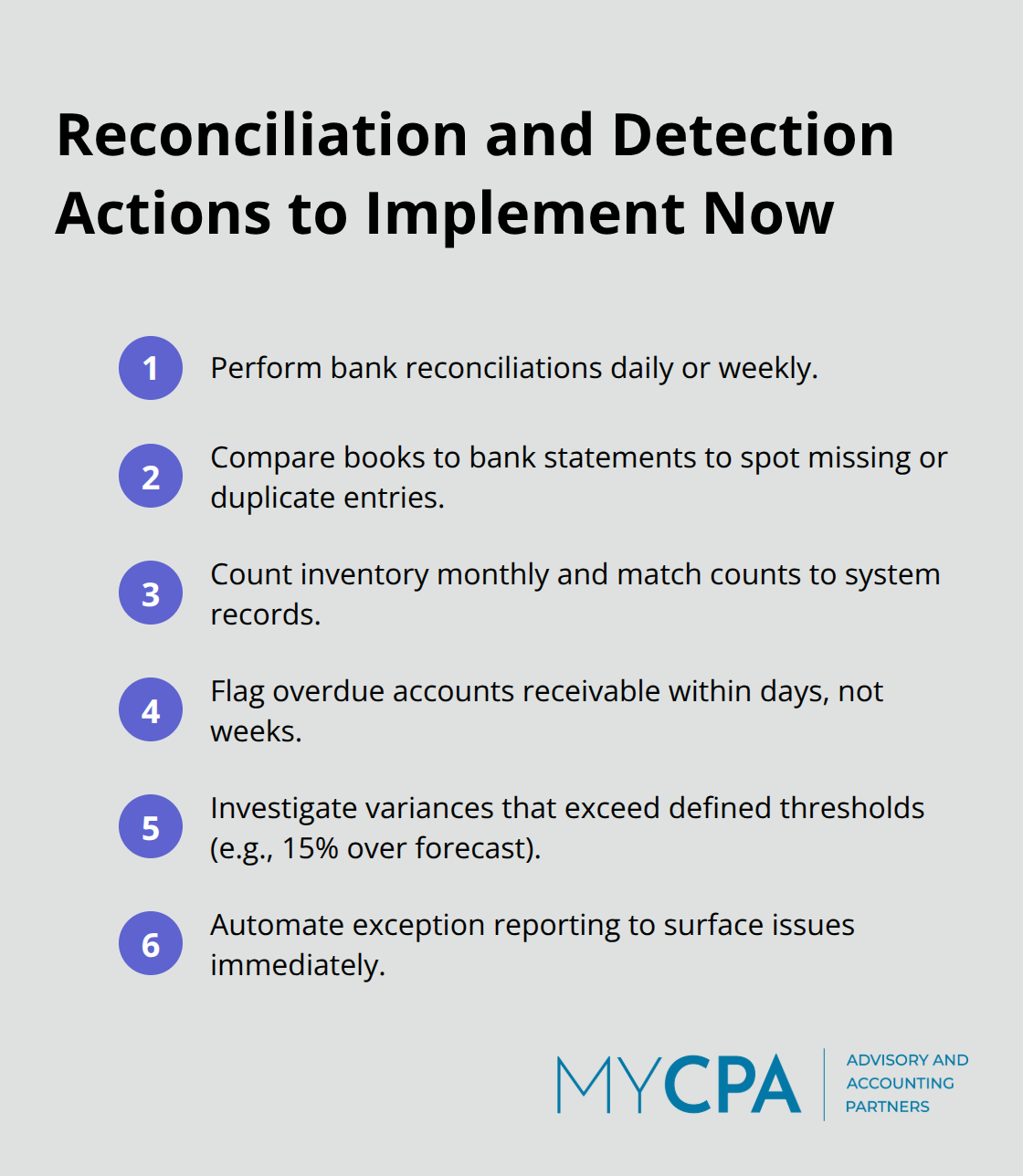
Automated exception reporting flags these variances instantly instead of waiting for monthly close procedures. Organizations using real-time reconciliation enable businesses to identify errors and discrepancies as soon as they occur, allowing for prompt issue resolution and dramatically reducing loss exposure.
The third mechanism is access control, which prevents unauthorized people from initiating transactions or modifying records. This includes physical security like locked filing cabinets and server rooms, but technical controls matter more. Multi-factor authentication prevents password theft from compromising accounts. Role-based access ensures a junior accountant cannot approve payments or modify vendor master records. Periodic access reviews verify that employees still need the system permissions they hold, removing access when people change roles. Audit logs track who accessed what and when, creating accountability. These three controls working together stop most fraud and catch most errors before they reach financial statements. Implementing these mechanisms requires more than selecting tools-it demands careful design tailored to your specific business operations and risk profile.
Start with what you actually do, not what your procedures manual claims you do. Most organizations operate differently than their documented processes suggest. A risk assessment identifies where money moves, where decisions happen, and where errors or fraud could hide. Walk through your accounts payable process step by step: who receives the invoice, who enters it into the system, who approves payment, who reconciles the bank statement. Write down the actual person performing each task, not the job title. You’ll immediately spot where one person controls multiple steps.
According to the New Jersey Society of CPAs, a documented duties matrix showing who performs what functions reveals conflicts that create fraud risk. This matrix becomes your control foundation. Without it, you operate blind to your own vulnerabilities.
Compare your current controls against what should exist. Gap analysis isn’t complex. List every critical transaction type in your business: expense payments, revenue collection, payroll, inventory movement, journal entries. For each one, identify which control mechanisms exist and which are missing. Do you have approval workflows? Are they actually enforced or just suggested? Do reconciliations happen on schedule? Does someone independent verify results?
This comparison shows exactly where to invest control resources. Most businesses don’t have unlimited budgets, so prioritize gaps in high-risk areas. A missing approval control on $2 million in annual spending matters far more than a gap on a $50,000 process. Organizations often waste resources controlling low-risk activities while leaving major exposure unaddressed.
Designing controls that fit your business means rejecting one-size-fits-all templates. A manufacturing company with complex inventory doesn’t need the same expense approval structure as a service firm. A business with ten employees requires different controls than one with 500. Right-sizing controls prevents them from becoming burdensome enough that people circumvent them.
The Federal Managers Financial Integrity Act guides federal agencies through this process, and their framework applies equally to private organizations: define objectives, assess risks, design activities to mitigate those risks, then communicate expectations and monitor execution. This structured approach prevents controls from becoming arbitrary or excessive.
Staff training transforms controls from rules into shared responsibility. When employees understand that controls protect their paychecks and the company’s viability, compliance becomes automatic. Gartner research shows 18% of accountants make errors daily, yet most errors stem from unclear expectations rather than incompetence. Training should cover why specific controls exist, what each person’s role involves, and what happens when controls fail.
New hire onboarding must include control procedures before they access systems. Annual refresher training keeps controls top-of-mind as staff turnover occurs. Leadership sets the tone. When executives follow approval procedures rather than overriding them, when management investigates variances instead of dismissing them, when the CFO personally signs off on high-risk transactions, employees take controls seriously. Conversely, when leadership treats controls as optional, employees follow suit.
Organizations serious about strengthening internal controls establish clear escalation paths for control failures and actually use them. Someone finds a missing approval? They report it immediately, not months later during audit. Variance analysis reveals unusual activity? It gets investigated within days. This responsiveness demonstrates that controls matter. When people see that control violations trigger investigation and correction, they stop treating controls as suggestions and start treating them as requirements.
Strong internal controls deliver measurable results that protect your assets and reputation. Organizations that implement segregation of duties, regular reconciliations, and access controls experience fewer audit deficiencies, lower compliance costs, and faster response times to emerging risks. The SEC’s 2024 data proves this matters: internal control violations drove 58% of enforcement actions, resulting in $8.2 billion in financial remedies.
Internal controls strengthening requires ongoing monitoring, staff training, and periodic reassessment as your business evolves. Start by mapping your actual processes, not your procedures manual, and identify where one person controls multiple steps in critical transactions. Document a duties matrix showing who performs what functions, then compare your current controls against what should exist based on your risk profile and prioritize gaps in high-risk areas where significant money moves.
When employees understand why controls exist and how they protect the company, compliance becomes automatic rather than forced. Leadership sets the tone by following approval procedures instead of overriding them and investigating variances instead of dismissing them. We at My CPA Advisory and Accounting Partners offer tailored financial services including accounting services, QuickBooks expertise, and business advisory consulting designed to strengthen your control environment-contact us today to begin your internal controls strengthening journey.








Privacy Policy | Terms & Conditions | Powered by Cajabra