
Tax Compliance Guidelines: A Clear Path to Peace of Mind
Follow tax compliance guidelines to reduce audit risk, avoid penalties, and gain financial confidence today.
Tax compliance mistakes cost business owners thousands of dollars every year. Many don’t realize they’re breaking rules until the IRS shows up at their door.
We at My CPA Advisory and Accounting Partners have seen it all-misclassified workers, missed deadlines, lost deductions. This guide walks you through tax compliance guidelines that actually work, so you can stop worrying and start building real wealth.
The IRS categorizes worker misclassification as a top enforcement priority. When you classify an employee as an independent contractor, you avoid payroll taxes, Social Security contributions, and Medicare payments. The IRS catches these errors regularly, and penalties run steep. A business that misclassifies just one employee faces back taxes, penalties of 20 to 40 percent of unpaid employment taxes, and potential criminal charges if the IRS determines willful misconduct.
The test isn’t what you call someone-it’s whether you control how, when, and where they work. If you set hours, provide equipment, and direct daily tasks, that person qualifies as an employee. Getting this right from day one matters because fixing it later costs far more than doing it correctly upfront.
Failing to track deductible expenses represents the second major drain on business profits. Small business owners leave unclaimed deductions annually. Home office expenses, vehicle mileage, software subscriptions, professional development, and meals with clients all qualify-but only if you document them.
The IRS requires contemporaneous written evidence, which means receipts, mileage logs, and records created at the time of the expense. Spreadsheets updated months later don’t hold up during an audit. This documentation gap represents money you earned but never claimed.
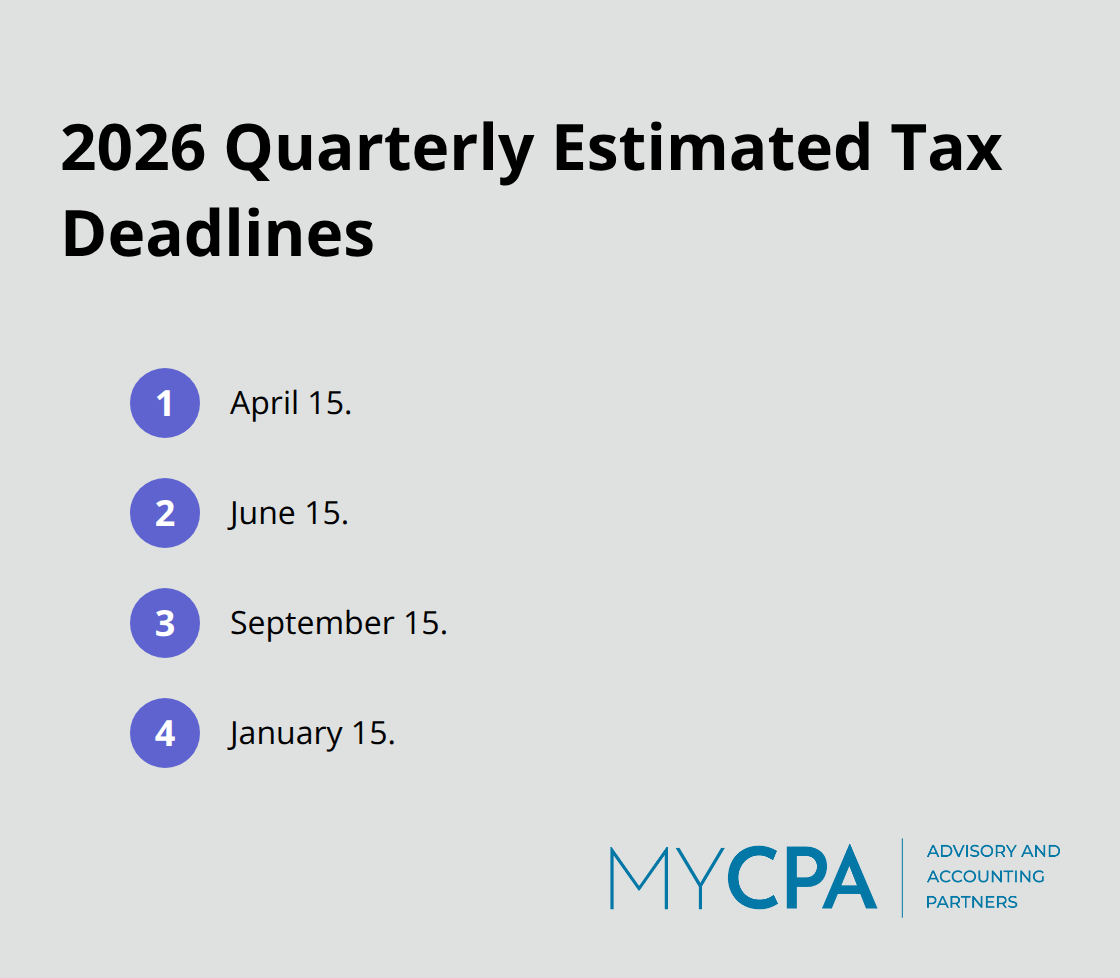
Missing quarterly estimated tax payments compounds these problems significantly. Self-employed individuals and S-corp owners who skip quarterly taxes face underpayment penalties that accumulate throughout the year. The 2026 quarterly deadlines fall on April 15, June 15, September 15, and January 15, and underpayment penalties currently run around 8 percent annually.
Many business owners underestimate their tax liability or simply forget these deadlines exist, then scramble to pay massive lump sums in April. Setting up automatic calendar reminders and calculating the correct quarterly amount with a tax professional prevents this expensive mistake entirely. Getting ahead of these three mistakes positions you to move into building a tax compliance strategy that actually protects your bottom line.
Federal tax deadlines in 2026 demand immediate attention, and missing them costs significantly more than paying on time. The IRS filing deadline for most businesses remains April 15, 2026, but the real pressure starts earlier. Corporations must file Form 1120 by that date, S-corps and partnerships need their returns submitted by March 15, 2026, and sole proprietors file Schedule C with their personal return on April 15. The penalty for late filing runs 5 percent per month of unpaid taxes, capped at 25 percent total, which means a three-month delay on a $10,000 tax bill costs $1,500 in penalties alone.
Documentation requirements matter more than most business owners realize. The IRS expects detailed records supporting every deduction, income source, and credit claimed. Bank statements, invoices, contracts, and contemporaneous written evidence must be organized and accessible. Many businesses discover during an audit that they cannot substantiate claimed deductions because records scattered across email, notebooks, and random files lack the organization needed to prove legitimacy.
State and local tax obligations add significant complexity onto federal requirements. Depending on your location and business structure, you may owe state income tax, franchise tax, sales tax, and local business tax. States like California, New York, and Texas each impose different filing dates and documentation standards. A business operating in multiple states faces separate quarterly filing deadlines for each jurisdiction.
Sales tax alone creates monthly, quarterly, or annual filing obligations depending on your state, and missing these deadlines triggers penalties that compound quickly. The variation across jurisdictions means that what works in one state fails in another, requiring careful attention to each location where you conduct business.
Payroll tax responsibilities represent the third major compliance requirement that business owners frequently mishandle. Federal payroll taxes must be deposited according to a schedule determined by your total tax liability. The IRS classifies employers as either monthly or semi-weekly depositors, and the distinction matters significantly. Semi-weekly depositors must submit payroll taxes within three business days of the pay period ending, while monthly depositors have until the 15th of the following month.
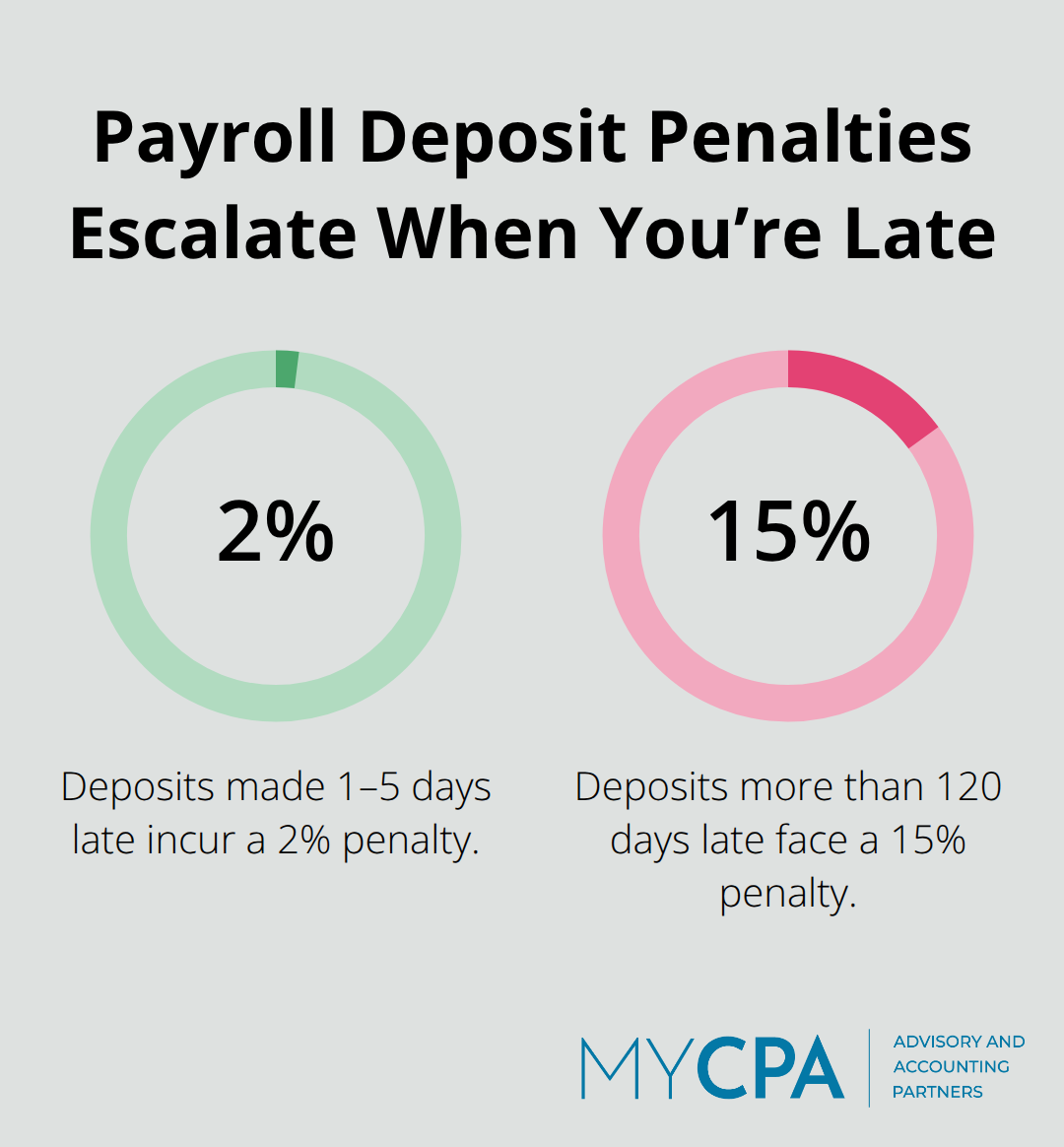
Failing to deposit these taxes on schedule triggers penalties starting at 2 percent for deposits made one to five days late, escalating to 15 percent for deposits more than 120 days late. State unemployment insurance taxes add another layer, with rates varying by state and industry classification.
Establishing a payroll tax calendar before your first employee starts work prevents the scramble that leads to costly mistakes. Marking these deadlines in your business accounting system keeps compliance on track throughout the year rather than treating tax obligations as an April problem. Many business owners treat tax compliance as something to handle once annually when it actually requires consistent attention and action every quarter.
The difference between business owners who stress about taxes and those who sleep soundly comes down to one thing: systems. Not spreadsheets you update occasionally or folders you organize when panic sets in. Real systems mean your financial records stay organized automatically, you know exactly what you owe before the IRS sends a notice, and tax deadlines never surprise you.
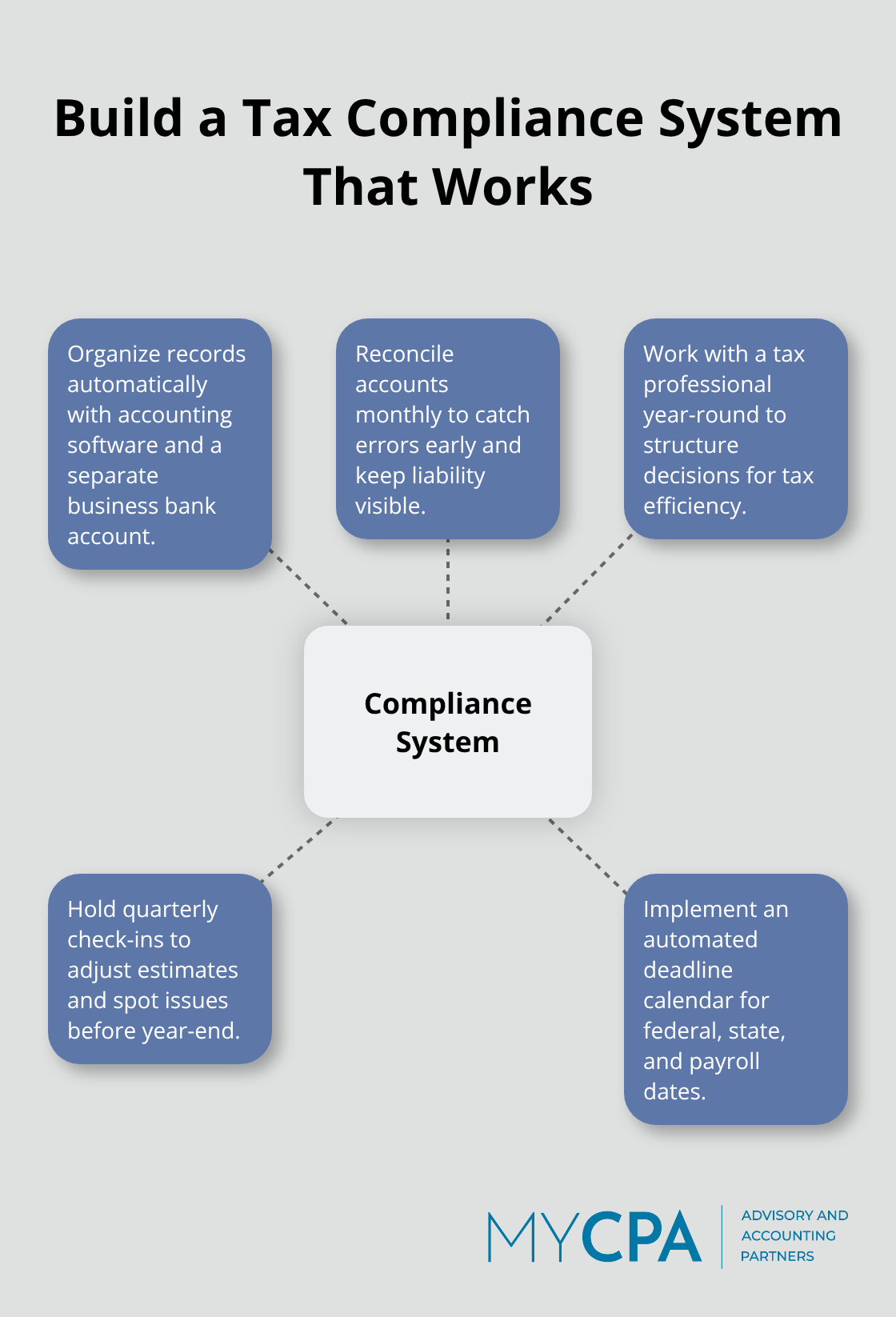
Start organizing from day one because fixing messy records later costs far more than doing it right upfront. Open a separate business bank account immediately and use accounting software like QuickBooks to categorize transactions as they happen. The IRS expects businesses to maintain records for at least three years, and software-generated records with timestamps hold up far better during audits than reconstructed files from years later.
Assign someone on your team to reconcile accounts monthly rather than waiting until December. This monthly habit catches errors early, prevents duplicate entries, and keeps your actual tax liability visible throughout the year instead of discovering surprises in April.
Working with a tax professional year-round beats the April scramble every single time. Most business owners consult a CPA only when filing season arrives, which means they miss opportunities to reduce taxes legally and make expensive mistakes that could have been prevented. A tax professional tracks regulatory changes affecting your business, identifies deductions you didn’t know existed, and structures business decisions for tax efficiency before you implement them.
Quarterly check-ins with a tax advisor allow you to review financial performance, discuss upcoming business decisions, and adjust your estimated tax payments if income patterns shift. These conversations cost far less than penalties from underpayment or the hours spent defending audit positions later. Set up a dedicated email folder where you send your tax professional receipts, invoices, and tax-related documents throughout the year so everything arrives organized when filing time comes.
Implement a tax deadline calendar in your accounting system and set automated reminders two weeks before each deadline. Mark federal quarterly estimated tax dates, state filing deadlines specific to your location, payroll tax deposit schedules, and annual filing dates. This calendar transforms tax obligations from chaos into predictable quarterly and annual checkpoints you handle methodically.
The calendar approach (combined with your accounting software) eliminates the scramble that leads to missed payments and penalties. Your team knows exactly when action is required, and nothing falls through the cracks because deadlines appear in your system automatically. This proactive approach keeps compliance on track throughout the year rather than treating tax obligations as an April problem.
Tax compliance guidelines don’t have to feel overwhelming. The three mistakes we covered-misclassifying workers, failing to track expenses, and missing quarterly payments-are entirely preventable with the right approach. Business owners who implement systems from day one, organize financial records consistently, and work with a tax professional year-round avoid the costly penalties and stress that plague those who treat taxes as an afterthought.
Proactive tax planning transforms your relationship with compliance. Instead of scrambling in April or dreading IRS notices, you gain visibility into your actual tax liability throughout the year. Quarterly check-ins with a tax advisor catch problems early, identify deductions you’d otherwise miss, and allow you to adjust your strategy before year-end (which protects your bottom line and gives you genuine peace of mind).
We at My CPA Advisory and Accounting Partners understand that tax compliance requires more than just filing forms on time. Visit My CPA Advisory and Accounting Partners to discuss how we can support your compliance efforts and help you keep more of what you earn.








Privacy Policy | Terms & Conditions | Powered by Cajabra