
Tax Compliance for Startups: Building a Strong Foundation
Build a strong tax foundation for your startup with essential compliance steps, deadlines, and practical strategies to avoid costly mistakes.
Starting a business means juggling countless responsibilities, and tax compliance for startups often gets pushed to the back burner. The truth is, getting your tax foundation right from day one saves you money, headaches, and potential penalties down the road.
We at My CPA Advisory and Accounting Partners have seen firsthand how early tax planning separates thriving startups from those struggling with avoidable mistakes. This guide walks you through the essential obligations, smart strategies, and common pitfalls you need to know about.
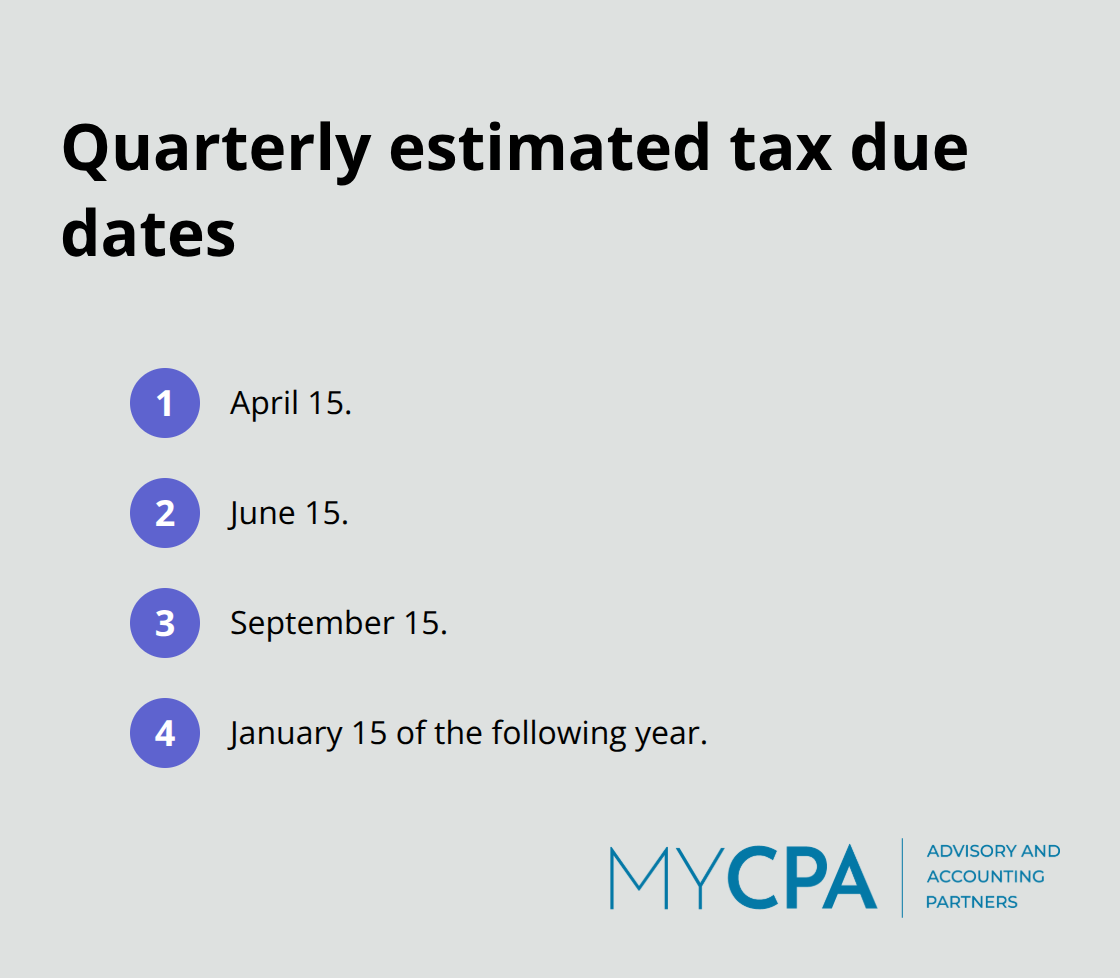
The IRS requires you to obtain an Employer Identification Number within days of forming your business, and this single document becomes your tax ID for nearly every filing and banking task ahead. Federal income tax obligations start immediately, even if you haven’t earned significant revenue yet. The IRS expects self-employed individuals and business owners to file quarterly estimated tax payments, with deadlines falling on April 15, June 15, September 15, and January 15 of the following year.
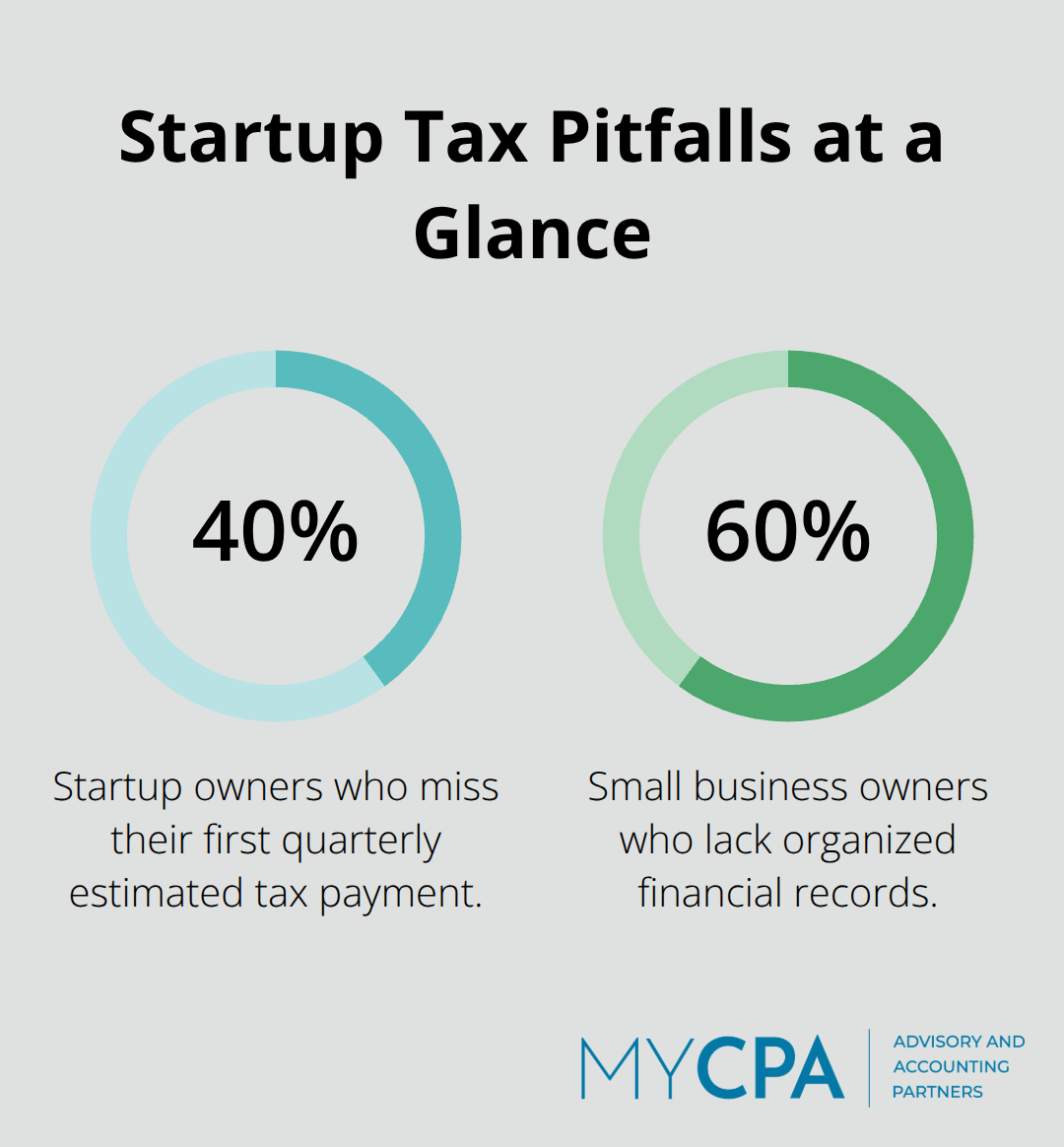
According to the National Federation of Independent Business, roughly 40% of startup owners miss their first quarterly payment simply because they didn’t realize the requirement existed. This oversight triggers penalties and interest that compound quickly, so marking these dates in your calendar now prevents costly surprises.
State and local tax registrations vary dramatically depending on your location and industry, but most states require sales tax permits if you sell physical products or taxable services. Some states, including Texas, have no state income tax, while others like California impose strict filing requirements on every business regardless of size.
Employment tax responsibilities kick in the moment you hire your first employee, requiring you to withhold federal income tax, Social Security, and Medicare contributions from their wages. The IRS pursues small businesses for payroll tax violations, making compliance essential from day one.
Your Employer Identification Number serves as your business’s Social Security number with the IRS, and you need it before opening a business bank account, hiring employees, or filing most tax forms. You can obtain an EIN free from the IRS website in minutes, or contact a tax professional if you prefer guidance through the process.
State registrations require separate applications in most cases, and timelines vary from same-day approval in some states to several weeks in others. Many startup owners underestimate how long state registration takes and miss filing deadlines that trigger automatic penalties.
Quarterly estimated tax payments represent your self-employment or business income taxes spread across the year, and the IRS expects these payments whether or not you’ve actually earned the projected income. Missing even one quarterly payment generates penalties that compound with interest charges.
To calculate your estimated tax liability, take your projected annual income, subtract anticipated deductions, and multiply by your effective tax rate (then divide by four for each quarterly payment). This approach keeps you aligned with IRS expectations and prevents the accumulation of penalties that catch many startup owners off guard.
Your state and local tax picture depends heavily on where you operate and what you sell. Sales tax applies in most states when you sell physical products or certain services, and you must register for a sales tax permit before collecting from customers. Some jurisdictions impose gross receipts taxes or franchise taxes on all businesses, regardless of profitability, so research your specific state requirements early.
Understanding these obligations now positions you to move forward with confidence into building a tax strategy that actually works for your business.
The business structure you select determines how much you pay in taxes, what paperwork you file, and your personal liability exposure. Sole proprietorships and partnerships offer simplicity but expose your personal assets to business debts, while S-corporations and LLCs provide liability protection and often reduce self-employment taxes. According to the Small Business Administration, about 23 million small businesses operate as sole proprietorships, but many would save money with a different structure once revenue grows.
An S-corporation election can save you 15.3% in self-employment taxes on profits above reasonable salary levels, though it requires more administrative work and quarterly filings. The choice matters most when your startup reaches $60,000 to $80,000 in annual profit, which is when structure optimization typically pays for itself. You should evaluate your structure annually as your business scales, since what works at startup stage rarely remains optimal after two or three years of growth.
Record-keeping determines whether you can actually prove your deductions when the IRS questions your return. The National Small Business Association found that 60% of small business owners lack organized financial records, making them vulnerable to audits and penalty assessments they could have avoided. You need systems that capture every business expense, income source, and payroll transaction in real time, not scattered receipts organized months later.
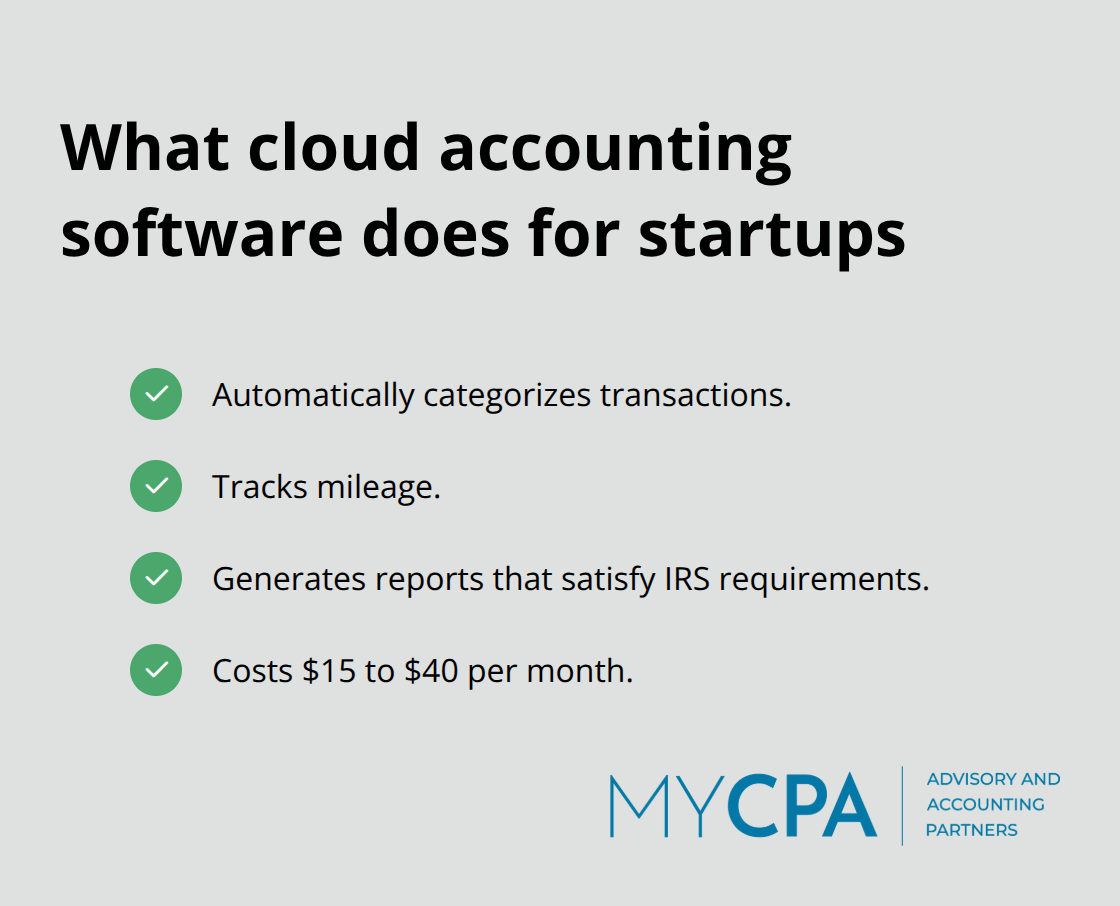
Cloud-based accounting software like QuickBooks or Xero costs $15 to $40 monthly and automatically categorizes transactions, tracks mileage, and generates reports that satisfy IRS requirements. You must separate business and personal finances completely-mixing them creates tax nightmares and invites auditor scrutiny.
Many startup owners resist hiring a tax professional early, thinking they’ll save money, but this false economy costs them thousands in missed deductions and penalty avoidance. A qualified tax advisor establishes systems that protect you during your first year, identifies deductions you’d otherwise miss, and provides confidence that your foundation is genuinely solid. This proactive engagement positions you to handle the tax mistakes that commonly plague growing startups.
The IRS classifies workers as either employees or independent contractors, and this single decision triggers massive tax consequences for your startup. The misclassification issue hits startups hardest because the stakes are genuinely punishing-the Department of Labor and IRS pursue worker classification violations aggressively, and penalties can reach 40% of unpaid employment taxes plus interest going back multiple years.
The IRS uses the economic reality test, examining factors like control over work, investment in equipment, and permanence of the relationship to determine classification status. If you direct how someone works, provide their tools and materials, and maintain an ongoing relationship with them, they’re almost certainly employees requiring payroll tax withholding and unemployment insurance contributions. Many startups incorrectly classify workers as contractors to avoid payroll complexity, but this gamble destroys your financial position when audited. The correct approach means accepting payroll administration costs upfront rather than facing catastrophic penalties later.
Your quarterly estimated tax payments represent your self-employment or business income taxes spread across the year, and the IRS expects these payments whether or not you’ve actually earned the projected income. Startup owners frequently calculate estimates based on optimistic revenue projections rather than realistic cash flow, then face massive tax bills when actual earnings exceed predictions.
You need to recalculate quarterly estimates based on year-to-date performance, adjusting downward if revenue disappoints or upward if it exceeds expectations. This prevents the common scenario where January arrives and you discover a tax liability you cannot immediately pay. Underestimating your income to reduce payments creates a dangerous gap between what you owe and what you’ve set aside.
Failing to track deductible business expenses represents the third catastrophe that undermines startup tax positions. The IRS allows deductions for ordinary and necessary business expenses, yet many startup owners claim far fewer deductions than they’re entitled to simply because they lack documentation. Home office deductions, vehicle mileage, software subscriptions, professional development, and client entertainment all qualify for deductions when properly documented and directly tied to business operations.
You must capture receipts and maintain records contemporaneously-reconstructing expenses months later invites disputes and disallowed deductions. The actual cost of poor tracking becomes visible when comparing two identical startups where one owner deducts $12,000 in legitimate expenses annually while the other claims nothing due to disorganization. Over five years, organized tracking saves that business owner approximately $3,000 to $4,500 in taxes depending on their tax bracket.
Cloud-based accounting software like QuickBooks or Xero eliminates the excuse of disorganization by automatically capturing transactions and categorizing expenses if you maintain consistent discipline. The discipline matters more than the tool-even spreadsheet-based tracking outperforms scattered receipts in a shoebox. Establishing these systems correctly during the formation stage prevents the scrambling and penalties that catch unprepared business owners.
Tax compliance for startups shapes your business’s financial health from day one, and the systems you establish now prevent costly mistakes that compound into expensive penalties. Successful startup owners treat tax planning as a strategic business function rather than an annual obligation, recognizing that proactive engagement with tax professionals during formation costs far less than reactive problem-solving after errors accumulate. This approach gives you confidence that your financial foundation remains solid as you scale.
Your next step involves establishing the systems and partnerships that support sustainable growth without tax complications holding you back. We at My CPA Advisory and Accounting Partners specialize in helping startups build tax-efficient operations through tailored tax services, accurate accounting, and personalized business advisory that adapts as your business evolves. Contact us to learn how we can support your startup’s financial success and keep your tax compliance for startups on track.








Privacy Policy | Terms & Conditions | Powered by Cajabra