
Scale Smart: ‘Growth planning for startups’ To Accelerate Traction
Plan your startup's growth with actionable strategies to accelerate traction and scale sustainably from day one.
Most startups fail not because they lack ambition, but because they scale without a plan. Growth planning for startups separates companies that hit their targets from those that burn cash and miss opportunities.
At My CPA Advisory and Accounting Partners, we’ve seen firsthand how the right growth strategy transforms early-stage businesses. This guide walks you through a proven framework to accelerate traction while building a foundation that actually holds.
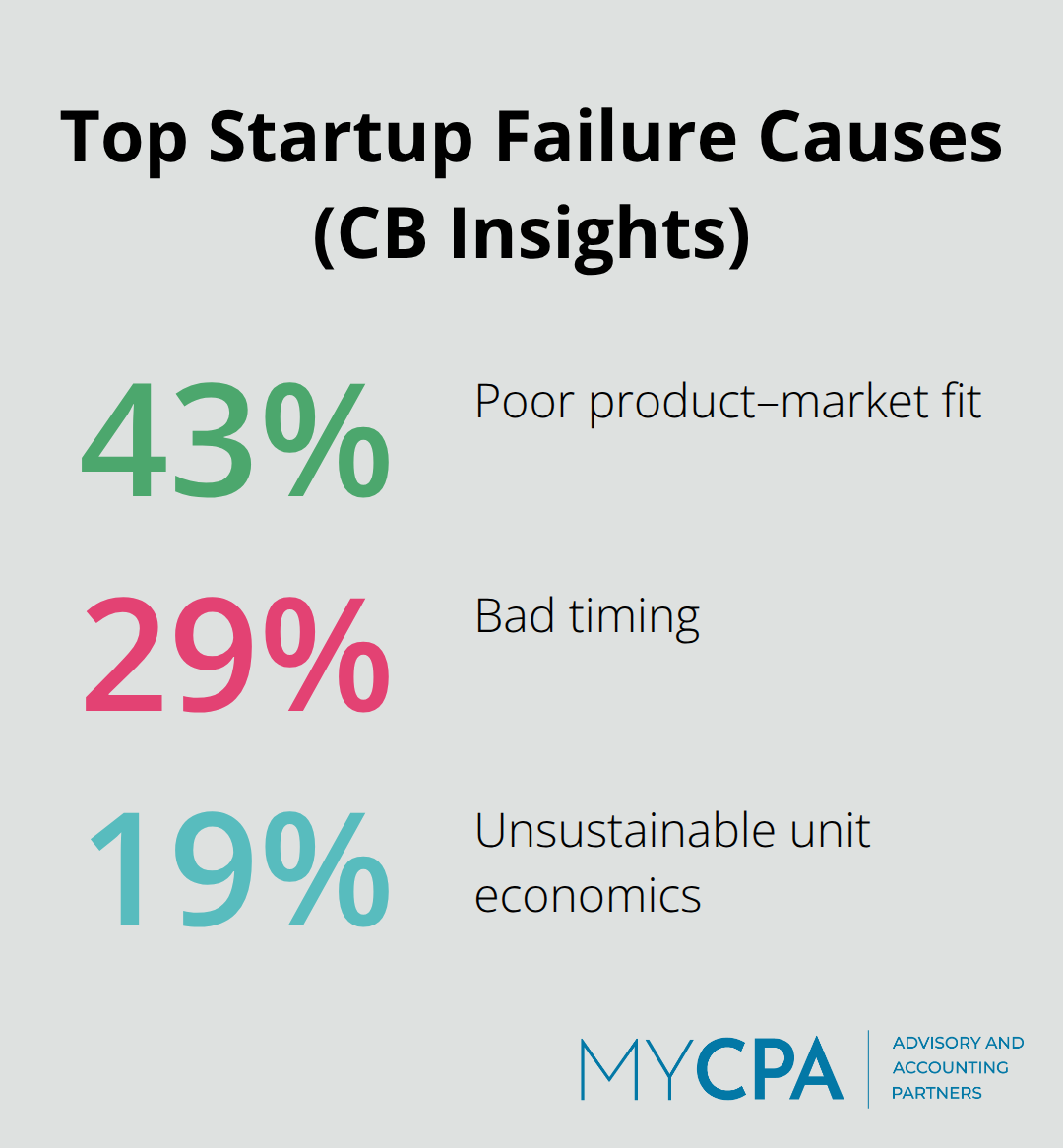
Unplanned growth kills startups faster than slow growth ever will. When companies scale without a roadmap, they experience three critical failures simultaneously: cash runs out before revenue catches up, teams become misaligned on priorities, and operational systems collapse under pressure. The data backs this up-according to research from CB Insights, the more telling causes of startup failure are poor product-market fit (43%), bad timing (29%), and unsustainable unit economics (19%).
Growth planning prevents this by forcing you to answer three questions before you spend a dime: Where does the money come from? What systems need to exist to handle growth? Who owns what as the team expands?
Most founders believe that more sales solve everything. They hire aggressively, spend on ads, and expand into new markets without measuring whether each dollar generates sustainable returns. What actually happens is your burn rate accelerates while your margins compress. Research on startup scaling shows that companies with formal growth plans achieve higher revenue growth than those operating ad hoc. The reason is straightforward: a plan forces you to track metrics that matter. Instead of vanity metrics like total signups, you measure customer acquisition cost against lifetime value, runway against monthly burn rate, and gross margin against pricing. These numbers reveal whether your growth is actually profitable or just expensive.
Without a growth plan, resources scatter across competing priorities. The sales team pursues deals that feel easy but have low margins. Engineering builds features that sound cool but customers don’t use. Marketing spends on channels that generate traffic but not conversions. A structured plan creates alignment by defining which customer segments matter most, which revenue streams to prioritize, and which operational investments pay for themselves. This doesn’t mean rigid planning-it means clear trade-offs. When leadership can point to specific metrics and say “this is why we’re investing here and not there,” teams stop debating and start executing. The framework separates high-impact opportunities from distractions, which is why startups with formal growth strategies extend their runway by an average of 18 months compared to those without.
Understanding where your money goes and which activities actually drive revenue sets the stage for building a real growth strategy. The next section walks you through the specific framework that transforms this insight into action.
A growth plan without specific targets amounts to wishful thinking. Founders who accelerate fastest share one trait: they define exactly who they’re selling to, what numbers prove progress, and when they’ll hit each milestone. This section shows you how to build that blueprint so you’re not chasing every opportunity that appears.
Start by identifying which customer segment will generate the most revenue with the least friction. Most startups serve multiple markets but excel in none. Your job is to ruthlessly pick the one segment that fits your product best and has the highest lifetime value. primary customer segment allows you to build early momentum more easily-awareness and word of mouth builds faster across like-minded groups. Once you’ve selected your primary segment, define exactly who they are: their industry, company size, revenue level, and the specific problem your product solves for them. This clarity eliminates wasted sales effort.
Next, determine your go-to-market motion for this segment. Will you sell direct, through partners, or via self-serve? Airbnb’s breakthrough came when they realized their audience already congregated on Craigslist, so they cross-posted listings there instead of building visibility from scratch. The tactic was unconventional, but it worked because it met customers where they already were. Your go-to-market choice directly impacts which metrics matter most and how aggressively you can scale.
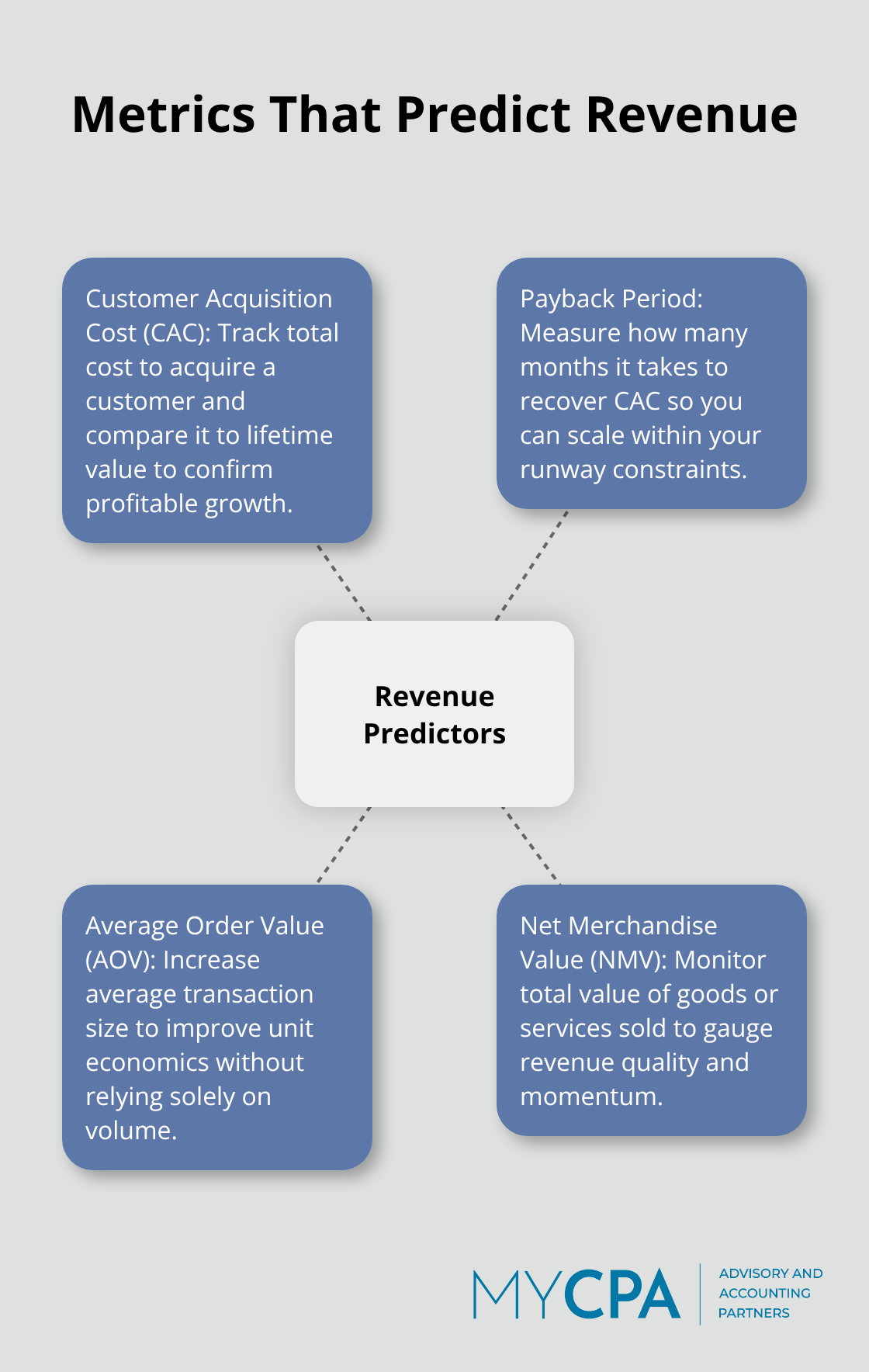
Metrics are where most startups fail. They track vanity metrics like total users or website traffic, which tell you nothing about sustainable growth. Instead, measure what actually predicts revenue. Your core metrics that predict revenue should include customer acquisition cost, payback period, average order value, and net merchandise value. Stripe’s dominance came from obsessing over developer adoption rates and API integration friction, which revealed that seven lines of code for integration was the magic threshold.
They measured what mattered to their core user and optimized relentlessly.
Set one ambitious objective with three to five measurable key results, as John Doerr describes in his OKR framework. For example: your objective is to achieve product-market fit in the SMB segment. Key results might be 500 active users with 40% monthly retention, 30% net revenue retention from expansion revenue, and NPS above 50. These are specific, measurable, and achievable within a defined timeframe. This approach aligns your entire team around what matters most.
Finally, create a phased timeline that reflects your funding and team capacity. Most startups collapse not because the plan is wrong but because they execute everything simultaneously and run out of cash. Phase one might focus on validating product-market fit in your primary segment over three months with minimal marketing spend. Phase two scales customer acquisition in that segment with paid channels over the next six months. Phase three expands to a secondary segment or introduces a new revenue stream. Each phase has clear entry and exit criteria, so you know when to move forward or pivot. Your runway determines your pace, so calculate months of cash remaining by dividing current balance by monthly burn rate, then work backward to determine which phases fit within that window. With your blueprint in place, the next step is identifying which specific tactics will actually move these metrics and generate the traction your plan demands.
Most startups treat tactics as an afterthought, assuming that once the plan exists, execution follows naturally. That’s backwards. The gap between planning and traction opens because founders chase tactics randomly instead of selecting the few that move your core metrics. Start by identifying which channels and tactics actually drive customer acquisition in your primary segment. Shopify’s 1.7 million merchants didn’t come from a single tactic-they came from ruthlessly testing which onboarding flows converted free trial users into paying customers, then optimizing those flows obsessively. Your first move is to run small, controlled experiments on three to five acquisition channels relevant to your segment. If you’re selling B2B SaaS to mid-market companies, test acquisition channels systematically by assessing where your target audience seeks information. If you’re selling consumer products, test organic social, paid ads, and partnerships. Measure the cost to acquire a customer in each channel and the quality of those customers by tracking 30-day retention.
OpenAI didn’t build ChatGPT’s 100 million user base through traditional marketing-they released their API to developers, making their product infrastructure for others to build on. This single tactic created exponential adoption because it aligned the growth mechanism with what their core users actually needed. Your job is to find that one or two channels where your customer already congregates and where your product solves a specific, measurable problem they’re willing to pay for.
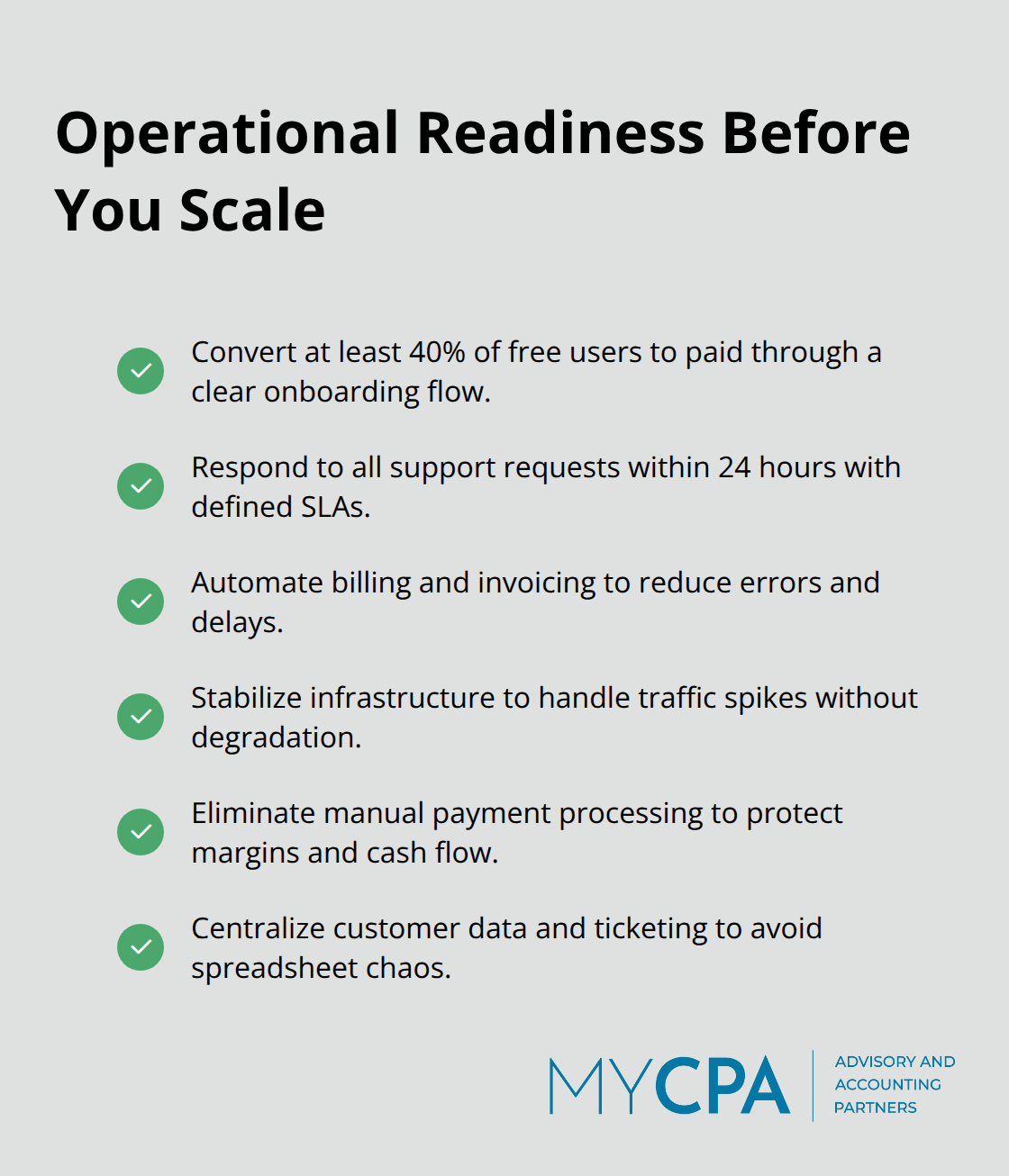
Once you’ve identified high-impact channels, stop building new features and start optimizing your systems for the volume you’re about to create. Most startups fail at scale not because their product is wrong but because their operations can’t handle growth. Before you double customer acquisition spend, optimize operations before you scale by ensuring your onboarding process converts at least 40% of free users to paid, your support team responds within 24 hours, and your billing and invoicing systems are automated. Dropbox’s viral referral program worked because their infrastructure was already stable-they could reliably handle millions of new users without crashes or service degradation. If you’re still manually processing payments, managing customer data in spreadsheets, or responding to support tickets without a system, scaling will destroy your margins and your reputation.
Calculate your payback period by dividing customer acquisition cost by monthly profit per customer-if it’s longer than twelve months, your growth economics are broken and no amount of volume fixes it. Strategic financial advisory can model how scaling affects your unit economics, runway, and cash flow before you accelerate acquisition spending.
Strategic partnerships accelerate growth only when they’re built on mutual benefit, not desperation. Airbnb cross-posted to Craigslist because they identified where their target users already spent time, not because they hoped Craigslist would promote them. Approach potential partners with a specific proposal: here’s the customer segment we both serve, here’s how we’ll measure success together, and here’s what each of us gets in return. Partners care about their own metrics, so frame the partnership around what they gain, not what you need. If you’re selling accounting software, partner with bookkeepers or tax professionals who already serve your target customer, not with random SaaS platforms hoping for cross-promotion.
Growth planning for startups separates companies that hit revenue targets from those that collapse under expansion. The framework replaces hope with data by forcing you to answer hard questions before you spend money: Who are you selling to? What metrics prove you’re winning? Which tactics actually move those metrics? Airbnb measured where their audience congregated, Stripe measured developer friction, Dropbox measured referral conversion, and Shopify measured onboarding flow-each company identified the one metric that predicted revenue, then optimized relentlessly.
Your burn rate, runway, customer acquisition cost, and payback period aren’t accounting details-they’re the signals that tell you whether your growth is sustainable or just expensive. We at My CPA Advisory and Accounting Partners help startups model how scaling affects unit economics, cash flow, and runway before they accelerate spending. Our business advisory services provide the financial foundation that lets you grow with confidence instead of guessing.
Start with your primary customer segment this week and define your three to five key results. Calculate your runway, then run small experiments on acquisition channels and measure what actually converts. Growth planning for startups works because it replaces guesswork with evidence, and when you execute it correctly, traction follows.








Privacy Policy | Terms & Conditions | Powered by Cajabra