
Growth planning for startups: From Roadmap to Reality
Build a growth plan for your startup with practical roadmap strategies, financial forecasting, and execution tactics to turn vision into measurable results.
Most startups fail because they confuse activity with progress. We at My CPA Advisory and Accounting Partners have seen countless founders chase opportunities without a coherent plan, burning cash and momentum in the process.
Growth planning for startups isn’t about creating a perfect document and shelving it. It’s about building a roadmap that actually works in the real world, then having the discipline to execute it while staying flexible enough to adapt.
Most startup founders treat vision statements like résumé padding. They craft something inspirational, print it on the office wall, then ignore it when making decisions. We watch this happen repeatedly, and it’s one of the fastest ways to derail growth. Your mission and values need to be specific enough to guide real choices about which opportunities you pursue and which you reject. If your mission could apply to five different businesses, it’s too vague. State exactly what problem you solve and for whom instead of saying you want to build innovative solutions. This specificity becomes your filter. When a potential partnership or market opportunity lands on your desk, you can measure it against something concrete rather than gut feel. The founders who scale fastest aren’t the ones with the most ambitious visions. They’re the ones who’ve defined their vision narrowly enough that it actually steers the ship.
Measurable growth targets separate real planning from wishful thinking. Too many startups set goals like reach profitability or grow the user base without attaching actual figures and timelines. Your targets should include revenue growth rates, customer acquisition numbers, retention rates, and timeline specifics. Try for 100% revenue growth in year one-that’s measurable. Try for 50 new enterprise clients by Q3-that’s actionable. These targets become your benchmarks for monitoring progress later. They also force you to think through whether your ambitions align with your resources. A bootstrapped startup targeting 300% growth without additional funding reveals a disconnect worth addressing now, not later when you’ve burned through cash. The discipline of naming specific numbers exposes assumptions early.
Your goals must overlap with actual market demand, not just internal confidence. Founders often fall in love with their product and assume the market will too. This mismatch between what you want to build and what customers actually want wastes months and capital. Study your target market’s current spending patterns, growth rates, and buying cycles. If you’re entering a market that’s shrinking or consolidating, your growth targets need to reflect the headwind you’re facing. Conversely, if you’re entering a market experiencing 25% annual growth, you can afford to be more aggressive. Talk to potential customers before finalizing growth targets. Ask them about their budget constraints, decision-making timelines, and pain points. This information should shape your targets, not confirm what you already believed. Alignment between your vision, your goals, and market conditions separates startups that scale from those that plateau after initial traction. With your vision and targets locked in, you’re ready to build the roadmap that actually gets you there.
A growth roadmap isn’t a five-year plan locked in a drawer. It’s a living document that maps the specific milestones you need to hit, when you need to hit them, and what resources each phase requires. Most founders skip this step because it feels tedious compared to product development or fundraising. That’s a mistake. We’ve watched startups burn through capital because they had no clarity on what success looked like at each stage.
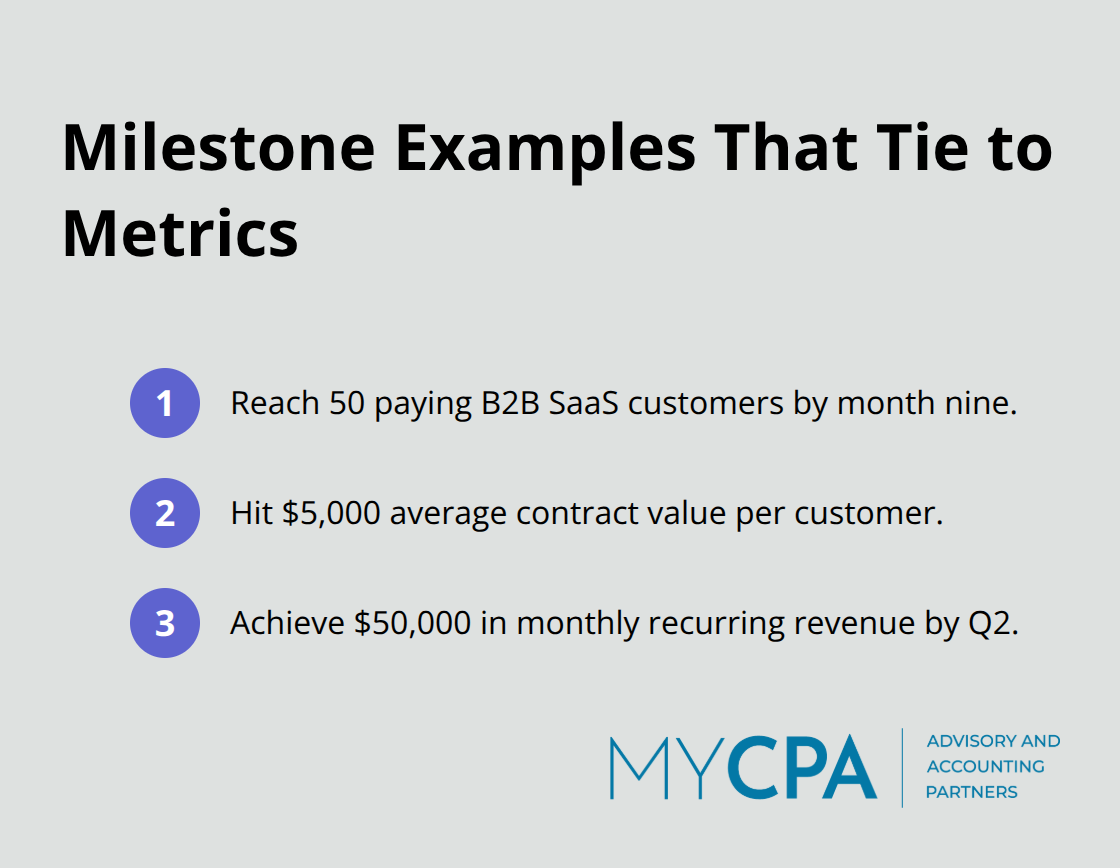
Your roadmap needs concrete milestones tied to actual business metrics, not vanity numbers. If you’re a B2B SaaS company, a milestone might be reaching 50 paying customers with an average contract value of $5,000 by month nine. For an e-commerce startup, it could be achieving $50,000 in monthly recurring revenue by quarter two. These milestones connect directly to your earlier growth targets but break them into smaller, achievable stages.
Each milestone needs a timeline with realistic dates and a resource estimate. How many people do you need to hire? What tools or infrastructure investments are required? What’s your cash burn rate at each phase? A startup that knows it needs to spend $80,000 on paid customer acquisition to hit a milestone can plan accordingly. One that hasn’t done this math discovers the shortfall after the money’s already spent.
Resource allocation is where most roadmaps fail in practice. Founders allocate budget based on what sounds important rather than what drives the metrics attached to their milestones. If your milestone is acquiring 100 new enterprise customers in six months and your current sales team has capacity for 20, you need to hire or contract additional sales resources. That’s non-negotiable. Many startups treat hiring as optional and hope the existing team works harder instead.
Market conditions and competitive pressure force you to adjust your roadmap constantly, not because you planned poorly but because reality shifts. If a major competitor enters your market and drops their pricing 40%, your customer acquisition cost targets become obsolete. Your roadmap needs flexibility built in from the start.
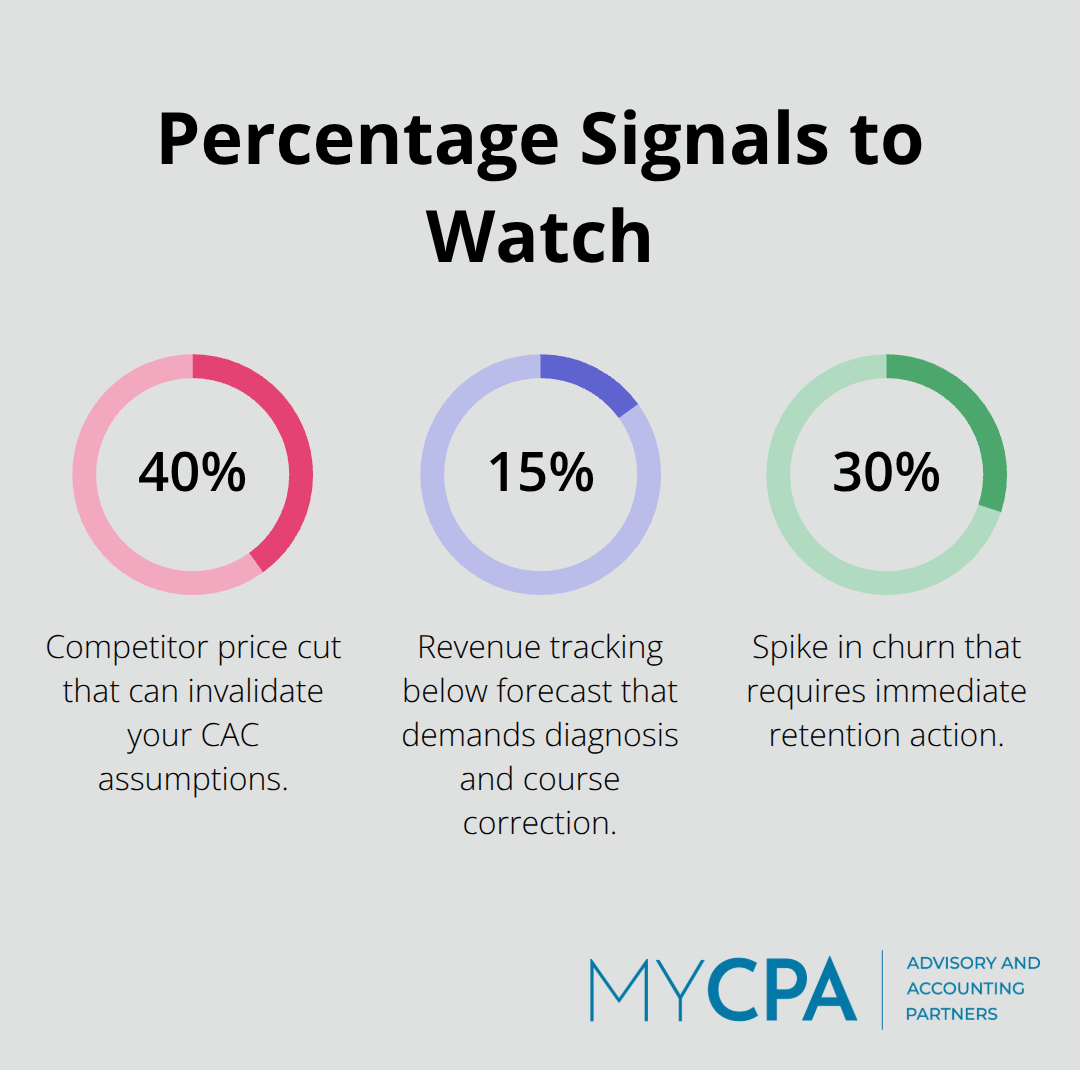
Set review points every quarter where you compare actual performance against projected performance. If revenue tracks 15% below forecast, you need to know whether that’s a sales execution problem, a product-market fit problem, or a market timing problem. Each requires different adjustments to your roadmap. The startups that scale successfully treat their roadmap as a hypothesis to test, not a commitment to defend.
With your milestones defined and your resources allocated, execution becomes the next critical phase. How you monitor progress and adjust in real time separates startups that hit their targets from those that watch opportunities slip away.
The difference between startups that hit their growth targets and those that miss them isn’t better planning. It’s relentless tracking of actual performance against what you predicted. Most founders avoid this because the data often reveals uncomfortable truths about their assumptions. The ones scaling fastest treat their numbers like a daily habit, not a monthly chore.
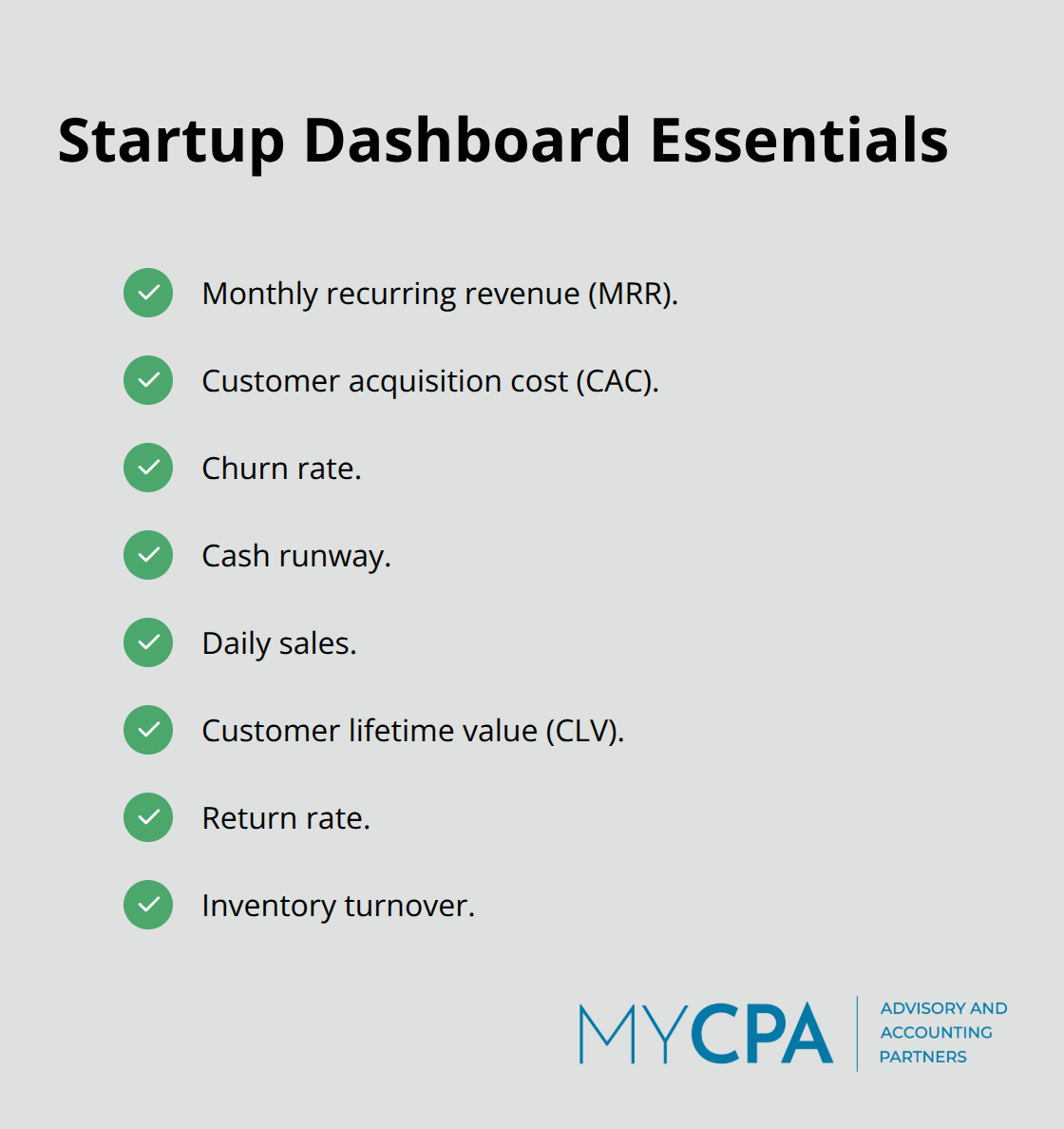
You need a dashboard that shows your key metrics in real time. For a SaaS company, that means tracking monthly recurring revenue, customer acquisition cost, churn rate, and cash runway. For e-commerce, it’s daily sales, customer lifetime value, return rate, and inventory turnover.
Pick five to seven metrics maximum that directly connect to your milestones. More than that and you’re drowning in noise instead of gaining clarity.
Update these numbers weekly, not monthly. A startup that discovers a 30% spike in churn in week two can respond immediately. One that learns about it at month-end review has already lost significant revenue and customer relationships. Set a specific threshold for each metric where you trigger a response. If customer acquisition cost exceeds $150 when your model assumes $100, something needs investigation that week.
When your actual performance diverges from your roadmap, the instinct is to ignore it and hope things improve. Resist that completely. A 20% revenue shortfall isn’t a minor variance. It’s a signal that your sales process, product-market fit, or market timing has a problem worth understanding immediately.
Pull your team together and diagnose the gap. Is your sales cycle longer than expected? Are customers hesitating because of a competitor’s recent move? Is your product missing a feature prospects consider essential? The diagnosis determines the fix. Some adjustments are tactical and immediate, like increasing paid marketing spend or adjusting pricing. Others require strategic shifts, like pivoting your target customer or redesigning your product roadmap.
The startups that adapt fastest don’t wait for perfect data. They make decisions with 70% confidence and course-correct based on results. Your roadmap assumed you’d hire three salespeople in quarter two to hit your customer acquisition targets. Quarter one data shows your existing sales team closed deals 40% faster than expected. That changes everything. You might hire one person instead of three and redirect capital to product development or marketing. Flexibility isn’t abandonment of your plan. It’s intelligent response to what the market actually tells you.
Building the team that executes this strategy matters as much as the strategy itself. Founders often hire slowly because they’re uncertain about roles or want to preserve cash. That hesitation costs more than the salary. If your milestone requires acquiring 100 new customers and you don’t have the sales capacity to pursue that, no amount of marketing spend compensates.
Hire people who own outcomes, not activities. A salesperson who closes deals matters far more than one who makes calls. An engineer who ships features customers pay for matters more than one who optimizes code nobody sees. Startups stay small because they hire generalists when their growth demanded specialists, or hire specialists before they had enough work to justify the cost.
The timing and type of hire directly impact whether you hit your milestones. Document what each role needs to accomplish in the next six months. That clarity attracts better candidates and gives you a measurable way to evaluate whether the hire is working. If your sales hire hasn’t closed five customers by month three when that was the explicit expectation, you have a performance problem worth addressing quickly.
Growth planning for startups fails most often because founders treat it as a one-time exercise rather than an ongoing discipline. The plan you write in month one will be wrong by month four, and that’s not failure-that’s reality. The startups that scale accept this truth and build systems to catch misalignment early, adjusting their roadmap as market conditions shift and performance data arrives.
The most common pitfall is confusing a detailed plan with a good plan. Founders spend weeks building elaborate spreadsheets with five-year projections, then abandon them the moment reality diverges. Your roadmap should be specific enough to guide decisions but flexible enough to adapt when the market tells you something different. Specificity about your next two quarters matters; precision about year five wastes time and resources you need for execution.
As your startup scales, your financial management becomes increasingly complex, and revenue tracking, expense allocation, tax planning, and cash flow forecasting demand expertise most founders lack. We at My CPA Advisory and Accounting Partners provide the accounting services and business advisory support that keeps your financial foundation solid while you focus on execution. Our QuickBooks services and tax optimization help you retain more of what you earn and make growth planning for startups actually sustainable.








Privacy Policy | Terms & Conditions | Powered by Cajabra