
Strategic Financial Advisory: Insightful Guidance for Growth
Gain strategic financial advisory insights to drive business growth, improve profitability, and make smarter decisions for long-term success.
At My CPA Advisory and Accounting Partners, we know that comprehensive analysis in accounting is the backbone of sound financial management.
This critical process goes beyond mere number-crunching, offering insights that can shape a company’s future.
In this post, we’ll explore how thorough analysis ensures accuracy, uncovers trends, and supports strategic decisions.
Comprehensive analysis in accounting acts as a financial detective, revealing insights that might otherwise remain hidden. A study by the American Institute of CPAs found that firms discovered significant errors due to mergers and changes in accounting practices. These errors (if left unchecked) could lead to misguided decisions and potential legal issues.
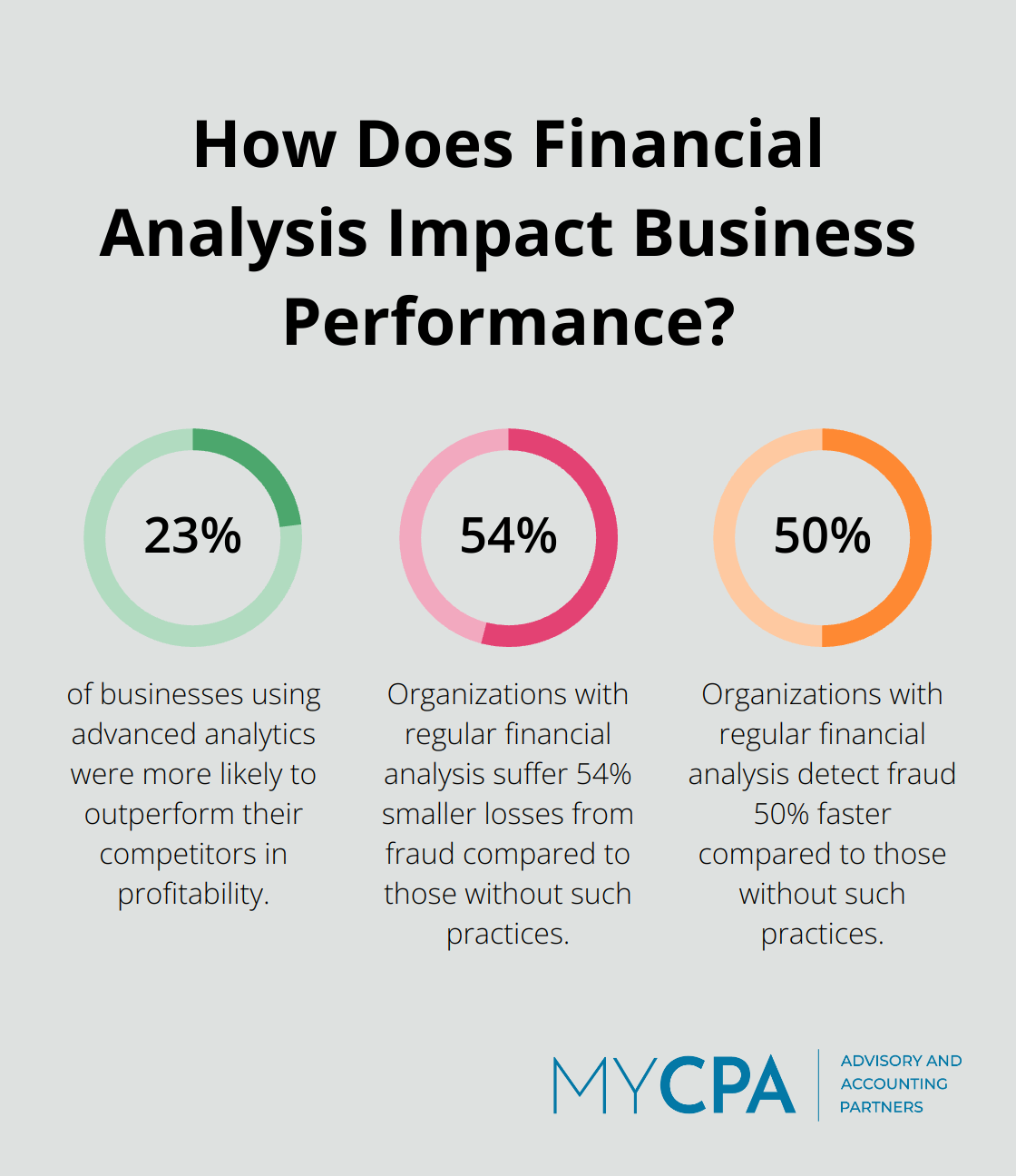
Regular analysis of financial data allows businesses to identify industry trends early. This proactive approach enables companies to adapt their strategies quickly. A report by McKinsey & Company showed that businesses using advanced analytics were 23% more likely to outperform their competitors in profitability.
Comprehensive analysis transforms raw financial data into actionable insights. According to a survey by Deloitte, analytics plays a critical role in decision-making in today’s complex business environment. Companies can increase their profitability through data-driven decision-making powered by thorough financial analysis.
Accurate financial reporting, backed by comprehensive analysis, builds trust with stakeholders. A PwC study revealed that 63% of investors consider the quality of financial reporting as very important when making investment decisions. This trust can lead to better financing options and stronger business relationships.
Detailed analysis of cash flow patterns allows businesses to optimize their working capital. The National Association of Credit Management reports that companies with robust cash flow analysis reduce their days sales outstanding (DSO) by an average of 10-15 days, significantly improving liquidity.
Comprehensive analysis helps identify potential financial risks before they become critical issues. A study by the Association of Certified Fraud Examiners found that organizations with regular financial analysis detect fraud 50% faster and suffer 54% smaller losses compared to those without such practices.
Comprehensive financial analysis empowers businesses to navigate the complex financial landscape with confidence. It’s not just about looking at numbers; it’s about understanding the story behind those numbers and using that knowledge to drive success. The next section will explore the key components that make up a truly comprehensive analysis.
Financial ratios provide quick insights into a company’s performance. The current ratio measures a company’s ability to pay short-term obligations. A study by P Rajkumar defines the risk of financial failure as the inability of a firm to pay its current liabilities, which may lead to bankruptcy.
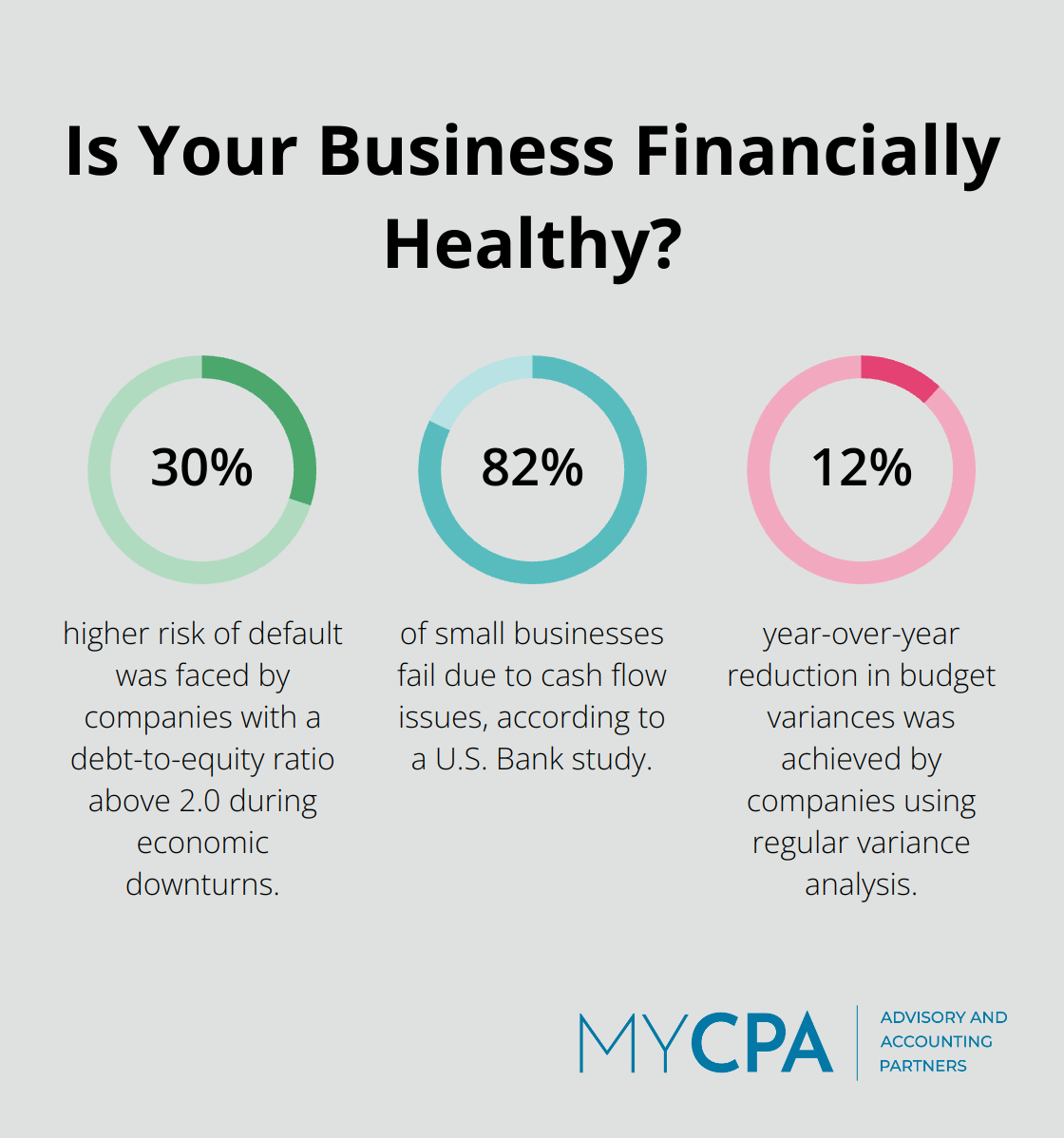
The debt-to-equity ratio assesses a company’s financial leverage. Data from S&P Global Market Intelligence shows that companies with a debt-to-equity ratio above 2.0 faced a 30% higher risk of default during economic downturns.
Variance analysis compares actual financial results with budgeted or forecasted figures. This process identifies areas of concern and opportunities for improvement. A survey by the American Productivity & Quality Center revealed that companies using regular variance analysis reduced their budget variances by an average of 12% year-over-year.
For effective variance analysis, focus on key performance indicators (KPIs) specific to your industry. A manufacturing company might track variances in material costs, while a service-based business might focus on billable hours.
Cash flow analysis reveals a company’s liquidity and financial health. A U.S. Bank study found that 82% of small businesses fail due to cash flow issues. Regular cash flow forecasting proves essential for business success.
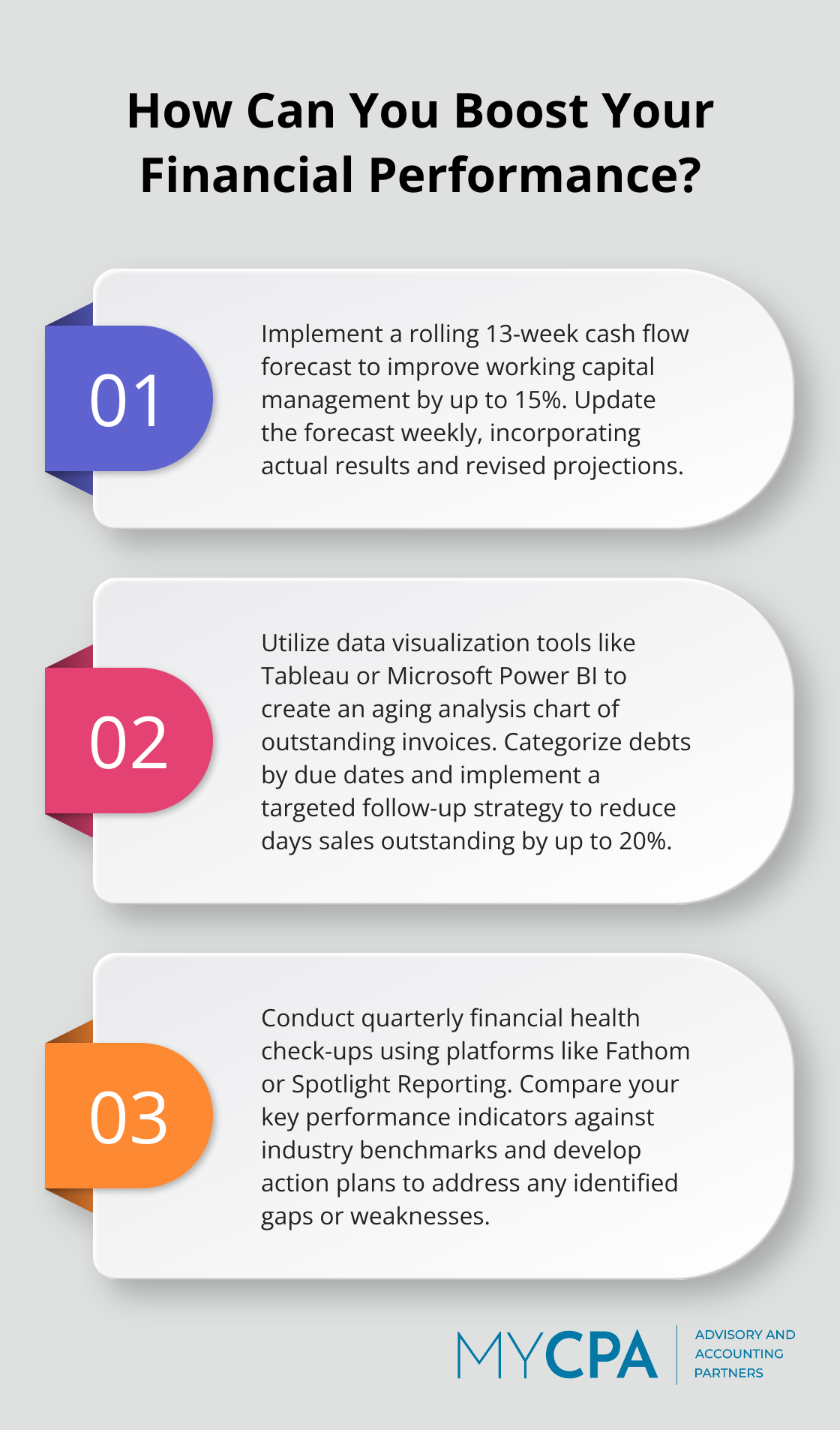
A rolling 13-week cash flow forecast provides a detailed view of short-term cash needs while allowing for adjustments based on changing business conditions. Companies implementing this method reported a 15% improvement in working capital management (according to a study by The Hackett Group).
Benchmarking against industry standards provides valuable context for your financial performance. The Risk Management Association (RMA) publishes annual financial statement studies that offer industry-specific benchmarks for various financial ratios.
In the retail sector, for example, the average inventory turnover ratio is 4.5 times per year. If your business falls significantly below this benchmark, it might indicate inefficient inventory management. Identifying these gaps allows you to develop targeted strategies to improve performance and competitiveness.
These components of financial analysis enhance your business’s financial management. The true value, however, lies in the interpretation of these analyses and the actions taken based on the insights gained. In the next chapter, we’ll explore the tools and techniques that make comprehensive financial analysis more effective and efficient.
Modern accounting software transcends basic bookkeeping. Platforms like Xero and QuickBooks Online offer real-time financial dashboards, automated reconciliations, and custom report generation. Companies using cloud accounting exclusively saw a 15% growth in year-over-year revenue pattern compared to traditional methods.
QuickBooks’ AI-powered cash flow forecasting feature predicts upcoming cash shortages with 90% accuracy, enabling proactive financial management. (MyCPA Advisory and Accounting Partners specializes in optimizing these tools for maximum client benefit.)
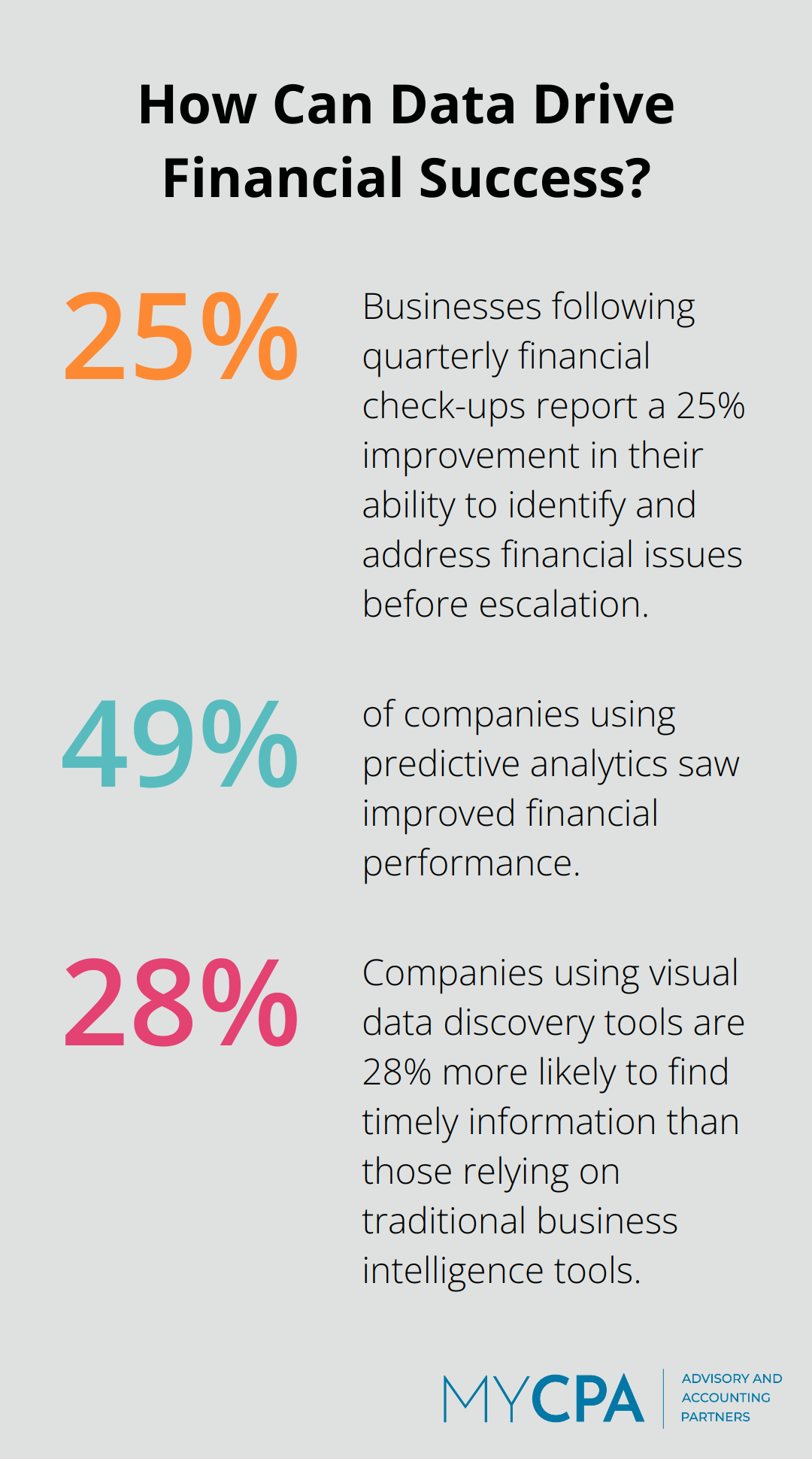
Data visualization tools transform complex financial data into digestible visual formats. Tableau and Microsoft Power BI lead this field. The Aberdeen Group found companies using visual data discovery tools are 28% more likely to find timely information than those relying on traditional business intelligence tools.
An aging analysis chart categorizes outstanding invoices based on their due dates, allowing finance teams to prioritize follow-ups. This approach can reduce days sales outstanding by up to 20% through targeted visualizations and action plans.
Predictive analytics uses historical data and machine learning algorithms to forecast future financial trends. IBM’s SPSS and SAS excel in this domain. Dresner Advisory Services reported 49% of companies using predictive analytics saw improved financial performance.
A manufacturing client optimized inventory levels using predictive analytics, resulting in a 12% reduction in carrying costs without compromising product availability. This method combines historical sales data with external factors (economic indicators, seasonal trends) to accurately predict future demand.
Regular financial health check-ups maintain fiscal fitness. Tools like Fathom and Spotlight Reporting provide comprehensive financial health assessments. These platforms analyze key performance indicators, benchmark against industry standards, and provide actionable insights.
Quarterly check-ups prove most effective. Businesses following this practice report a 25% improvement in their ability to identify and address financial issues before escalation.
Implementing these tools and techniques requires expertise and ongoing management. MyCPA Advisory and Accounting Partners helps businesses select the right tools and provides ongoing support to ensure effective use. This combination of cutting-edge technology and expert analysis gives businesses a competitive edge in financial management and decision-making.
Comprehensive analysis in accounting transforms raw financial data into strategic insights. This approach empowers businesses to make informed decisions, mitigate risks, and uncover growth opportunities. Professional accountants interpret complex financial information and translate it into actionable strategies, providing invaluable expertise beyond basic number-crunching.
The future of accounting analysis will revolutionize financial data processing and interpretation through artificial intelligence and machine learning. Predictive analytics will offer more accurate forecasts and risk assessments, shifting the role of accountants towards high-level analysis and strategic advisory services. These advancements will enable companies to navigate future business challenges and opportunities more effectively.
My CPA Advisory and Accounting Partners combines deep financial knowledge with cutting-edge analytical tools to drive business success. We help companies turn financial data into a powerful asset for growth and success. Businesses that master financial analysis will position themselves to thrive in tomorrow’s complex business landscape.








Privacy Policy | Terms & Conditions | Powered by Cajabra