
Accounting Accuracy Improvements: Techniques That Endure
Boost accounting accuracy improvements with proven techniques that reduce errors, save time, and strengthen financial controls for your business.
Most business owners react to problems after they hit. At My CPA Advisory and Accounting Partners, we believe proactive business advisory changes that equation entirely.
When you plan ahead instead of fighting fires, you catch issues early, adapt to market shifts faster, and build real momentum. That’s the difference between surviving and thriving.
Early detection of financial problems saves money. Research from the National Federation of Independent Business shows that companies with regular financial reviews catch issues early, preventing costly emergency borrowing or operational disruptions. When you monitor key performance indicators weekly rather than quarterly, you spot trends before they become crises. A restaurant owner who tracks daily average transaction value and table turnover identifies a 15% decline in customer spending patterns within days, not months, allowing time to adjust pricing, staffing, or marketing before the problem compounds. Similarly, a construction company that monitors job completion percentages against budgeted hours can reallocate resources or adjust future bids before unprofitable projects damage annual margins.
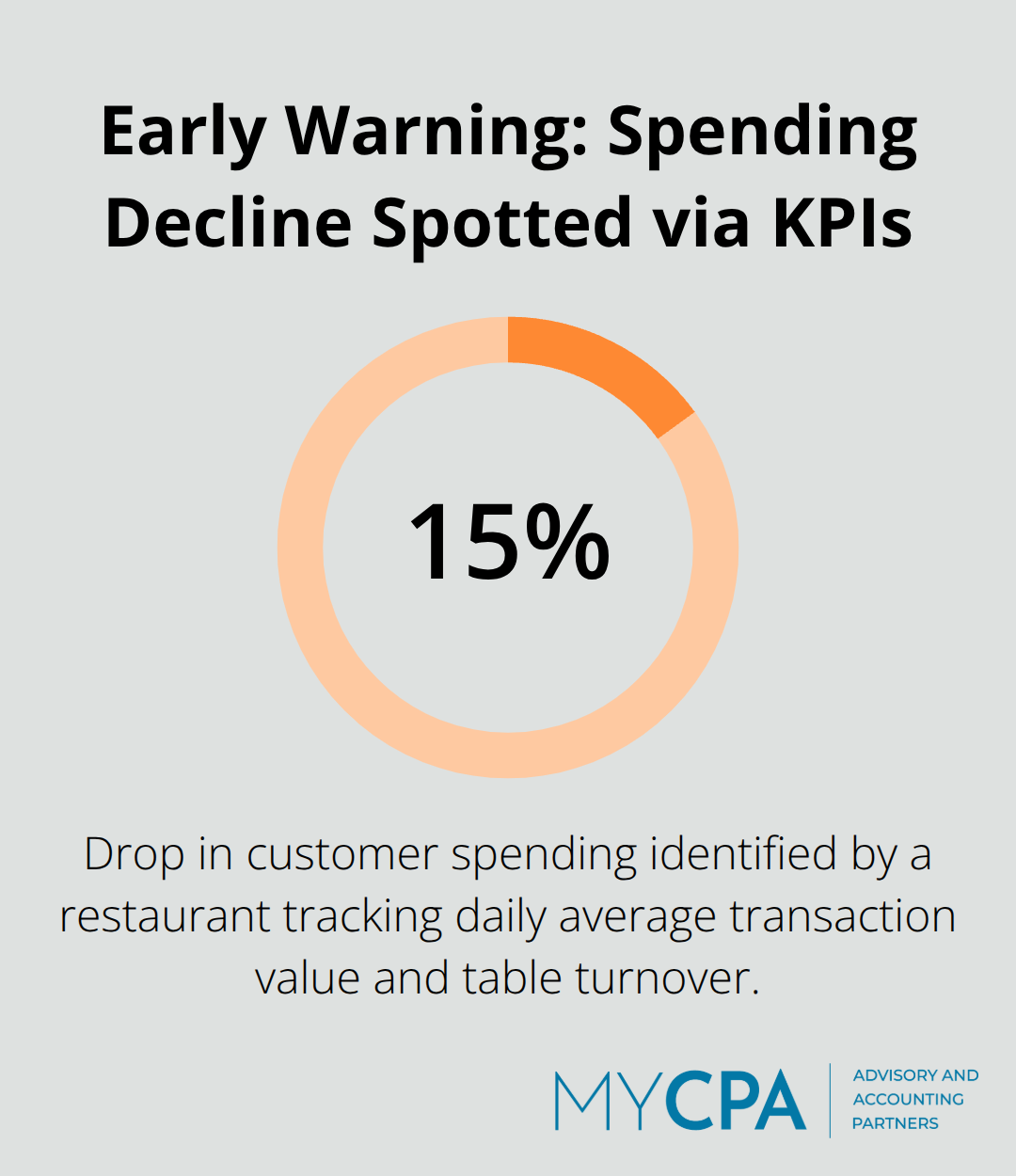
This early-warning system transforms reactive survival into deliberate management.
Markets shift faster than most business owners realize. Technology disruption, supply chain volatility, regulatory changes, and shifting customer expectations can upend competitive advantage within months. Proactive advisory keeps you ahead through analysis of market trends specific to your industry, not generic business advice. A tech company with recurring revenue needs different forecasting than a manufacturing business managing tariff exposure or a healthcare provider preparing for regulatory shifts. Clients who adapt their structure, processes, and pricing before disruption hits reduce restructuring costs and retain more control over their growth direction. Waiting until competitors capture market share or customers flee to alternatives forces you into damage control, not strategy. Real growth comes from anticipating what’s coming, not chasing what’s already happened.
Rapid growth without financial planning creates invisible problems. Revenue growth that outpaces cash flow leads to operational strain, missed payroll, or forced financing at unfavorable terms. Monthly financial consultations that translate statements into strategic recommendations reveal whether growth is profitable or just busy. Many business owners discover they’re growing their way into insolvency because they lack visibility into which customers, products, or services actually generate margin. Proactive advisors identify cost structure weaknesses, pricing gaps, and operational bottlenecks before they derail scaling. A living strategic plan with quarterly reviews keeps your team aligned, deploys resources where they matter most, and ensures financial decisions support long-term objectives instead of short-term survival.
These three foundations-early detection, market awareness, and financial alignment-set the stage for the specific advisory areas that drive real growth. Understanding where to focus your advisory efforts determines whether you build momentum or simply manage chaos.
Cash flow problems, tax surprises, and operational waste kill more businesses than market competition. Most owners focus on revenue but ignore the mechanics that turn revenue into profit. Three specific areas demand your attention: financial planning, tax optimization, and operational efficiency. When these three work together, growth stops being a threat to stability and becomes a path to sustainable profitability.
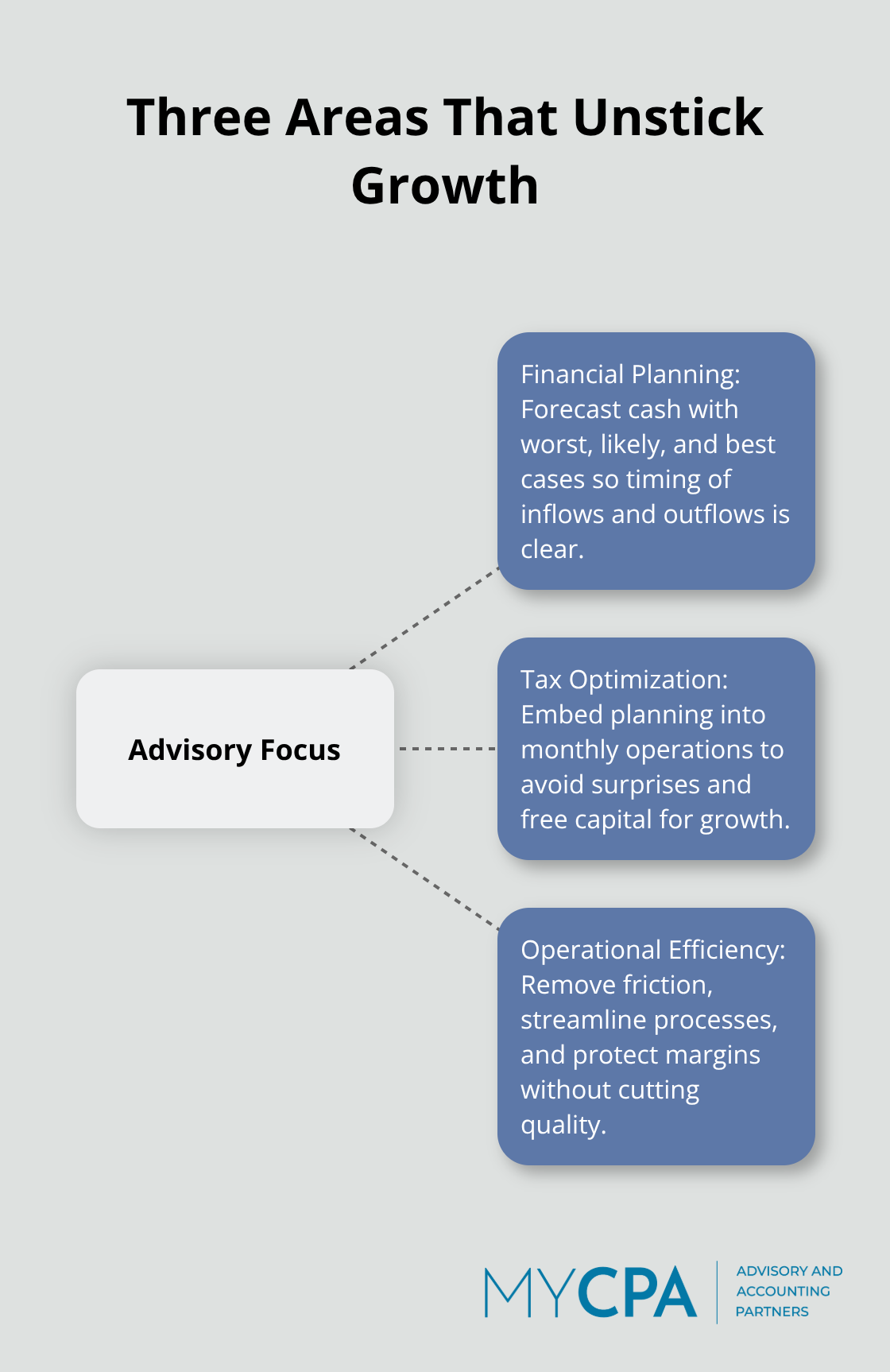
Financial planning means forecasting what you’ll actually have in the bank next month, not hoping revenue covers expenses. A restaurant owner tracking daily transaction value and table turnover has visibility, but without cash flow modeling that accounts for payroll cycles, supplier payment terms, and seasonal slowdowns, that same owner faces a cash crisis despite strong sales. Real forecasting models your worst-case, most-likely, and best-case scenarios so you know exactly how much runway you have before you need additional financing.
Many owners assume they understand their cash position because they watch their bank balance. That assumption costs them. Revenue and profit are not cash. A construction company with strong margins on completed projects still needs cash to pay workers and suppliers before invoices get paid. A tech firm with growing monthly recurring revenue still faces lumpy expenses for infrastructure upgrades or talent acquisition. Monthly financial consultations translate your statements into strategic recommendations and reveal whether your growth actually funds itself or creates a hidden financing problem.
Tax optimization isn’t about aggressive schemes or year-end scrambling. It’s embedded into monthly operations. A construction company that accelerates depreciation on equipment or a tech firm that structures stock options correctly saves capital that funds growth instead of going to the IRS. Tax planning integrated into your accounting means you’re not surprised in April and you’re not leaving money on the table.
Compliance strategy protects you too. Missing payroll tax deadlines, misclassifying workers, or overlooking sales tax obligations creates penalties that compound fast. Monthly financial consultations catch these gaps before they cost you. The difference between reactive tax filing and proactive tax planning is thousands of dollars in your pocket-capital you redeploy into hiring, equipment, or market expansion.
Operational efficiency directly impacts profitability. Many owners assume growth requires hiring more people or buying more equipment. Often it requires removing friction from existing operations. A manufacturing business managing tariff exposure needs supply chain realignment now, not after tariffs bite margins. A healthcare provider preparing for regulatory shifts needs to reorganize processes before compliance becomes a crisis.
Weekly KPI monitoring reveals which customers generate real margin versus which ones consume resources without profit. Cost reduction shouldn’t mean cutting quality or gutting your team. It means identifying non-value-added expenses, streamlining processes, and adopting automation where it saves time without sacrificing what customers actually pay for. A living strategic plan with quarterly reviews keeps your financial decisions aligned with growth objectives instead of reactive firefighting.
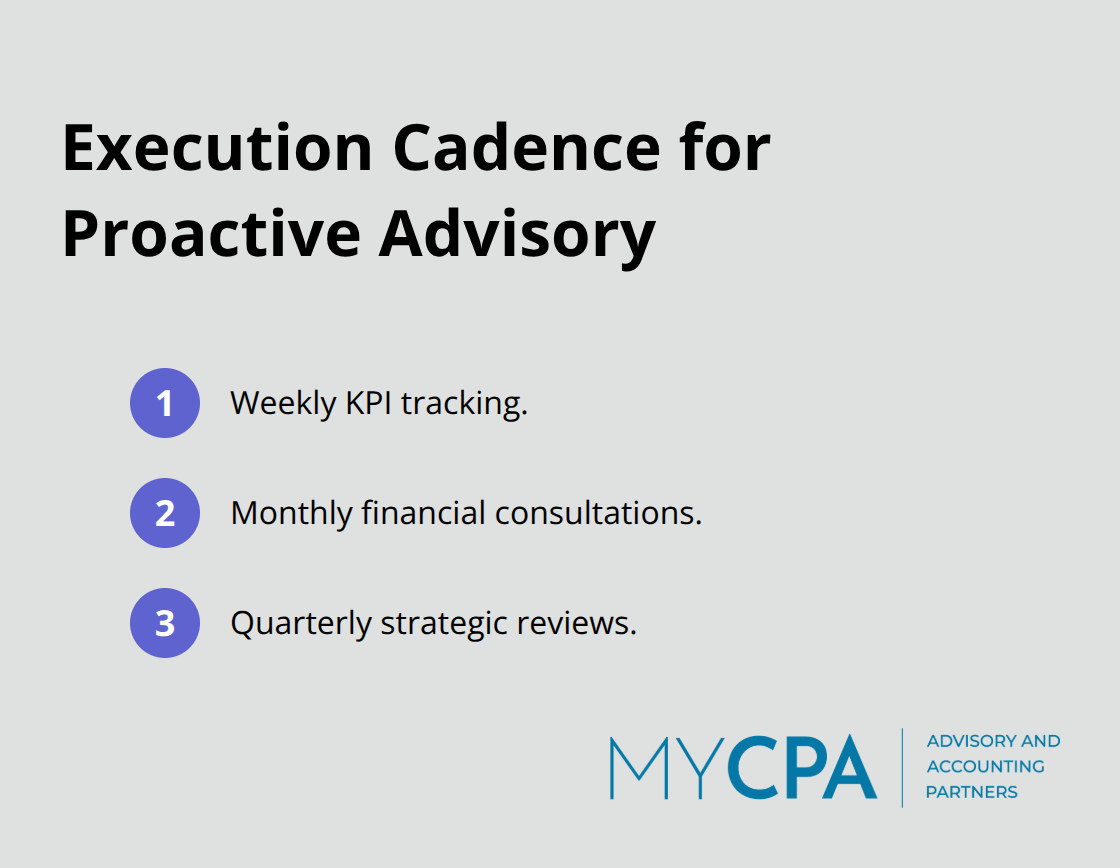
Cash flow, tax strategy, and operational efficiency don’t work in isolation. A company that forecasts cash flow accurately but ignores tax planning still wastes capital. A business that optimizes taxes but tolerates operational waste still struggles to scale. When you address all three together-with monthly consultations, weekly KPI tracking, and quarterly strategic reviews-you transform how your business operates. You stop reacting to problems and start anticipating them.
The next step is identifying the right partner to guide this work. Not all advisors understand how to connect these pieces or how your specific industry shapes what matters most.
Not all advisors understand how to connect financial planning, tax strategy, and operational efficiency into a coherent growth plan. Many accountants focus on compliance and historical reporting, leaving you to figure out strategy alone. The difference between an advisor who manages your books and one who accelerates your growth comes down to three things: industry knowledge, cross-disciplinary capability, and how they actually show up for you.
Start with questions about potential advisors’ experience with businesses like yours. A firm that works primarily with restaurants understands seasonal cash flow patterns, labor cost structures, and food cost volatility in ways a generalist never will. A tech-focused advisor knows how to model monthly recurring revenue, churn analysis, and the timing of infrastructure costs before they hit your P&L.
Ask for specific examples of how they’ve helped similar clients navigate challenges you’re facing now-not hypothetical scenarios, but real situations with measurable outcomes. Industry experience isn’t a nice-to-have; it’s the foundation of advice that actually applies to your world.
Tax planning without operational insight leaves money on the table, and operational improvements without tax strategy waste capital. A true advisory partner coordinates between your accountant, tax strategist, and operations consultant so recommendations align instead of conflict.
When you meet monthly for financial consultations, the advisor translating your statements should understand not just the numbers but the operational decisions that created them. We at My CPA Advisory and Accounting Partners provide tax services, accounting, and business advisory as integrated disciplines, which means your cash flow forecast accounts for tax liability timing and your operational improvements factor in tax implications.
Proactive advisory requires weekly KPI monitoring and rapid response when trends shift. If a firm takes weeks to return calls or schedules quarterly meetings when market conditions demand monthly reviews, they’re not equipped for the pace your business requires.
The right partner makes financial conversations less dreaded and more about identifying opportunities. They translate your statements into actionable insights within days, not weeks. Speed matters because market shifts and cash flow problems don’t wait for your next scheduled meeting.
Proactive business advisory separates owners who control their growth from those who get controlled by it. Early detection prevents costly crises, market awareness keeps you ahead of disruption, and financial alignment ensures growth actually funds itself instead of creating hidden problems. Most owners start advisory work when they’re already in trouble, but starting now while your business still has breathing room means you shape your future instead of reacting to it.
Look honestly at your current situation. Do you forecast cash flow accurately or hope it works out? Do you know which customers and products generate real margin? Are you paying more tax than necessary because tax planning happens in April instead of throughout the year? We at My CPA Advisory and Accounting Partners help business owners answer these questions with clarity and specificity through integrated tax, accounting, and advisory services that translate your statements into actionable insights within days, not weeks.
The businesses that thrive aren’t the ones with the most revenue-they’re the ones with the clearest visibility into what’s coming and the discipline to act before problems force their hand. Finding an advisor who understands your industry, responds quickly, and coordinates across disciplines moves you from annual tax filing to monthly consultations that keep you ahead. That shift transforms how your business operates.








Privacy Policy | Terms & Conditions | Powered by Cajabra