
Strategic Financial Advisory: Insightful Guidance for Growth
Gain strategic financial advisory insights to drive business growth, improve profitability, and make smarter decisions for long-term success.
Many businesses waste money on accounting tasks that pull focus from what they do best. Financial and accounting outsourcing services let you hand off these responsibilities to specialists while keeping costs down.
At My CPA Advisory and Accounting Partners, we’ve seen firsthand how outsourcing transforms operations. This guide walks you through the benefits, services, and how to pick the right partner for your business.
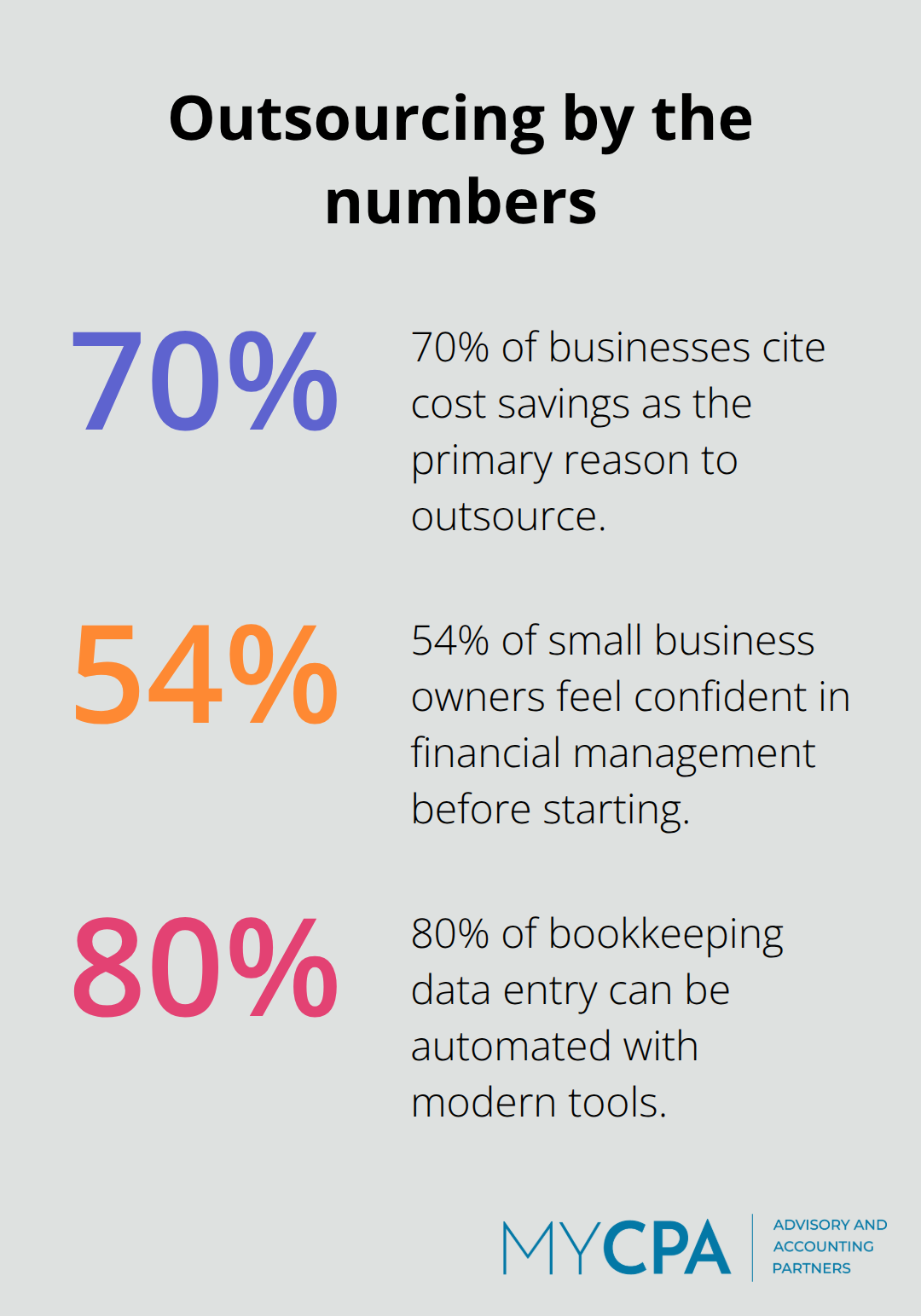
Outsourcing accounting and finance work isn’t a luxury-it’s a practical move that directly impacts your bottom line. 70% of businesses cited cost savings as the primary reason for outsourcing compared to hiring full-time staff. An in-house accountant in the U.S. typically costs between $55,000 and $70,000 annually, not including benefits, payroll taxes, and overhead. When you outsource, you pay only for the services you actually need, which means no wasted spending on underutilized employees or expensive benefits packages. This flexibility lets you scale up during busy tax seasons or growth periods and scale down when demand drops-something impossible with permanent hires. Real-time access to financial data through cloud-based platforms means you make faster decisions without waiting for monthly reports.
Better cash flow visibility, accurate forecasting, and profitability insights come standard with professional outsourced services, giving you the information you need to spot problems before they become expensive.
Most small business owners lack deep expertise in tax law, regulatory compliance, or financial reporting standards. Only 54 percent of small business owners feel confident in their financial management abilities before starting their ventures, according to QuickBooks research. Outsourced accountants bring years of experience across multiple industries and client types, meaning they’ve already solved the problems you’re facing. They understand quarterly tax filings, payroll compliance requirements, and the specific rules for your industry (whether you’re in healthcare, manufacturing, or retail). This expertise reduces the risk of costly mistakes, penalties, and missed deductions that could drain thousands from your business. When you need advice on product launches, fundraising, or acquisitions, professional advisors guide you through the financial implications rather than leaving you guessing.
Small business owners spend roughly 18 hours per month on payroll tasks alone. Add bookkeeping, tax prep, financial reporting, and compliance work, and you’re looking at 40 to 60 hours monthly on accounting tasks that don’t directly generate revenue. That’s time you could spend on customer relationships, product development, marketing, or strategic planning. When accounting specialists handle these responsibilities, you shift from reactive firefighting to proactive leadership. You stop wondering whether your books are accurate and start using financial data to identify growth opportunities.
The right outsourcing partner doesn’t just process transactions-they become an extension of your financial team. They bring industry-specific knowledge, updated compliance expertise, and the ability to scale services as your business grows. The decision to outsource requires evaluating credentials, technology standards, and service agreements that align with your needs. Understanding what separates a quality partner from a mediocre one determines whether outsourcing delivers real value or becomes another frustration.
Outsourcing works best when you hand off the work that drains time and money without requiring your direct involvement. Not every accounting task deserves the same treatment, and understanding which services deliver the most value helps you structure an outsourcing arrangement that actually moves the needle.
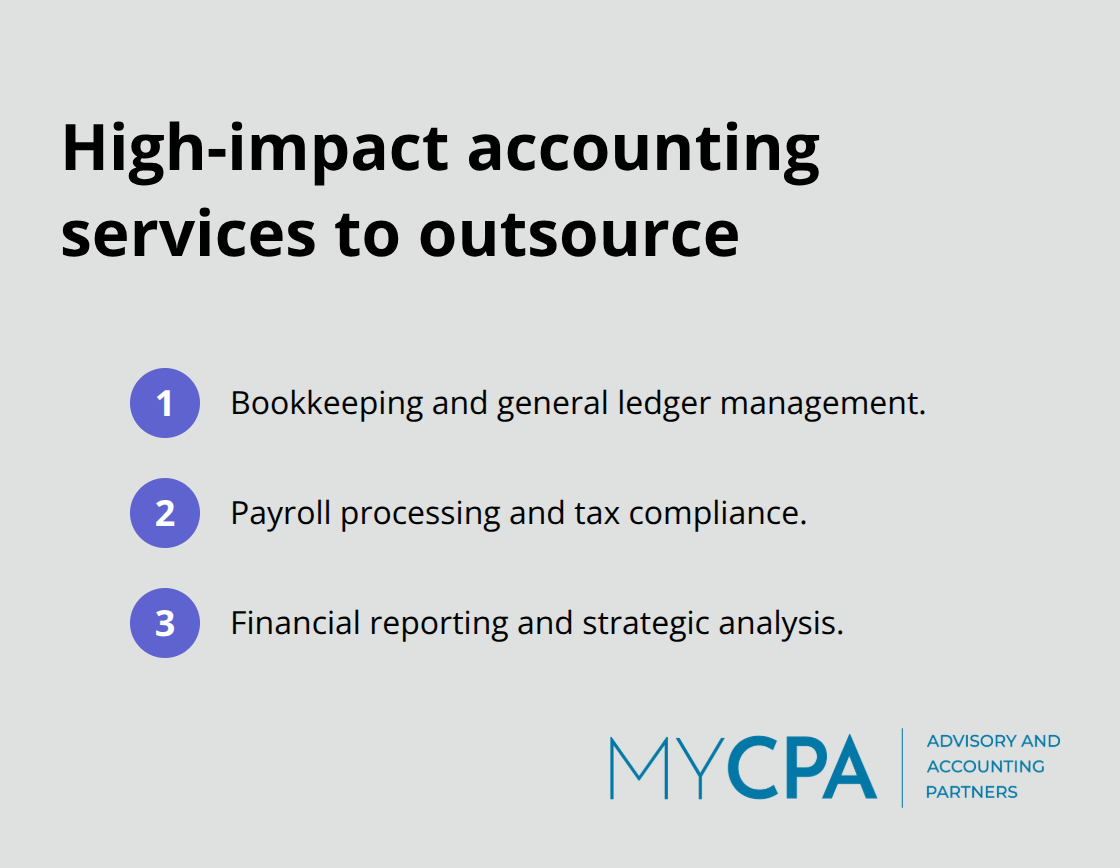
Bookkeeping and general ledger management form the foundation of accurate financial records, yet most businesses waste resources maintaining these manually when automation handles 80 percent of data entry tasks. Cloud-based platforms now integrate directly with your banking systems, eliminating manual transaction entry and reducing errors that plague spreadsheet-based approaches. These systems capture transactions automatically, reconcile accounts, and flag discrepancies before they compound into larger problems.
Payroll processing exemplifies why outsourcing makes financial sense: the average small business owner spends 18 hours monthly on payroll tasks alone, and a single miscalculation on tax withholdings can trigger penalties exceeding $5,000. Professional payroll services guarantee on-time payments, accurate tax calculations across federal and state requirements, and proper filing for W-2s and quarterly deposits. Regulations change constantly, and compliance mistakes cost real money through penalties and back-pay obligations that drain cash reserves.
Financial reporting and analysis transform raw data into actionable insights that inform real decisions about cash flow, profitability by product line, and spending patterns that reveal waste. Most outsourced accounting partners deliver monthly financial statements within days of month-end close rather than weeks, giving you current information instead of historical data. This speed matters because you respond to problems faster and capitalize on opportunities before competitors do.
Tax law shifts annually, and missing deductions or misclassifying expenses can cost thousands. Financial analysis requires someone who understands your industry benchmarks and can spot when metrics move outside normal ranges. Rather than expecting one internal accountant to master all three areas while juggling interruptions and administrative work, outsourcing lets you access specialists who handle these exact problems across dozens of clients monthly. This repeated exposure means they’ve encountered your specific challenges before and know the solutions that work. You also eliminate the turnover problem that plagues in-house accounting departments, where a key person leaving creates months of disruption and knowledge loss.
The practical advantage of outsourcing lies in having professionals who focus exclusively on financial operations while you concentrate on growth. This separation of responsibilities means financial records stay accurate, compliance stays current, and strategic decisions rest on solid data rather than guesswork. Selecting the right partner determines whether these benefits materialize or whether you end up frustrated with poor service and missed deadlines.
Selecting an outsourcing partner requires more than checking references and comparing prices. The wrong choice wastes months of transition time and disrupts your financial operations while you scramble to fix mistakes. The right partner becomes an extension of your financial team and delivers measurable improvements to your accuracy, compliance, and decision-making speed.
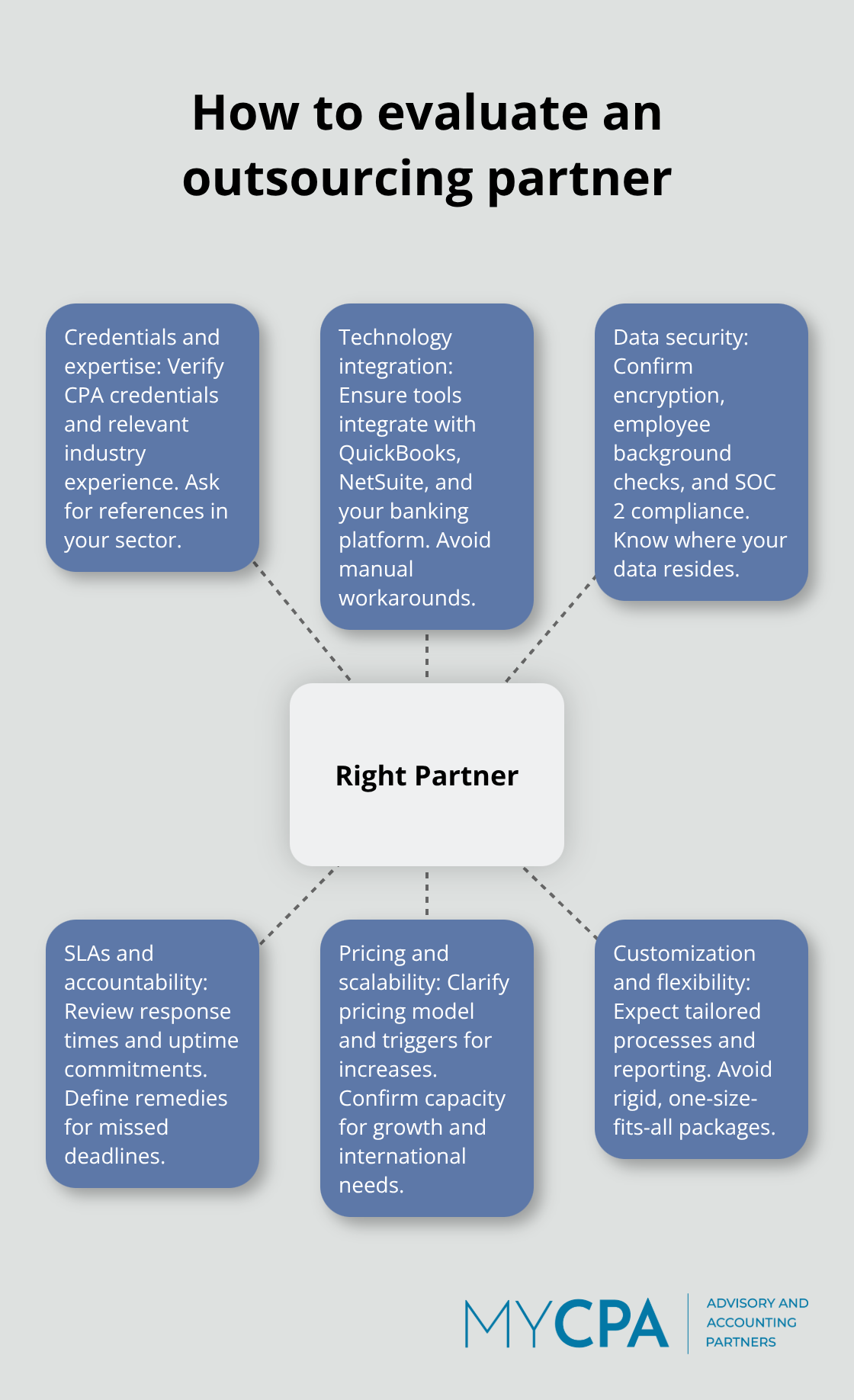
Start by confirming that your potential partner holds relevant certifications like CPA credentials, which indicate they meet strict continuing education requirements and professional standards. Ask specifically how many clients they serve in your industry and request references from businesses similar to yours in size and complexity. A firm claiming to serve healthcare, manufacturing, and retail equally well probably masters none of them deeply.
Industry specialization matters because tax treatment, compliance requirements, and reporting standards differ dramatically across sectors. Manufacturing companies face inventory accounting and cost-of-goods-sold calculations that retail operations never encounter. Healthcare providers navigate revenue recognition rules that manufacturing ignores. Your partner should speak your industry’s language without requiring extensive education on your business model.
Technology and security determine whether outsourcing improves your financial operations or creates new problems. Ask directly which accounting software your potential partner uses and whether it integrates with your existing systems like QuickBooks, NetSuite, or your banking platform. Integration prevents data entry errors and eliminates the manual workarounds that waste time and introduce mistakes.
Confirm their security practices including data encryption, employee background checks, and whether they maintain SOC 2 compliance. Verify where your financial data physically resides and whether they comply with data-residency regulations that apply to your business.
Request their service level agreement in writing and examine specific guarantees around response times, uptime, and what happens if they miss deadlines. A partner who promises 99.5 percent uptime but offers no compensation when they fall short isn’t taking accountability seriously. Clarify whether their pricing scales as your transaction volume grows or whether you’ll face surprise increases when your business expands.
Some firms charge per transaction, others per employee count, and some use fixed monthly fees. Understand which model applies to you and what triggers price adjustments. Ask whether they can handle international transactions if your business operates across borders, and confirm they understand GAAP or IFRS requirements depending on your reporting obligations.
The best partners show willingness to customize their service delivery around your specific needs rather than forcing you into a standardized package. They adapt their processes to match your business requirements instead of expecting you to conform to their rigid systems. This flexibility matters most when your operations involve unique workflows or specialized reporting needs that standard outsourcing models don’t address.
Outsourcing financial and accounting services eliminates the burden of managing complex compliance, payroll, and reporting tasks while freeing your leadership team to focus on what actually grows your business. The financial impact is immediate: you reduce overhead costs, eliminate staffing turnover disruptions, and gain access to expertise that would cost far more to build internally. Beyond the numbers, outsourcing delivers something equally valuable-peace of mind that your financial records are accurate, your compliance obligations are met, and your data is secure.
The long-term value compounds as your business scales. When accounting operations run smoothly in the background, you make faster decisions based on current financial data rather than waiting weeks for reports. You spot cash flow problems before they become crises and identify which products or services actually generate profit. You capitalize on growth opportunities without worrying whether your accounting infrastructure can handle increased complexity.
Starting your outsourcing journey requires identifying a partner who understands your industry, maintains strong security practices, and commits to service standards that match your expectations. We at My CPA Advisory and Accounting Partners understand that every business has unique financial needs, and our team offers tailored financial and accounting outsourcing services including tax optimization, accurate accounting, QuickBooks expertise, and business advisory support designed specifically for your situation. Contact us today to explore how we can transform your operations and position your business for sustainable growth.








Privacy Policy | Terms & Conditions | Powered by Cajabra