
Cash Flow Management: Keeping Startups Solvent and Agile
Master cash flow management to keep your startup solvent and agile. Learn practical strategies to optimize cash flow and avoid financial stress.
Most startups fail not because their product is bad, but because they run out of cash. Cash flow management separates the businesses that survive from those that don’t.
At My CPA Advisory and Accounting Partners, we’ve seen firsthand how startups with solid cash flow strategies stay agile and competitive, while those without one scramble to keep the lights on. This guide walks you through the practical steps to manage your cash flow effectively.
Cash flow is the money moving in and out of your startup, and it’s the single most important metric you’ll track. It’s not your revenue, not your profit margin, and certainly not the growth rate your investors love to hear about. According to the U.S. Chamber of Commerce, cash flow problems rank among the top reasons small businesses fail. Startups constantly face a dangerous trap: their revenue looks fantastic on paper, but their bank account tells a different story. This happens because revenue and cash aren’t the same thing. When you close a deal worth $50,000 with net-60 payment terms, you record that revenue immediately, but you won’t see the cash for two months. If you spend based on that projected income and your customer delays payment by another month, you’ve created a cash crisis that has nothing to do with your product or market fit.
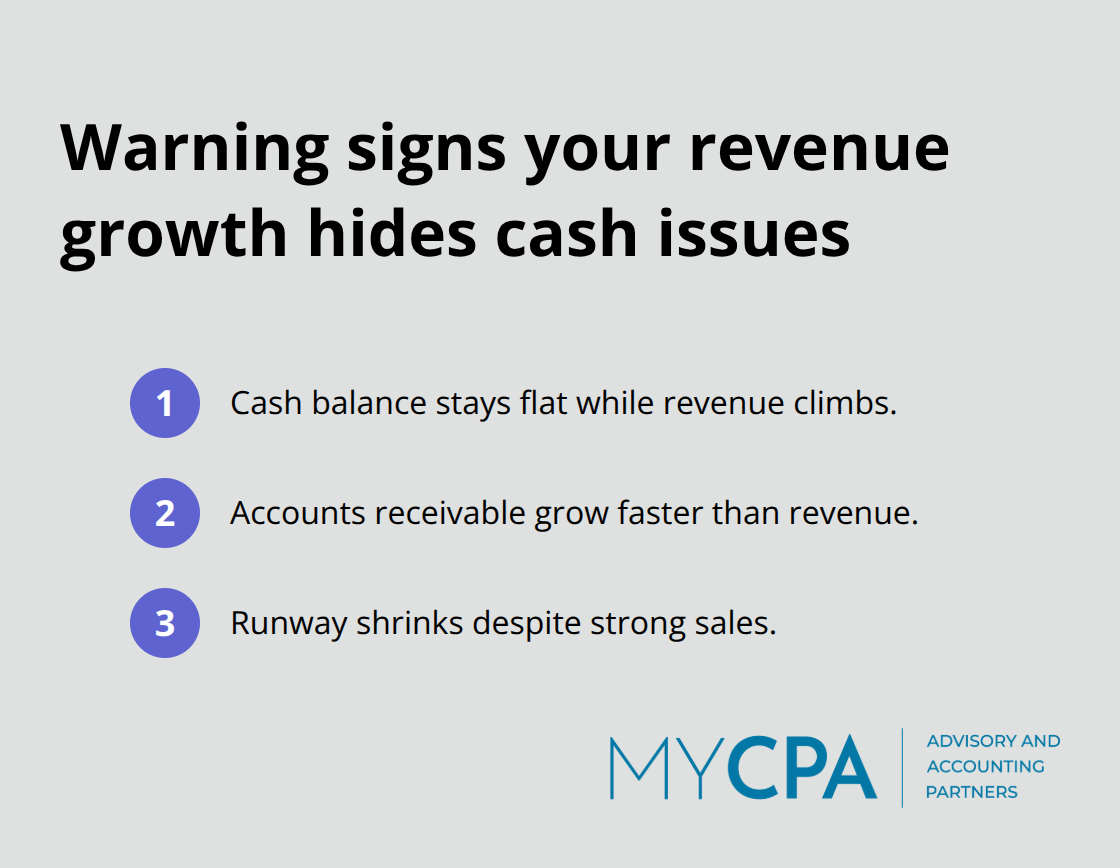
Your startup can grow revenue at 40% year-over-year and still run out of cash within six months. This happens in SaaS companies that offer annual contracts paid quarterly, in service businesses that wait 45 or 60 days for invoices to be paid, and in e-commerce operations where inventory sits for weeks before converting to sales. The warning signs are specific: your revenue climbs but your cash balance stays flat, your accounts receivable grow faster than your revenue, or your runway shrinks despite strong sales numbers.
Elliott Parker of Alloy Partners points out that velocity and direction of cash flow matter far more than any single balance sheet snapshot. A company that loses $10,000 per month but accelerates collections might be healthier than one that loses $5,000 monthly while customers take longer to pay. Founders must separate the psychological wins of closing deals from the operational reality of converting those deals into usable cash.
Most startups don’t actively manage their payment terms. Invoices get sent days after delivery, follow-ups on overdue accounts get deprioritized, and when enterprise customers ask for net-45 instead of net-30, founders say yes without calculating the cash impact. That’s a mistake. If you bill $500,000 monthly and your customers take an average of 45 days to pay instead of 30, you finance a $250,000 working capital gap with your own cash. Tightening collections, negotiating shorter payment terms, and sending invoices immediately are not optional optimizations-they’re survival strategies. Cash flow forecasting prevents the financial disasters that destroy startups by helping you track weekly cash positions rather than relying on monthly summaries. Companies that treat accounts receivable management as a core function rather than a back-office task materially improve their runway and reduce the frequency of funding crises. These operational choices directly affect how quickly you convert sales into cash you can actually spend.
The gap between when you pay your team and when customers pay you is where cash crises hide. Closing this gap requires three concrete actions: demand faster payments, stretch your own payment obligations, and cut the spending that doesn’t move the needle. Start with collections because it’s the fastest lever you control. Days sales outstanding, or DSO, measures how long it takes customers to pay after you invoice them. If your DSO is 45 days and you bill $100,000 monthly, you finance a $150,000 working capital gap out of your own pocket. Reduce that to 30 days and you free up $50,000 immediately without raising a dollar or cutting payroll.
The mechanics are straightforward. Invoice the same day work is completed, not three days later. Send payment reminders at day 10, not day 30.
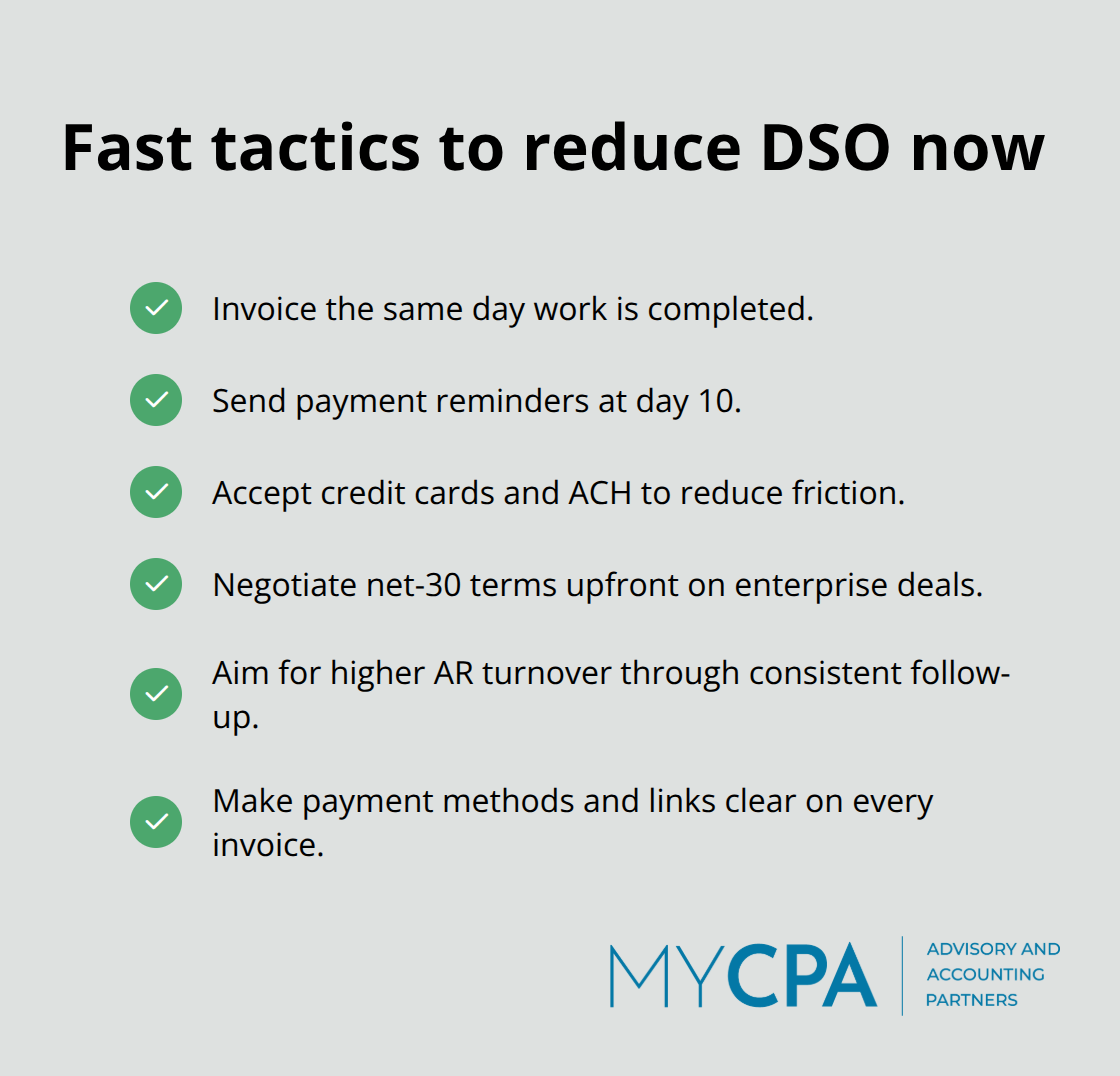
Make paying you frictionless by accepting credit cards or ACH transfers. For enterprise deals, negotiate net-30 terms upfront instead of accepting net-45 and hoping to tighten it later. You won’t win every negotiation, but you’ll win enough to materially extend your runway. Accounts receivable turnover, which measures how many times you collect your receivables in a period, directly reflects your discipline here. Higher turnover means faster cash conversion and a healthier balance sheet.
On the spending side, negotiate payment terms with suppliers the same way customers negotiate with you. Days payables outstanding, or DPO, is how long you take to pay suppliers. If you stretch net-30 terms to net-45 without damaging supplier relationships, you’ve effectively accessed an interest-free loan. But this only works if you’re actually generating cash from operations; extending payables while your cash position deteriorates will destroy your credibility and access to favorable pricing.
The real win comes from cutting operating expenses that don’t improve unit economics. SaaS startups often spend heavily on marketing to hit growth targets, but if your customer acquisition cost takes longer than nine months to recover, you burn cash faster than you build value. Prioritize spending on activities that directly improve gross margin, shorten your cash conversion cycle, or accelerate revenue. Operating cash flow is cash generated from daily business operations. Consistently positive operating cash flow means your operations sustain the business without external funding. If it’s negative, no amount of revenue growth hides the fact that your model is broken.
Weekly visibility catches problems before they become crises. Track your burn rate, runway, and forecast variance together so you see not just how much cash you spend but whether your projections match reality. This cadence matters because monthly reviews arrive too late to prevent damage (most startups discover cash problems only after they’ve already spent money they didn’t have). Your cash conversion cycle-the time between paying suppliers and collecting from customers-directly determines how much working capital you need to survive. Shorten that cycle and you reduce your dependency on external funding or credit lines.
Startups repeatedly make the same mistake: they track cash flow manually in spreadsheets, updating numbers weekly or monthly after damage has already occurred. Weekly visibility is not optional if you want to survive. Companies implementing daily cash positioning strengthen their forecasts and maintain stronger liquidity than those relying on weekly or monthly snapshots. The velocity of cash moving through your business changes constantly, and spreadsheets cannot capture that speed. You need real systems that connect your actual transactions to your forecasts so discrepancies surface immediately, not at month-end close.
Cash flow forecasting software falls into two categories: enterprise platforms built for Fortune 500 companies and lean tools designed for startups burning through runway. The enterprise tools demand three months of implementation and cost more than your monthly payroll. Skip them. Startups need software that integrates directly with your bank account, accounting system, and invoicing platform so data flows automatically without manual entry. Integration matters because manual data entry introduces errors that distort forecasts exactly when accuracy matters most. Automated data management reduces errors and speeds forecasting, with AI validating inputs and flagging inconsistencies before they affect projections. Try a 13-week rolling forecast as your standard, since that timeframe balances detail with practical planning horizons. The software should show you three scenarios: conservative (if revenue drops 20%), base case (your current trajectory), and optimistic (if a major customer signs). Most startups only model the base case and panic when reality diverges. Scenario planning takes one hour per month and prevents the false confidence that kills cash management discipline.
Your cash forecast is only as accurate as your underlying transaction data. If your accounts receivable aging report shows $150,000 outstanding but includes invoices from customers who always pay late, your forecast will overestimate incoming cash. Implement a monthly close process that reconciles your accounts receivable aging, verifies invoice accuracy, and adjusts your forecast based on collection history rather than invoice date. This takes most startups four to six weeks to establish properly, but it cuts forecast variance dramatically. Forecast variance measures the gap between projected and actual cash flow, and smaller variances indicate tighter financial control. Startups tracking variance weekly catch systematic forecasting errors and adjust assumptions before they compound into larger problems. Your accounting system should automatically code transactions so you can segment cash flow by customer, product line, or expense category. This visibility reveals which parts of your business generate cash and which drain it. A SaaS startup might discover that annual contracts generate positive cash flow while monthly subscriptions create timing mismatches that require working capital financing. That insight changes which customers you prioritize and how aggressively you pursue different deal structures.
Track operating cash flow, free cash flow, and days sales outstanding together every week. Operating cash flow measures net cash from your core operations and is calculated as net income plus noncash expenses minus changes in working capital. Consistently positive operating cash flow means your business model works. Free cash flow subtracts capital expenditures from operating cash flow and shows what is actually available for debt repayment or reinvestment. If both are negative, external funding becomes mandatory. Days sales outstanding tells you how long customers take to pay after you invoice them. Rising DSO signals slower collections and potential billing or credit-term issues. If your DSO increases from 35 to 50 days, you have effectively increased your working capital needs by 43 percent without changing revenue.
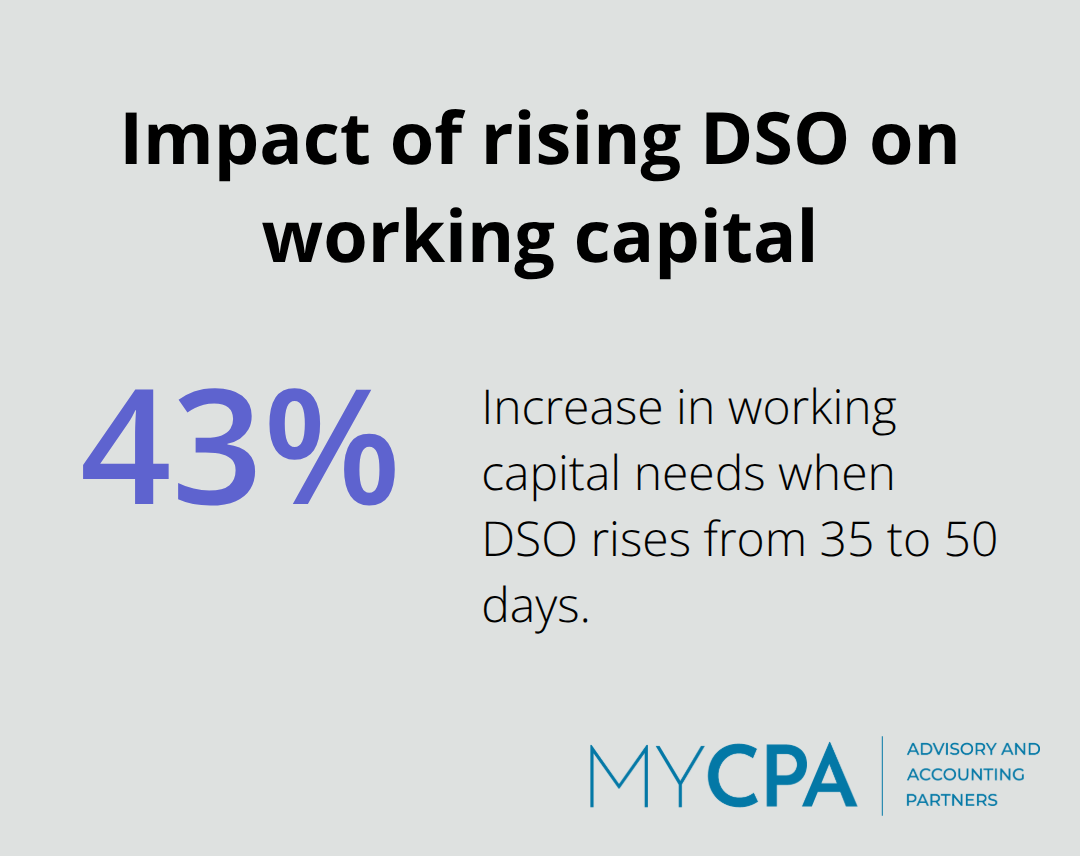
That is the kind of operational drift that destroys startups quietly. Most startups focus only on cash balance, but that is a snapshot, not a trend. A startup with $200,000 in the bank but negative operating cash flow and rising DSO is in worse shape than one with $100,000 and positive cash generation. The direction and velocity of cash matter far more than the absolute number.
Cash flow management is not a finance department responsibility-it’s a survival skill every founder must master. Start this week by calculating your current days sales outstanding and identifying which customers pay slowest. Next week, implement a 13-week rolling cash forecast in software that integrates with your accounting system, then establish a weekly cash review meeting where you compare actual cash flow to projections and adjust spending if your forecast indicates a runway problem.
These three actions take less than ten hours total but transform your financial control from reactive to proactive. You now have the framework: accelerate collections by tightening payment terms and invoicing immediately, stretch payables strategically without damaging supplier relationships, and cut operating expenses that don’t improve unit economics. Track operating cash flow, free cash flow, and days sales outstanding every week so you catch problems before they become crises.
We at My CPA Advisory and Accounting Partners help startups establish accurate financial reporting, implement QuickBooks systems that automate transaction coding, and build cash forecasting models tailored to your business cycle. Our business advisory services include personalized financial plans that align your spending with your runway and unit economics. Contact My CPA Advisory and Accounting Partners to discuss how we can strengthen your cash flow infrastructure and give you the financial confidence to scale without external funding crises.








Privacy Policy | Terms & Conditions | Powered by Cajabra